Hepper is reader-supported. When you buy via links on our site, we may earn an affiliate commission at no cost to you. Learn more.
Bump on a Dog’s Eye: Causes, Signs & Care (Vet Answer)

In this article
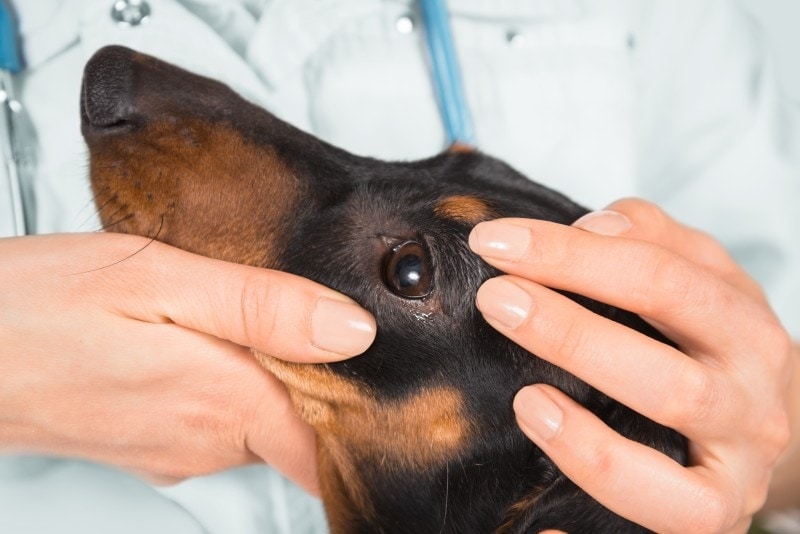
Discovering a bump on your dog’s eye can set your mind racing with questions. When did the lump appear and what exactly is it? Could the bump be a tumor? You may even jump to conclusions and think the worst, like if the bump is a tumor, could it be cancerous?
It’s best not to panic, as there are a number of common causes of bumps on a dog’s eye—not all of them tumors. Furthermore, not all tumors are cancerous. Let’s explore the most common causes of these bumps, their signs and treatment, and how best to care for your dog if you discover a bump on his or her eye.

What Are the Possible Causes of a Bump on a Dog’s Eye?
Bumps may arise from the various tissues surrounding the eyes, such as the skin of the eyelids, or the conjunctiva (the pink mucus membrane that lines the eyelids). Some of the most common causes of these bumps include the following:
1. Cherry Eye
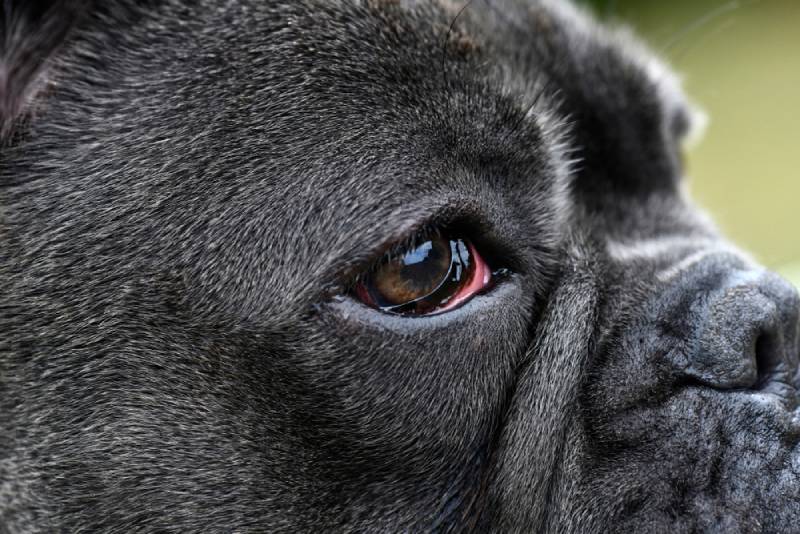
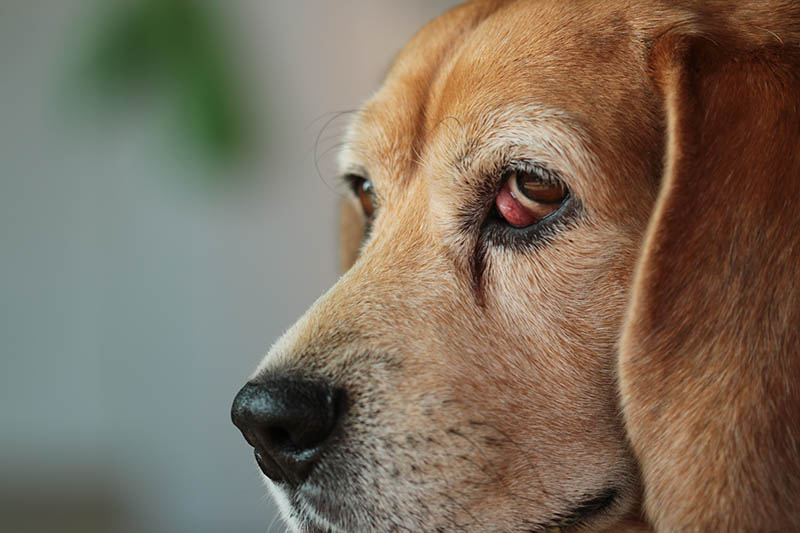
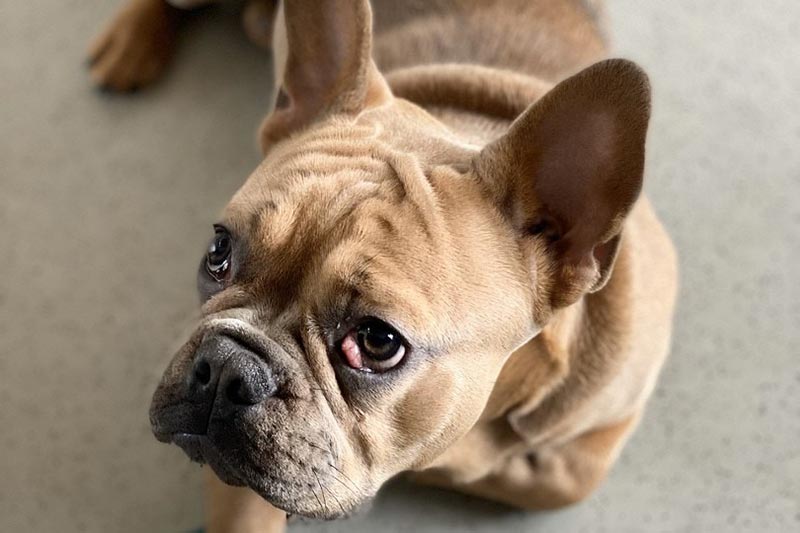
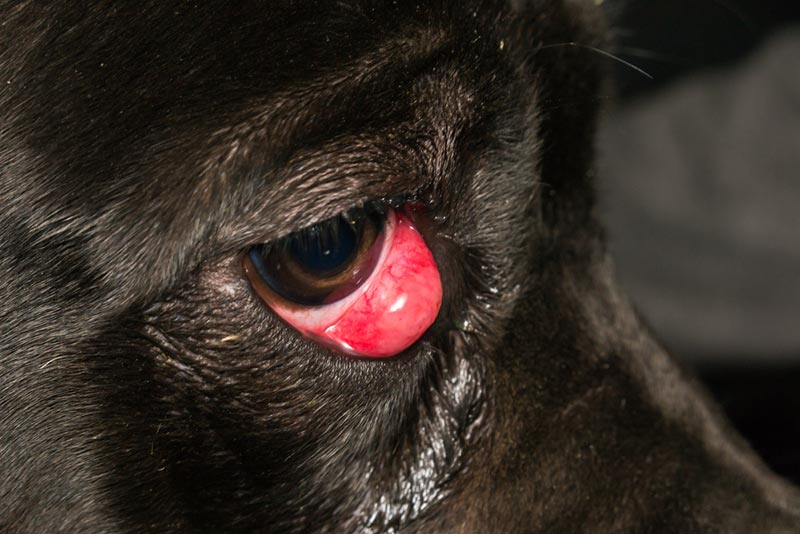
Cherry eye, as it is commonly referred to, describes the prolapse of a dog’s third eyelid gland. Dogs have a third eyelid located in the inner corner of their eyes that helps protect the eyeball. It also contains a gland that produces a significant proportion of the tear film that helps keep the eye lubricated.
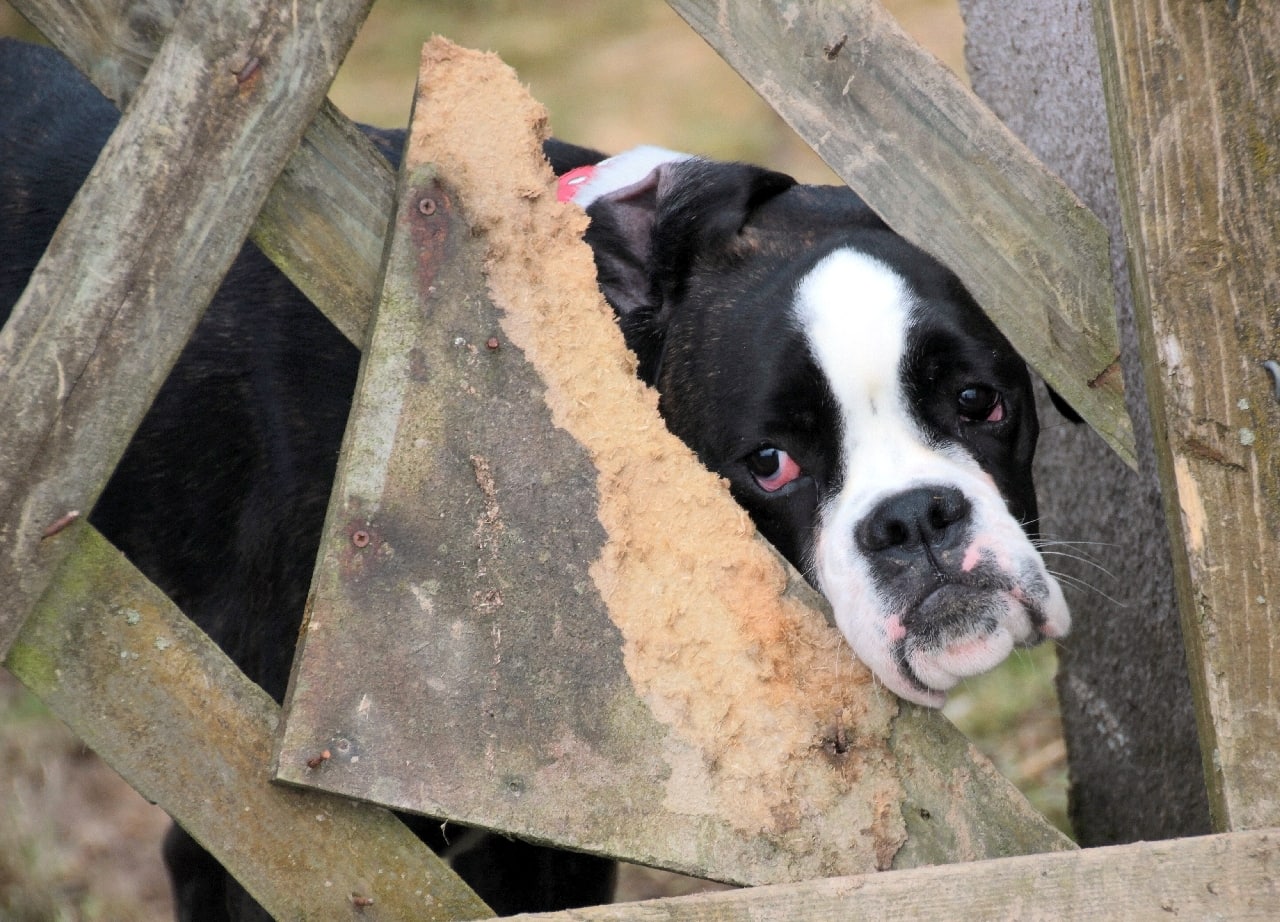
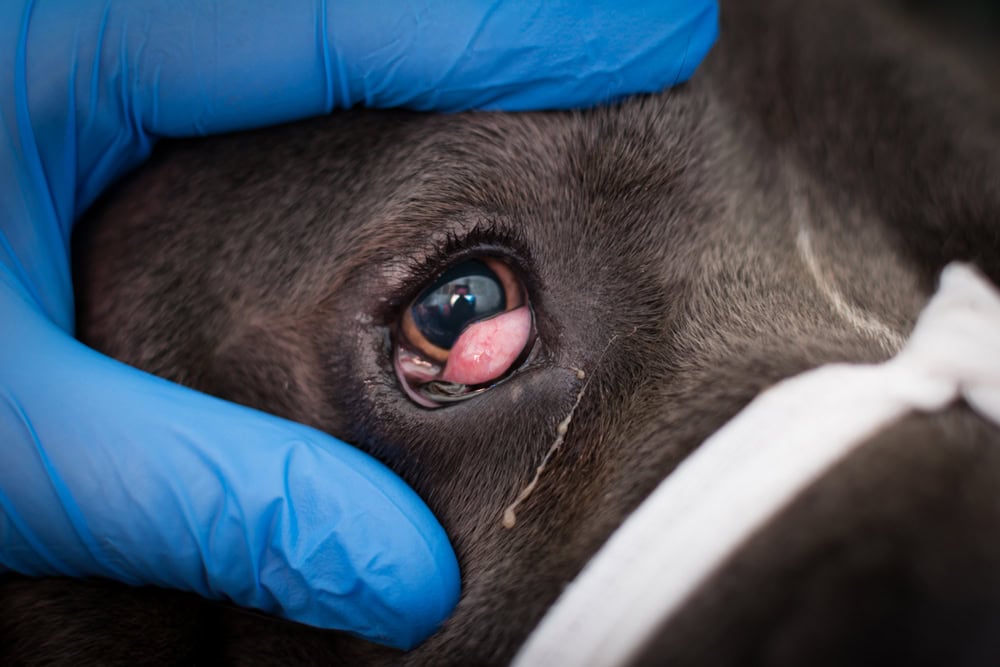
Occasionally, the gland “pops out” or prolapses when the ligament that holds it in place stretches or breaks. The prolapsed gland is visible as a pink bump near the corner of the inner eye, and resembles a cherry—hence the common term, “cherry eye.”
Cherry eye usually occurs in young dogs and is more common in certain breeds, such as Cocker Spaniels, Bulldogs, Boston Terriers, Beagles, Bloodhounds, Shih Tzus, and other flat-faced breeds.
2. Chalazion or Meibomian Cyst
The eyelids of dogs contain dozens of tiny oil glands called meibomian glands. These glands produce a secretion called tear film that helps keep the eyes moist and lubricated. A chalazion, also known as a meibomian cyst, occurs when the duct of a meibomian gland becomes blocked, resulting in an accumulation of secretions within the gland and chronic irritation. A chalazion appears as a non-painful bump or swelling within the upper or lower eyelid. They are commonly seen in older animals.
The cause of chalazia is not always known, although they may be associated with infection, trauma, or meibomian gland tumors obstructing the duct.
3. Meibomian Gland Tumors
A meibomian gland adenoma is a very common type of benign (non-cancerous) eyelid tumor that usually affects middle-aged to older dogs.
Meibomian gland tumor growths arise from the meibomian glands and are the most common type of eyelid tumor affecting dogs. Meibomian gland tumors appear as small bumps—inside or outside the eyelids.
4. Papillomas
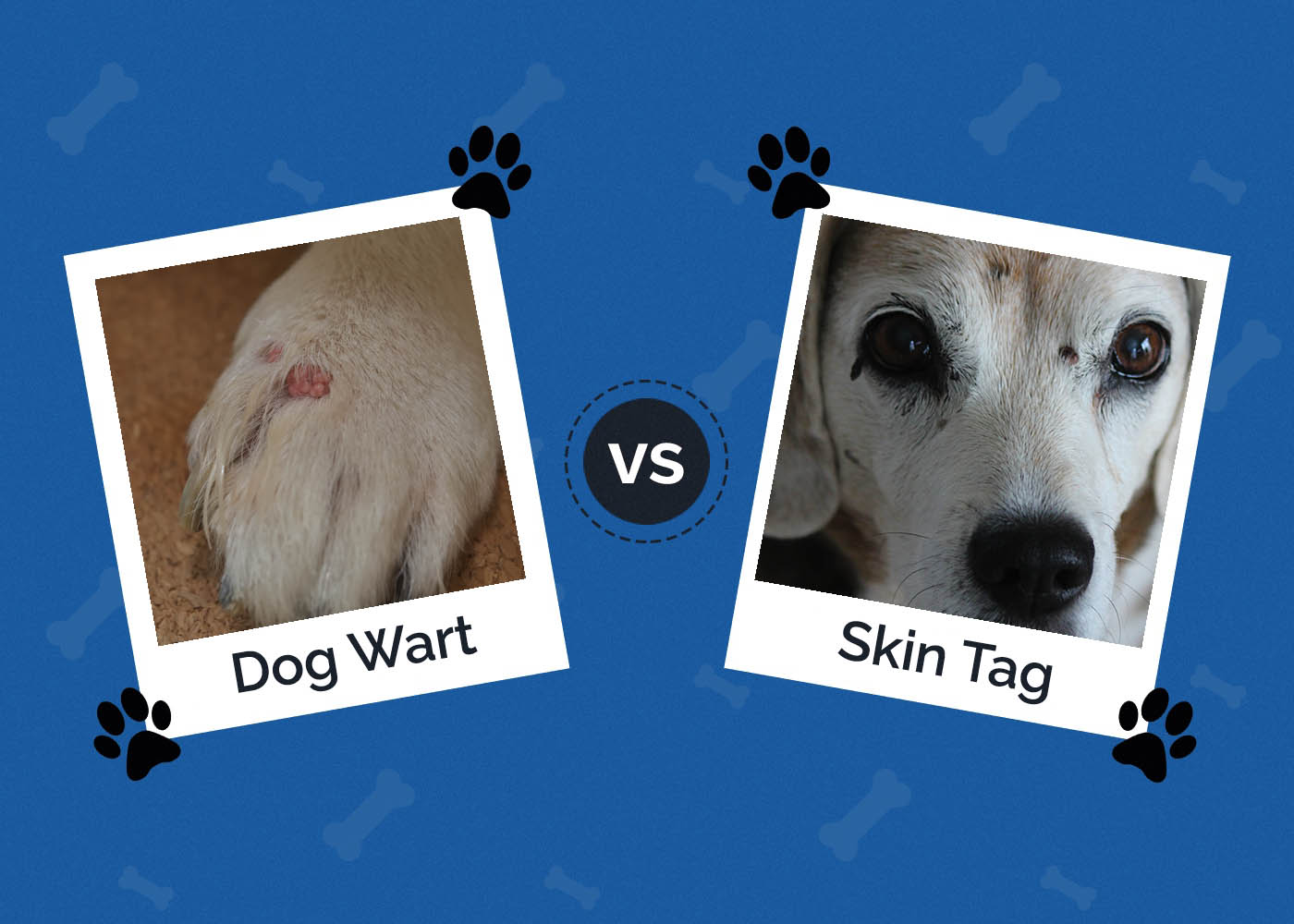
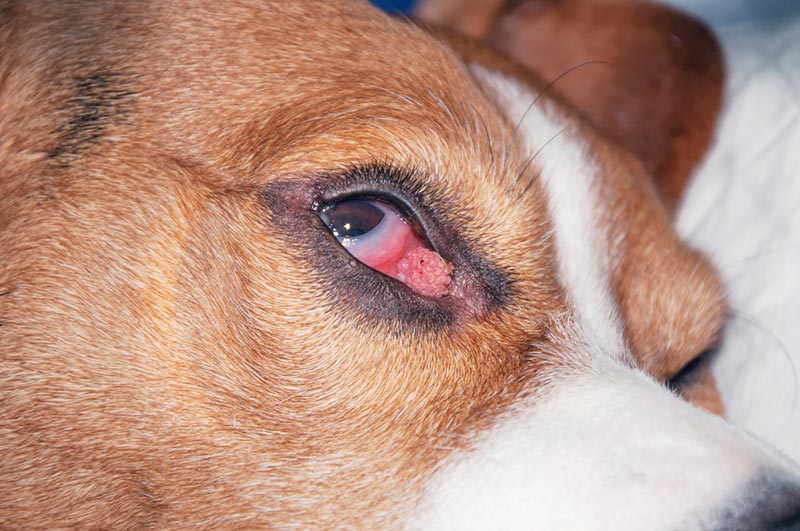
Papillomas, commonly known as warts, are benign tumors. These tumors can be viral or non-viral in origin. Viral papillomas usually occur in young dogs, although dogs of any age can be affected. Papillomas often disappear without any treatment, although some require surgery if they fail to go away on their own or become infected or inflamed.
Papillomas vary in color, from white to pink to black, and appear as cauliflower-like bumps or stemlike protrusions on the eyelids and the conjunctiva.
5. Melanomas
Melanomas are malignant (cancerous) tumors of melanocytes, the pigmented cells of the body. Eyelid melanomas may appear as a single bump arising from the eyelid skin, or as a flat and broad growth on the eyelid margins. Melanomas may also arise from the conjunctiva of the eye, appearing as raised, soft, black masses. Conjunctival melanomas tend to occur less frequently than eyelid melanomas in dogs.
6. Conjunctival Haemangioma and Haemangiosarcoma
Haemangiomas and haemangiosarcomas are tumors arising from the lining of the blood vessels. Haemangiomas are benign, while haemangiosarcomas are malignant. These tumors appear as red bumps or blood blisters on the conjunctiva. It’s thought that sunlight exposure is a risk factor for the development of these tumors.

Where Are the Signs of These Different Kinds of Bumps?
The signs depend on the type of bump on the eye, its location, and, if it’s a tumor, whether it’s benign or malignant.
1. Signs of Cherry Eye
Cherry eye, or the prolapse of the third eyelid gland, is fairly easy to spot. The primary sign is a fleshy pink bump in the corner of the eye. It may develop in one or both eyes. The cherry eye may come and go, or remain permanently prolapsed. Although it’s not typically painful, dogs may paw at the affected eye.
2. Signs of a Chalazion
A chalazion will appear as a bump on the eyelid. These bumps are sometimes yellowish in color and are usually non-painful. The affected eyelid may also become inflamed, and secondary bacterial infections may occur.
3. Signs of Tumors
Tumors appear as masses on the inside or outside of the eyelids, or on the conjunctiva. Some benign tumors may not cause any issues, while others may scratch the clear surface of the eye (the cornea) and create a painful corneal ulcer. Tumors may also lead to conjunctivitis (inflammation of the pink layer lining the eye and eyelid).
Signs of conjunctivitis include excessive blinking or squinting, discharge from the affected eye, and redness and swelling around the eye.
Benign tumors tend to grow slowly and do not spread, while malignant tumors tend to grow rapidly, invade and destroy the surrounding tissue, and may spread to other parts of the body. They may break open and bleed, and also become infected and painful. Like benign tumors, malignant tumors may irritate the eye and cause corneal ulcers and conjunctivitis.

How Do I Care for My Dog if I Notice a Bump on Their Eye?
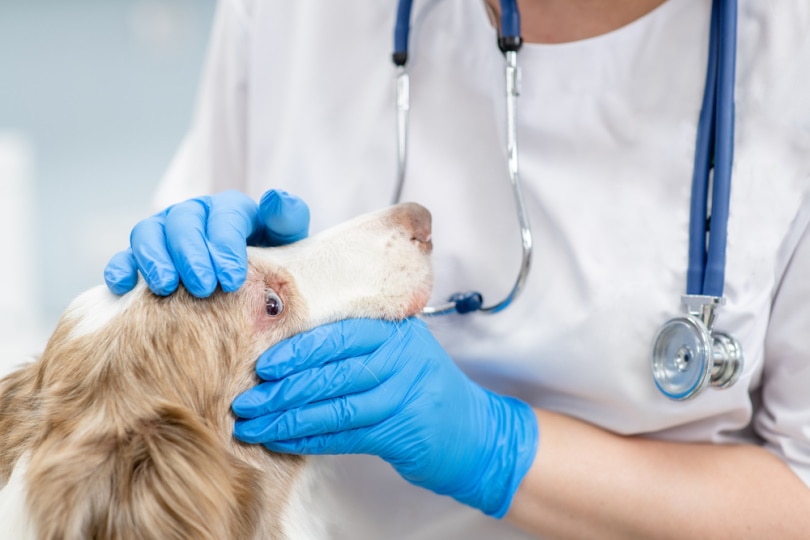
If you notice a bump on your dog’s eye, it’s advisable to schedule an appointment with your veterinarian as soon as possible. Your veterinarian is the best person to determine the cause of the bump, as well as the correct treatment plan for your dog. Do not attempt to treat these bumps yourself with home remedies that you may find on Google.
Generally, the sooner the bump is treated, the better the prognosis. So, it’s best not to wait too long before booking an appointment with your vet. In order to ensure the best outcome for your dog, be sure to follow your veterinarian’s treatment plan closely. Many of these lumps require surgery to correct. If this is the case, be sure to stick to the postoperative instructions given to you by your vet.
Your dog will usually be required to wear an Elizabethan collar post-surgery to prevent him or her from scratching and rubbing the surgical site. It’s crucial to ensure that your dog doesn’t remove the collar, as scratching and rubbing can cause the stitches to fall out, as well as injury and infection, which can delay healing.
If your dog is prescribed medication, it’s important to administer the medication at the correct times and to take your dog for regular follow-ups as advised by your veterinarian.

Frequently Asked Questions (FAQ)
What is the treatment for the most common types of bumps found in a dog’s eye?
Treatment for cherry eye involves surgically replacing the prolapsed third eyelid gland. It’s crucial that the cherry eye is corrected, as the third eyelid gland does not produce tear film as effectively when it’s not in its correct position. This can lead to dry eye, a painful condition that, when left untreated, can lead to conjunctivitis, corneal ulcers, scarring, and permanent loss of vision.
Treatment for a chalazion is not always necessary, although they can sometimes grow large and become irritating to the cornea. Treatment involves cutting into the chalazion through the conjunctiva with a scalpel or CO2 laser while the dog is under general anesthesia and removing the debris from the cyst. The area is treated with topical antibiotics after surgery.
If your veterinarian determines the cause of the bump to be a tumor, it may be necessary to microscopically examine the cells of the tumor to identify the tumor type. Unfortunately, it’s not possible to identify the tumor based on its appearance alone.
The treatment for a tumor depends on the type, size, and location of the tumor, and may include surgical removal, cryotherapy (freezing), and radiation. Generally, the smaller the tumor, the easier it is to surgically remove. In the case of malignant tumors, the earlier it’s removed, the less chance it has to spread. It’s, therefore, important to seek veterinary care sooner rather than later.
If your dog has a malignant tumor, your veterinarian may advise additional blood work, chest X-rays, an abdominal ultrasound, and aspirates of the lymph nodes to determine if the tumor has spread.
What is the prognosis for a bump on my dog’s eye?
The prognosis depends on the cause of the bump. The prognosis for a chalazion and cherry eye is good with the correct treatment. Meanwhile, the prognosis for tumors depends on the type of cancer, its location, and whether it is benign or malignant. The prognosis also depends on how early the tumor is identified and treated. As with all tumors, early intervention offers the best prognosis.
Final Thoughts
The are many potential causes for a bump on a dog’s eye—ranging from prolapse of the third eyelid gland to a chalazion, or a tumor. Not all tumors are cancerous. It’s best to seek veterinary care as soon as you notice a bump, instead of trying to treat the condition at home or waiting to see if the bump gets better on its own.
Early treatment can prevent complications from developing, such as dry eye, corneal ulceration, and conjunctivitis. These complications can be painful and may lead to a loss of vision in the affected eye. In the case of tumors, it’s easier to remove a mass when it’s small. Early intervention may also prevent a malignant tumor from spreading to other areas of the body.
Related Reads:
Sources
https://www.cliniciansbrief.com/article/image-gallery-canine-eyelid-diseases
https://www.cliniciansbrief.com/article/managing-treating-cherry-eye
https://www.dvm360.com/view/managing-common-eyelid-diseases-proceedings
https://vcacanada.com/know-your-pet/eyelid-conjunctival-and-periocular-tumors
https://vcahospitals.com/know-your-pet/conjunctivitis-in-dogs
https://vcahospitals.com/know-your-pet/papilloma-of-the-skin
https://veterinarypartner.vin.com/default.aspx?pid=19239&catId=102899&id=10194756
Featured Image Credit: thanwa jundok, Shutterstock
Get Hepper In Your Inbox


Pet care tips from our vets and experts, straight to your inbox.
You may opt-out at any time. View our Privacy Policy for more information.
Lindsay is a veterinarian who lives in the beautiful city of Cape Town, South Africa with her husband and their rescue cat and dog, Harrison and Blizzard. Lindsay obtained her bachelor's degree in veterinary science from the University of Pretoria and currently works in small animal practice. When she’s not at work, you can find her out in nature, hiking with Blizzard, or following some kind of creative pursuit, such as writing, playing the piano or sewing.
Lindsay is a veterinarian living in Cape Town, South Africa with her husband and their rescue animals, Harrison and Blizzard. You can find her hiking with Blizzard, enjoying time in nature, or writing when she’s not working.
Education
Lindsay graduated from the University of Pretoria, receiving her bachelor's degree in veterinary science.
Experience
Lindsay currently works in small animal practice.
Join the conversation
Ask a question, share your story, or send private feedback.