Hepper blog

Search our database of over 9,984 posts with up-to-date information from our experts and veterinarians.

Hepper is reader-supported. When you buy via links on our site, we may earn an affiliate commission at no cost to you. Learn more.

Can Bearded Dragons Get Covid? Vet-Reviewed Facts

By Kit Copson · Reviewed & fact-checked by Dr. Luqman JavedVet Approved
Dr. Luqman Javed
Reviewed & Fact-Checked byDr. Luqman JavedDVM (Veterinarian)
Dr. Luqman grew up with an extreme fondness for animals and turned a childhood dream into reality by becoming a veterinarian. His goals are now focused on helping pet owners understand their pets better in order to ensure the best quality of life for all pets globally. He is passionate about wildlife, exotic pets, pet owner education, and animal welfare. Luqman has 3 years of professional experience working with a variety of animal species. He has skills in demonstrating proper animal husbandry and training some exotic species, such as parrots. Additionally, he has decades of personal experience with keeping many exotic pets: freshwater fish, parrots, songbirds, chickens, ducks, turtles, and hamsters.View authorThe information is current and up-to-date in accordance with the latest veterinarian research. Read about our vets
Share
Ask us a question in the comments
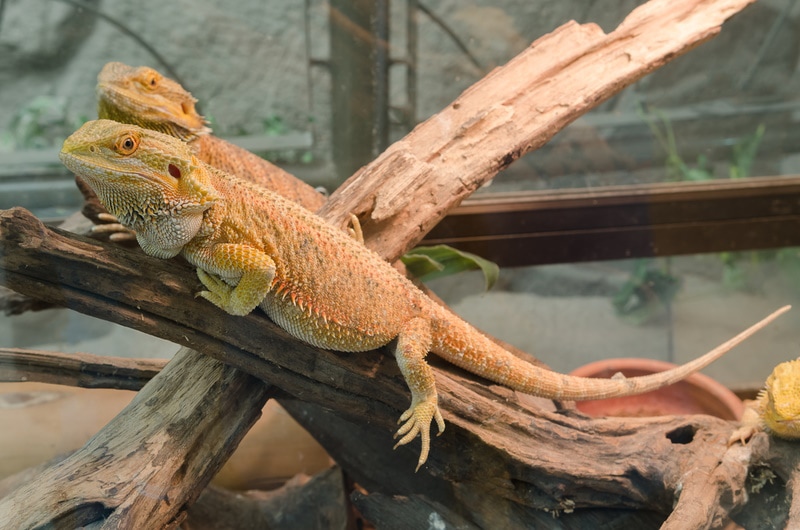
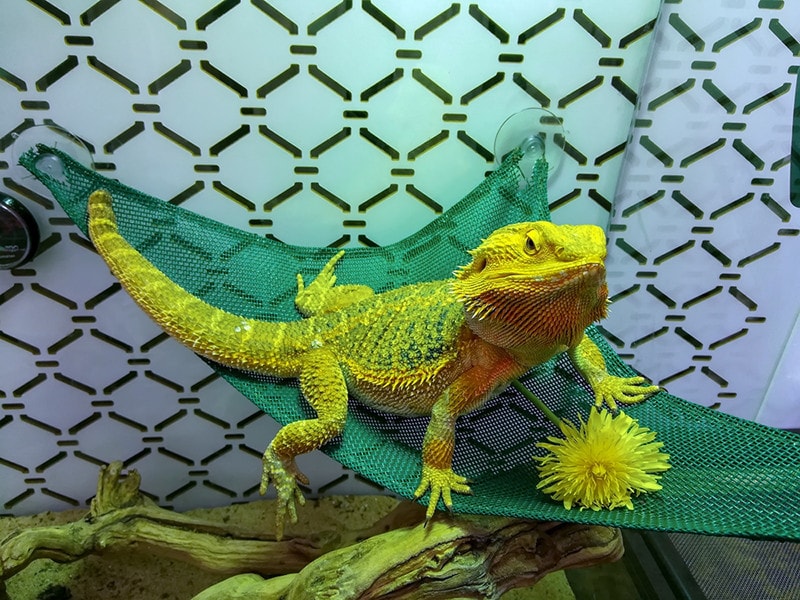
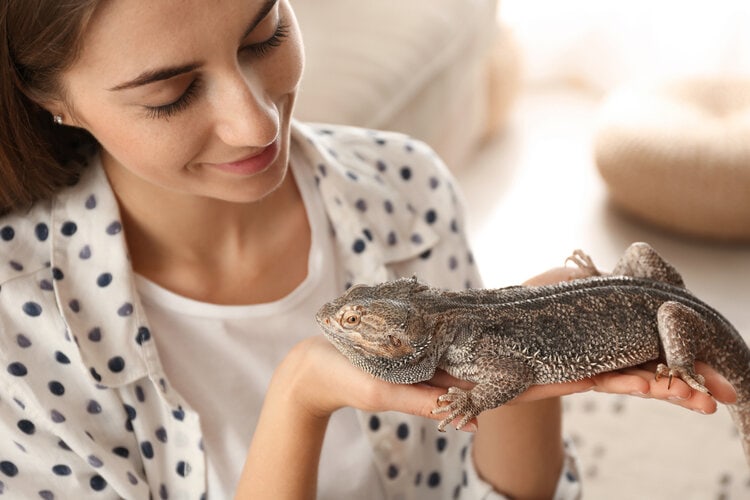
bearded dragons in terrarium

When the COVID-19 pandemic struck, one of the questions on many pet parents’ minds was whether or not the virus could spread to their cats, dogs, hamsters, birds, and reptiles. It’s true that some animals have been affected by SARS-CoV-2, the virus behind COVID-19, but there is no evidence to suggest that reptiles, like bearded dragons, can contract the virus.

In this post, we’ll share what experts have to say about reptiles and COVID-19 and explore the possible causes of your bearded dragon’s signs of illness if they’re showing any.

Can Reptiles Catch COVID-19?

While some animals have contracted the SARS-CoV-2 virus from humans, reptiles have not, as explained by the Centers for Disease Control and Prevention (CDC), which also revealed that studies thus far have shown that reptiles, invertebrates, amphibians, and birds are not susceptible to the virus.

Animals that have been affected include cats, dogs, big cats, mink, otters, and gorillas, but the CDC notes that the chance of an animal transmitting COVID-19 to humans is low and that it’s much more likely to be passed from person to person rather than from animal to person. On the other hand, close contact with infected humans can pass the virus onto animals, but this doesn’t happen very often. Research 1 has found that reptiles in particular are very resistant to the virus, even in experimental circumstances where their immune systems are deliberately challenged with the virus.

All that said, according to CDC information, more studies will need to take place for us to be able to fully understand the spread of SARS-CoV-2 between animals and humans, especially due to the possibility of future mutations.

In short, based on the information currently available, if your beardie is showing signs of being unwell, for example, wheezing or coughing, it’s highly unlikely to be COVID-19-related and is more likely the result of another kind of infection.

Why Is My Bearded Dragon Coughing?
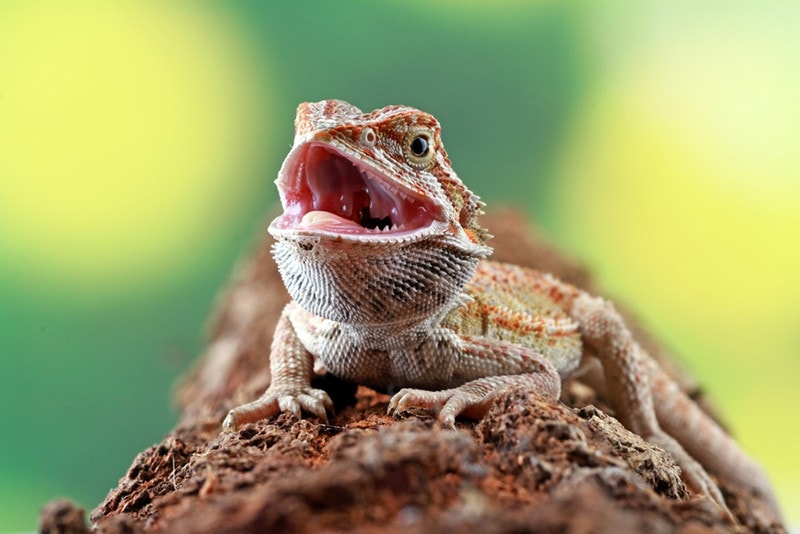
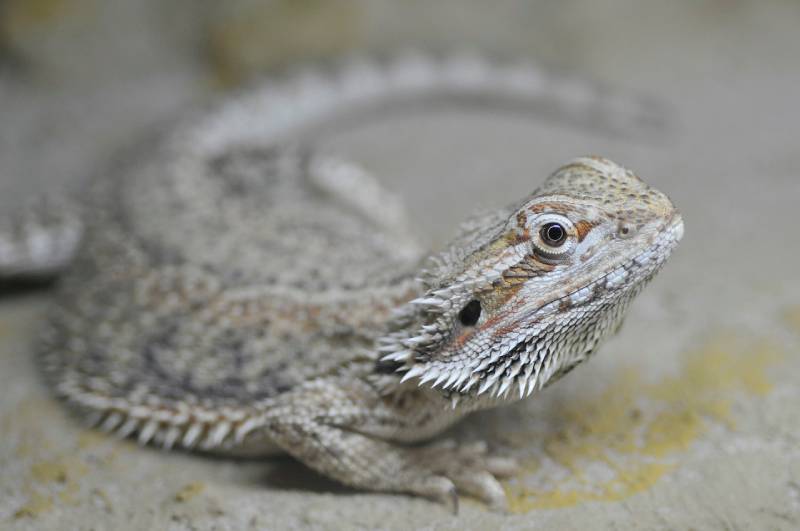
Bearded dragon
Image Credit: Opayaza12, Shutterstock

If your bearded dragon has been coughing and/or displaying other signs of illness, they may be suffering from an upper respiratory infection. Signs of respiratory infection in bearded dragons include coughing, lethargy, sneezing with liquid or bubbles around the nose and mouth, eye or nose discharge, loss of appetite, shallow breathing, and wheezing.

Bearded dragons that are most susceptible to respiratory illness are those that receive inadequate nutrition, are kept in unsanitary or poorly-heated conditions, and/or are experiencing stress. These conditions make bearded dragons vulnerable to bacterial, fungal, viral, and parasitic infections, which can then get into the respiratory system.

For this reason, if your bearded dragon is displaying any signs of being unwell, whatever the signs, you’ll need to get them seen by a vet to make sure they get proper treatment.

You can reduce the risk of your bearded dragon suffering from a respiratory infection by ensuring their environment is clean and properly heated. It’s also important that your beardie eats an appropriate diet to keep their immune system in good shape and gets plenty of mental stimulation to prevent boredom and stress.

Conclusion

In brief, the CDC has not reported any cases of reptiles contracting or transmitting COVID-19 whatsoever, so, if your bearded dragon is looking a bit worse for wear, it’s possible that a respiratory infection or another kind of illness is to blame. Contact your vet to find out what your next steps should be.

Sources

Featured Image Credit: Mr. Ratchacrit Nakkhonok, Shutterstock

Get Hepper In Your Inbox

Pet care tips from our vets and experts, straight to your inbox.

List

Select all that apply.

You may opt-out at any time. View our Privacy Policy for more information.

Kit Copson
Authored by

Kit Copson

Join the conversation

Ask a question, share your story, or send private feedback.
Rate this post
Required to post. Only our editors see your rating.
Who should see this?

A human reviews every comment before it appears. Your email is never published.

Picked to go with this article

13 Bearded Dragon Health Issues - Our Vet Explains What To Do

13 Bearded Dragon Health Issues - Our Vet Explains What To Do

Bearded dragons are known to make great pets. That said, they come with a certain set of requirements to keep them as healthy as possible. Many diseases on thi…

Dr. Meg Barnes
By Dr. Meg Barnes ·
Are Bearded Dragons Poisonous? Bite Risks & How To Prevent Them (Vet Reviewed)

Are Bearded Dragons Poisonous? Bite Risks & How To Prevent Them (Vet Reviewed)

If you're considering a Bearded Dragon as a pet, it's important to know everything there is to know about the species so that you can provide it with the best…

Nicole Cosgrove
By Nicole Cosgrove ·
Do Bearded Dragons Yawn? Facts & FAQ

Do Bearded Dragons Yawn? Facts & FAQ

Bearded dragons exhibit all kinds of unique behaviors that can be interesting to watch and learn about. If you’ve ever noticed your beardie (bearded dragon) op…

Kathryn Copeland
By Kathryn Copeland ·
Why Is My Bearded Dragon Lethargic? 6 Vet-Reviewed Reasons

Why Is My Bearded Dragon Lethargic? 6 Vet-Reviewed Reasons

When most of us think about pet reptiles, we think about bearded dragons because they're among the friendliest and most intelligent reptilian pets. Although th…

Jana Blagojevic
By Jana Blagojevic ·

Keep reading

More stories you might like

Can Bearded Dragons Eat Baby Food? Vet-Reviewed Feeding Facts

Bearded dragons are a popular reptile and a fun pet to have as part of your family. As with any pet, beardie owners often find themselves researching what food…

Melissa Gunter
By Melissa Gunter ·
Can Bearded Dragons Eat Baby Food? Vet-Reviewed Feeding Facts

Are Bearded Dragons Affectionate? Vet-Reviewed Emotional Science

When it comes to our pets, one of the many perks of owning one is the emotional and mental improvements that come from having something to care for. Part of th…

Melody Russell
By Melody Russell ·
Are Bearded Dragons Affectionate? Vet-Reviewed Emotional Science

How to Lower Humidity in a Bearded Dragon Tank: 4 Vet-Approved Ways

Maintaining the proper temperature and humidity levels in your bearded dragon tank is paramount to keeping it healthy. When the humidity is too high, it can de…

Nicole Cosgrove
By Nicole Cosgrove ·
How to Lower Humidity in a Bearded Dragon Tank: 4 Vet-Approved Ways

Does a Bearded Dragon’s Bite Hurt? Reasons for Biting & Facts

When you are a new pet owner, doing research about your pet is always smart. Since reptiles and specifically, bearded dragons are not the most common pets, it’…

Kathryn Copeland
By Kathryn Copeland ·
Does a Bearded Dragon’s Bite Hurt? Reasons for Biting & Facts

20 Incredible & Fun Bearded Dragon Facts

Bearded Dragons are one of the most popular reptiles in captivity today. Folks tend to really appreciate their demeanor, as they're one of the most social rept…

Ashley Bates
By Ashley Bates ·
20 Incredible & Fun Bearded Dragon Facts

Do Bearded Dragons Drink Water? Vet Approved Tips to Make Them Consume Fluid

Like every other animal in the world, bearded dragons need water to survive. They get their hydration in two ways: eating foods high in moisture, or drinking w…

Visnja Radosavljevic
By Visnja Radosavljevic ·
Do Bearded Dragons Drink Water? Vet Approved Tips to Make Them Consume Fluid

How Long Do Bearded Dragons Live? Vet Reviewed Lifespan, Data & Care

A bearded dragon lives quite a long time. The average lifespan of a pet bearded dragon is 8–12 years, while wild bearded dragons have shorter lives. If you pla…

Kristin Hitchcock
By Kristin Hitchcock ·
How Long Do Bearded Dragons Live? Vet Reviewed Lifespan, Data & Care

Are Bearded Dragons Good Pets? Vet Reviewed Pros & Cons

Bearded dragons are extremely popular lizards among reptile enthusiasts. They're attractive small- to medium-sized lizards with huge personalities and friendly…

Chantelle Fowler
By Chantelle Fowler ·
Are Bearded Dragons Good Pets? Vet Reviewed Pros & Cons