Hepper blog

Search our database of over 9,984 posts with up-to-date information from our experts and veterinarians.

Hepper is reader-supported. When you buy via links on our site, we may earn an affiliate commission at no cost to you. Learn more.

My Dog Ate a Conker: Vet-Approved Facts & Safety Guide

By Brooke Bundy · Reviewed & fact-checked by Dr. Karyn KanowskiVet Approved
Dr. Karyn Kanowski
Reviewed & Fact-Checked byDr. Karyn KanowskiVeterinarian
Karyn has lived in the UK for the past 10 years after moving from Queensland, Australia. In 2010, she graduated from The University of Queensland School of Veterinary Science, and also holds a Bachelor’s degree in Zoology. Karyn is passionate about using evidence, experience, and owner collaboration to provide the best solutions for pets, and believes in making reliable information about animal health accessible to all. She shares her home with 5 cats, 4 dogs, and 1 husband, and when she is not practising as a veterinary surgeon, she spends her time writing, gardening, and cleaning up pet hair!View authorThe information is current and up-to-date in accordance with the latest veterinarian research. Read about our vets
Share
Ask us a question in the comments
My Dog Ate a Conker

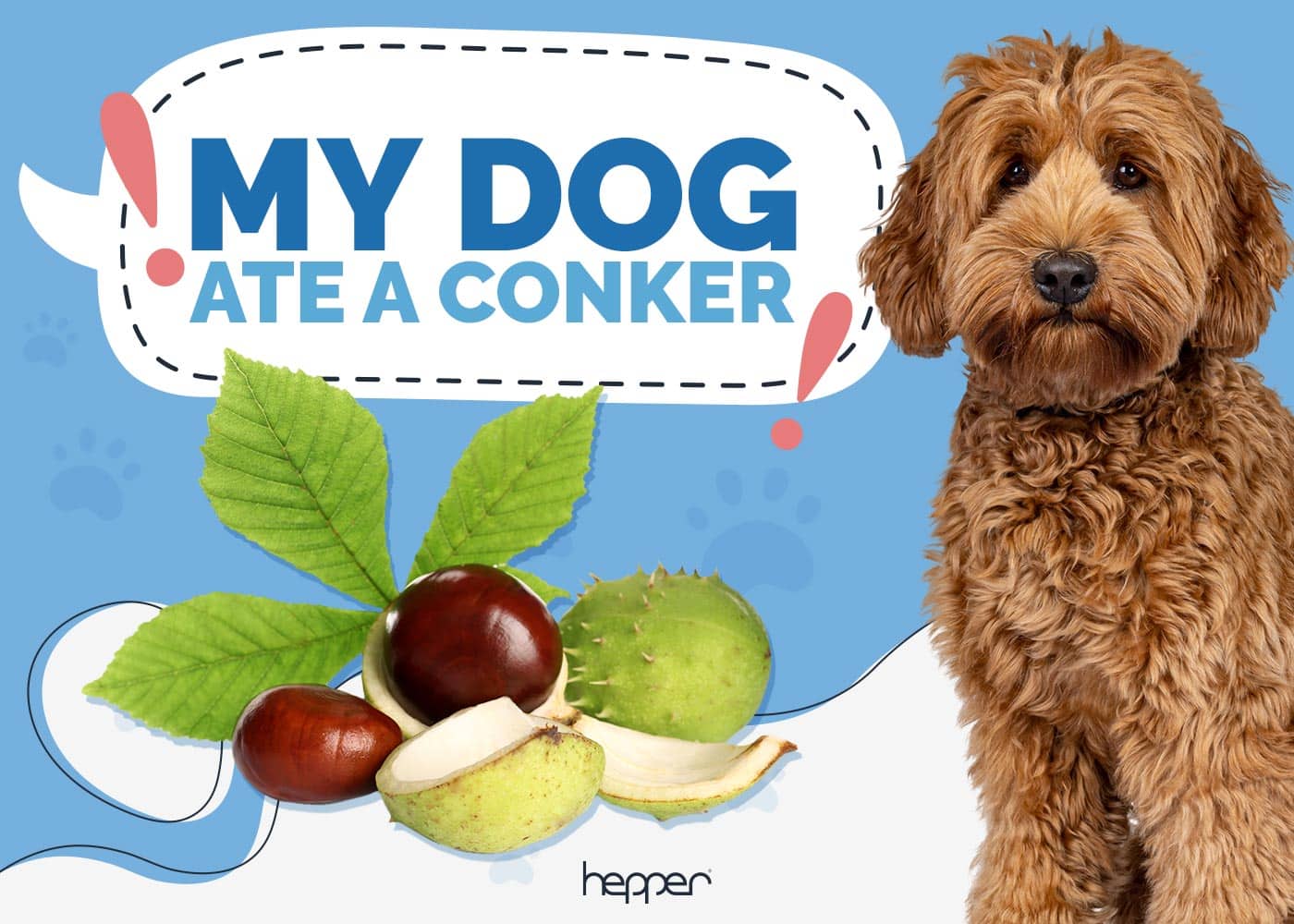
Whether you call them buckeyes or conkers, horse chestnuts signal the beginning of autumn. You or your dog might kick them along the trail as you gather leaves or visit the park. When a conker splits open, the green shell and creamy inside layer reveal a hard, dark brown seed. Unfortunately for our canine friends, all parts of this seed are highly toxic if ingested, not to mention that they can be dangerous in other ways. It’s important to reach out to your veterinarian for further instructions if your dog eats a conker. Here's everything you need to know.

Why Dogs Can't Eat Conkers

Conkers are spiky, hard, round seeds that fall from horse chestnut trees. While you can roast regular chestnuts over an open fire, conkers are toxic to humans and canines due to a chemical called aesculin. Ingestion isn't always fatal, but aesculin can make your dog seriously ill with symptoms such as vomiting, diarrhea, and shock. Conkers can also cause potentially fatal gastrointestinal (GI) obstructions due to their dense, prickly nature.

Every part of the horse chestnut tree contains aesculin, so you'll also want to be sure your dog never eats any of the bark or the leaves.
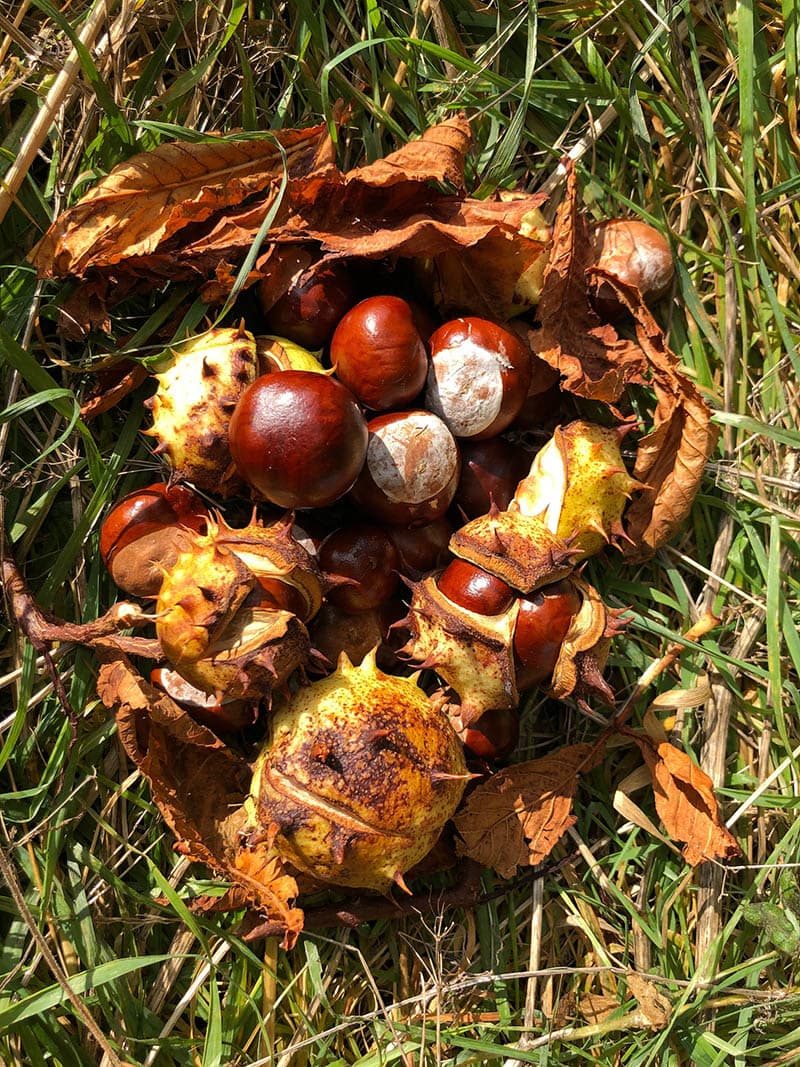
conkers on the grass
Image By: Red Dot, Unsplash

What to Do If Your Dog Eats a Conker

If you suspect your dog has picked up a conker, try to get them to spit it out before it's swallowed. You might try the command “Drop it,” if they're trained. Otherwise, you might offer them a safe treat or try to pick them up to get them to release if they're a small dog. If it does go down, call your vet immediately to see what to do next. You shouldn't try to induce vomiting before telling your vet what's going on, especially since the spiky part of the conker may hurt your dog's throat if it's forced to return.

You may not always notice if your dog eats something it shouldn’t, so you should familiarize yourself with these common signs of toxin ingestion. Aesculin isn't the only substance that causes these distressing issues, so it's really critical to take your pet to the vet if they experience these signs after eating anything, not just conkers:

  • Severe vomiting
  • Severe diarrhea
  • Lethargy
  • Collapse
  • Respiratory distress
  • Trouble defecating
  • Bloody stools
  • Tremors

Even if your pet hasn't been on a walk today, they could've still eaten a conker. Aesculin poisoning may not show symptoms for the first day or two after ingestion.

Regardless of what part of the conker they swallowed, your dog may need to be fully evaluated by your vet to find the most effective treatment, so it’s important to contact them as soon as possible. Your vet may instruct you how to induce vomiting at home or recommend that you bring them in for treatment. Your dog may need medication to flush the toxin out of their system or may require surgery if there is a GI obstruction.

In Conclusion

Hard, spiky, and poisonous, the autumnal conker spells potential trouble for our canine friends. Always keep a close eye on your dog during their walks to avoid letting them eat something toxic. If they do eat a conker, or if they show any signs of poisoning, call your vet immediately. Some substances are so toxic that they can be deadly in just a few hours, so it's important to act quickly and contact your vet for the best prognosis. Even if your dog is not affected by the toxin, it could still be affected by the spiky part of the conker or have GI obstruction. It’s always better to be safe than sorry.

Sources

Featured Image Credit: Georg Eiermann, Unsplash

Get Hepper In Your Inbox

Pet care tips from our vets and experts, straight to your inbox.

List

Select all that apply.

You may opt-out at any time. View our Privacy Policy for more information.

Brooke Bundy
Authored by

Brooke Bundy

Join the conversation

Ask a question, share your story, or send private feedback.
Rate this post
Required to post. Only our editors see your rating.
Who should see this?

A human reviews every comment before it appears. Your email is never published.

Picked to go with this article

Can Dogs Eat Acorns? Vet Approved Facts & Safety Guide

Can Dogs Eat Acorns? Vet Approved Facts & Safety Guide

Acorns might be a winter staple for squirrels, but are they safe for dogs? Your dog might show an interest in eating acorns, but you shouldn’t let it. In fact,…

Chelsea Mortensen
By Chelsea Mortensen ·
Can Dogs Eat Pine Cones? Health Concerns Reviewed

Can Dogs Eat Pine Cones? Health Concerns Reviewed

The weird things our dogs seem to fancy eating sometimes can be something of a surprise. As dog parents ourselves, we’ve witnessed our dogs attempt to hoover u…

Kit Copson
By Kit Copson ·
My Dog Ate a Stick: Our Vet Explains What to Do

My Dog Ate a Stick: Our Vet Explains What to Do

Dogs often eat things without realizing the dangers of doing so. While some sticks may be small enough to pass through your dog without causing harm, others ca…

Dr. Stacie Grannum
By Dr. Stacie Grannum ·
Foreign Body Ingestion in Dogs: Signs & Vet-Approved Next Steps

Foreign Body Ingestion in Dogs: Signs & Vet-Approved Next Steps

Foreign body ingestion is a common condition among dogs. It occurs when a dog swallows a non-food item, such as a toy, sock, or even a rock. If left untreated,…

Nicole Cosgrove
By Nicole Cosgrove ·

Keep reading

More stories you might like

Can Dogs Eat Chestnuts? Vet-Approved Safety Facts & FAQ

Chestnuts are a delicious snack for humans that offer several vitamins and minerals and are low in fat, making them a healthy go-to treat. They can be eaten ro…

Rachel Giordano
By Rachel Giordano ·
Can Dogs Eat Chestnuts? Vet-Approved Safety Facts & FAQ

Dog Eating Sticks: Vet Reviewed Reasons of this Behavior, Risks & Care Tips

A dog playing with or eating a stick seems like a fitting image. Many dogs love sticks. They are fun and enticing to them, as well as natural, so they seem to…

Annaliese Morgan
By Annaliese Morgan ·
Dog Eating Sticks: Vet Reviewed Reasons of this Behavior, Risks & Care Tips

Should I Make My Dog Throw Up? Our Vet Explains

Picture this: it’s Saturday evening, you’ve just finished dinner, and now you are waiting for that delicious-looking chocolate cake to cool down so you can cut…

Dr. Karyn Kanowski
By Dr. Karyn Kanowski ·
Should I Make My Dog Throw Up? Our Vet Explains

My Dog Is Eating Birdseed: Vet Reviewed Risks Explained

We’re not sure about you, but we are the kind of people who find joy in observing wild animals as much as we do living with domesticated ones. Bird watching ha…

Nicole Cosgrove
By Nicole Cosgrove ·
My Dog Is Eating Birdseed: Vet Reviewed Risks Explained

Intestinal Blockage in Dogs: Vet-Reviewed Signs, Causes, and Treatment

Dogs are curious creatures, and that curiosity can lead to dangers that all canine parents should be aware of. One such danger is an intestinal blockage. All d…

Rachael Gerkensmeyer
By Rachael Gerkensmeyer ·
Intestinal Blockage in Dogs: Vet-Reviewed Signs, Causes, and Treatment

My Dog Swallowed a Golf Ball: Here's What to Do! Vet Answers

You've been outside practicing your golf swing and realize one of your golf balls is missing. Your friendly Labrador has been running around the yard, but it d…

Dr. Samantha Devine
By Dr. Samantha Devine ·
My Dog Swallowed a Golf Ball: Here's What to Do! Vet Answers

My Dog Ate Pine Needles, What Should I Do? Vet-Approved Explanation

As strange as it seems, dogs do eat pine needles from time to time. A curious dog might chew on the Christmas tree or the pine in the backyard. There are sever…

Chris Dinesen Rogers
By Chris Dinesen Rogers ·
My Dog Ate Pine Needles, What Should I Do? Vet-Approved Explanation

My Dog Ate a Rose, Do They Need to See a Vet? Vet Reviewed Facts & FAQ

Roses aren’t toxic to dogs. Therefore, if your dog eats some of your roses, there is typically no reason to visit a vet. As curious creatures, dogs are known t…

Kristin Hitchcock
By Kristin Hitchcock ·
My Dog Ate a Rose, Do They Need to See a Vet? Vet Reviewed Facts & FAQ