Hepper blog

Search our database of over 9,984 posts with up-to-date information from our experts and veterinarians.

Hepper is reader-supported. When you buy via links on our site, we may earn an affiliate commission at no cost to you. Learn more.

Can Dogs Eat Sage? Vet-Verified Facts & FAQ

By Nicole Cosgrove · Reviewed & fact-checked by Dr. Maja PlatisaVet Approved
Dr. Maja Platisa
Reviewed & Fact-Checked byDr. Maja PlatisaVeterinarian
Dr. Maja has over 8 years of veterinary experience working with various animal species in the United Kingdom and the Channel Islands, from dogs, cats, rabbits, guinea pigs, to cows, goats, sheep, pigs, and poultry. Maja is very enthusiastic about veterinary volunteering work and often helps in neutering projects for stray animals in Greece. She has a wide range of skills in the fields of animal medicine and surgery, diagnostic imaging, endoscopy, microscopy and other aspects of clinical work. She is very passionate about animals and their health and loves to help our readers with any questions or issues with their four-legged family members and other animal companions. Her passion is small animal medicine and emergency work, while she also has a great interest in animal welfare. Dr. Platiša received her veterinary training and degree from the Faculty of Veterinary Medicine, University of Zagreb, Croatia, in 2015.View authorThe information is current and up-to-date in accordance with the latest veterinarian research. Read about our vets
Share
Ask us a question in the comments
Can Dogs Eat Sage

Sage is a common kitchen herb found in everything from the Thanksgiving feast to traditional Italian fare. It’s healthy for humans, but can dogs have it? Is it healthy for our canine companions?

Generally, sage is safe for dogs in small amounts. According to the American Society for the Prevention of Cruelty to Animals (ASPCA), all parts of the sage plant are non-toxic for dogs. However, before considering adding sage to your pooch’s diet, consult with your veterinarian.

What Is Sage?

Sage (Salvia officinalis) is a perennial herb part of the mint family. There are different types that have medicinal and culinary applications that go back centuries, though garden sage is the most common variety used in modern cooking.

Along with its culinary uses, sage is grown ornamentally in gardens and offers natural antiseptic, antibacterial, antimicrobial, and astringent properties. Some of the benefits and effects of sage have been proven scientifically, while others remain anecdotal and are currently only applicable to human nutrition, as research on use of sage in dogs is very limited.

  • Contains vitamins A, E, and K, which support bone, skin, and eye health
  • Good source of trace minerals like calcium, magnesium, potassium, phosphorus, and zinc
  • May reduce redness and inflammation when applied topically
  • May ease digestive upset
  • Antimicrobial properties to fight infection
  • Antioxidant properties to reduce free-radical damage

Herbs pack a lot of nutrition, but we tend to use them in small amounts, which limits the benefits. The amount of sage people consume is very small and unlikely to yield consistent or significant health benefits. The same will be even more true for dogs. Adding a mix of healthy herbs to your meals may add up to better health for you, but that doesn’t mean it’ll be the same for your dog. Essential oils, on the other hand, should be avoided, as they contain concentrated amounts of sage and have been suspected to have possibly caused seizures in children when accidentally consumed.
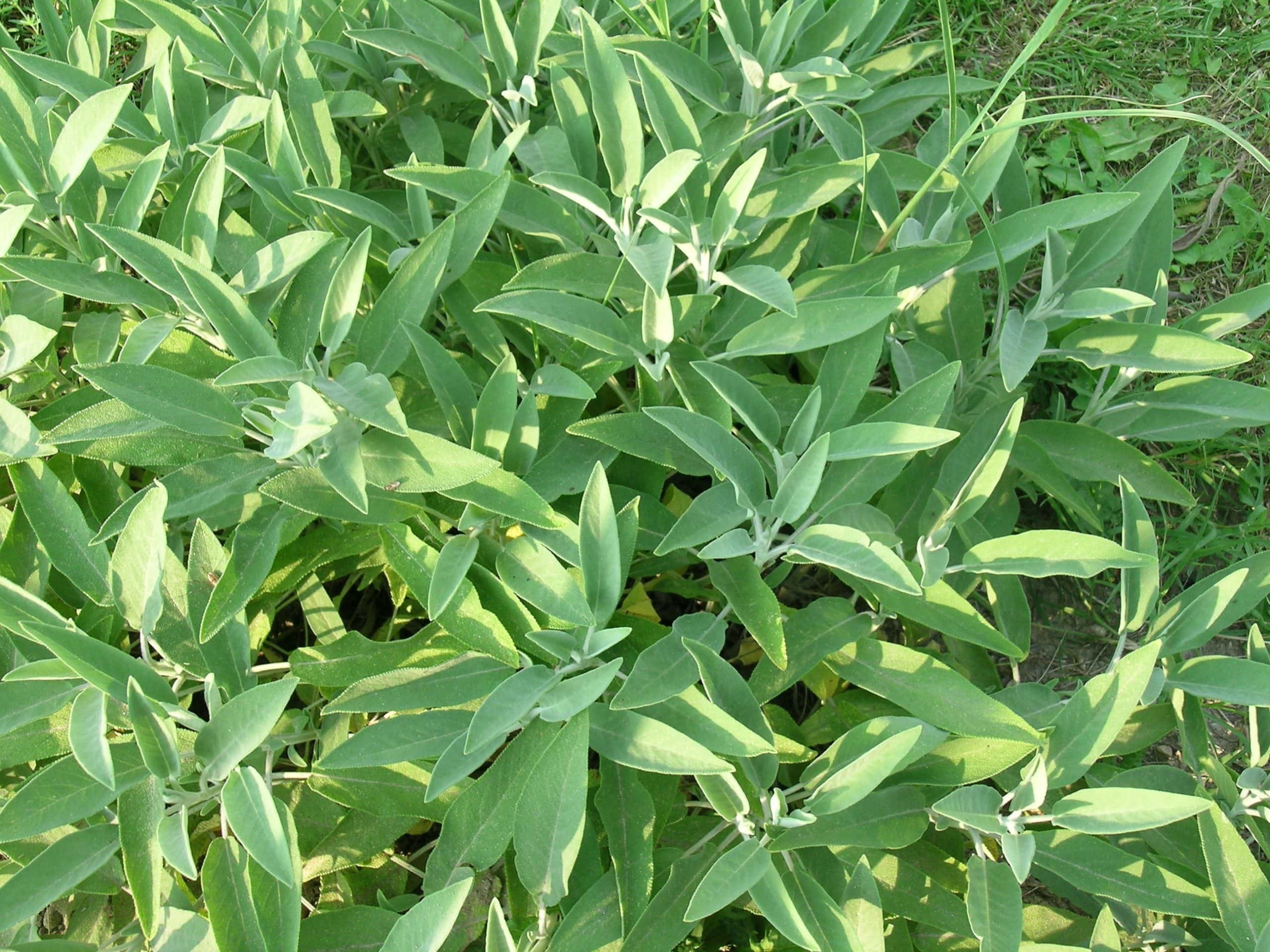
Sage
Image Credit: JumpStory

Feeding Sage to Dogs

Though some herbs cause digestive upset in dogs, sage is generally considered safe. There is no available information on how much is appropriate for dogs and whether it could have added benefits or risks. It’s important to serve only in moderation—if at all.

Sage does contain thujone, a chemical compound that can be toxic in extremely high doses. While it’s unlikely you could feed enough sage to hit these toxicity levels, err on the side of caution, especially in small dogs.

Always consider your dog’s size. Feeding small quantities of fresh or dried sage may be fine for large dogs, but it’s easy to go overboard with a toy breed. Speak to your vet about sage for your pooch, and how much may be appropriate and safe.

Also, keep in mind that what’s appealing to humans may not be to dogs. They have different dietary needs, despite evolving alongside us and eating a lot of the same proteins. Too much of a pungent herb like sage could make your dog’s food unappetizing, leading to other problems.

Finally, always monitor for adverse effects. Even small amounts could cause digestive upset in some dogs.

If you have any doubts, be sure to consult with your veterinarian to determine if sage is safe for your individual dog.

Conclusion

Sage is one of the few herbs that’s non-toxic and safe for dogs in small amounts. It should still be used in moderation and according to your vet’s advice. Going overboard with sage or other herbs can lead to signs of an upset stomach or toxicity, outweighing any potential minor health benefits for your dog. You should always discuss any supplements or dietary changes with your vet to ensure they’re safe.

Sources

Get Hepper In Your Inbox

Pet care tips from our vets and experts, straight to your inbox.

List

Select all that apply.

You may opt-out at any time. View our Privacy Policy for more information.

Nicole Cosgrove
Authored by

Nicole Cosgrove

Join the conversation

Ask a question, share your story, or send private feedback.
Rate this post
Required to post. Only our editors see your rating.
Who should see this?

A human reviews every comment before it appears. Your email is never published.

Picked to go with this article

Rosemary for Dogs: Our Vet Explains The Safety, Potential Uses & Efficacy

Rosemary for Dogs: Our Vet Explains The Safety, Potential Uses & Efficacy

You've got a lovely pot of rosemary in your back garden that your dog loves to sniff. You might even consider adding it to treats that you're making for your p…

Dr. Samantha Devine
By Dr. Samantha Devine ·
Can Dogs Eat Oregano? Vet-Approved Health Facts & FAQ

Can Dogs Eat Oregano? Vet-Approved Health Facts & FAQ

Herbs and spices are an essential part of the culinary arts, with the power to enhance the flavor and aroma of our favorite dishes. Our food would be bland if…

Jana Blagojevic
By Jana Blagojevic ·
12 Herbs That Are Safe for Dogs (What You Need To Know)

12 Herbs That Are Safe for Dogs (What You Need To Know)

Many herbs have a positive effect on humans, and they can help with various health problems and conditions. But do our furry friends benefit from those herbs a…

Visnja Radosavljevic
By Visnja Radosavljevic ·
Can Dogs Eat Rosemary? Nutrition Facts & Suggestions

Can Dogs Eat Rosemary? Nutrition Facts & Suggestions

Most people use rosemary to add flavor to their foods and teas. However, since our dog always wants a piece of what we are having, thoughtful pet owners often…

Nicole Cosgrove
By Nicole Cosgrove ·

Keep reading

More stories you might like

Can Dogs Eat Basil? Vet-Verified Nutrition Facts, Tips & Alternatives

If you enjoy cooking at home, you’re probably familiar with basil, a fragrant and versatile herb used in many Italian and Asian recipes. Dog owners might wonde…

Elizabeth Gray
By Elizabeth Gray ·
Can Dogs Eat Basil? Vet-Verified Nutrition Facts, Tips & Alternatives

Can Dogs Eat Dill? Vet-Approved Facts & Safety Guide

We know dill best as a spice and herb that flavors some of our favorite dishes. But have you ever wondered if giving dill to your dog is okay? Dill is not toxi…

Kathryn Copeland
By Kathryn Copeland ·
Can Dogs Eat Dill? Vet-Approved Facts & Safety Guide

Are Essential Oils Safe for Dogs to Take? Vet Verified Facts & Info

Essential oils serve a variety of purposes, from supporting relaxation to reducing inflammation. If you’ve experienced benefits from essential oils, then you’v…

Brooke Billingsley
By Brooke Billingsley ·
Are Essential Oils Safe for Dogs to Take? Vet Verified Facts & Info

Can Dogs Eat Bay Leaves? Vet-Reviewed Risks & FAQ

Bay leaves are used as herbs and can be purchased whole or in powder form. They’re a wonderful contribution to many cooked meals because they add flavor and ar…

Keri-Beth Clur
By Keri-Beth Clur ·
Can Dogs Eat Bay Leaves? Vet-Reviewed Risks & FAQ

Can Dogs Eat Cilantro? Vet-Verified Nutrition Facts & Safety Guide

It is a normal occurrence in most pet households to want to feed your dog a treat or let them sample a bit of our food. Unless they are on a specific prescript…

Annaliese Morgan
By Annaliese Morgan ·
Can Dogs Eat Cilantro? Vet-Verified Nutrition Facts & Safety Guide

Can Dogs Eat Marjoram? Vet Approved Facts & FAQ

Marjoram is a perennial herb with several culinary uses and health benefits for humans. This aromatic herb is a popular addition to certain soups and sauces an…

Sarah Psaradelis
By Sarah Psaradelis ·
Can Dogs Eat Marjoram? Vet Approved Facts & FAQ

Can Dogs Eat Cumin? Vet-Approved Nutritional Info

Cumin is a popular spice that can be found in many pantries and kitchens. It is in many healthy recipes and natural home remedies and is famous for its health…

Nicole Cosgrove
By Nicole Cosgrove ·
Can Dogs Eat Cumin? Vet-Approved Nutritional Info

Can Dogs Eat Ginger? Vet-Reviewed Potential Benefits & Contraindications

Ginger has been used in Indian and Chinese medicine for thousands of years and today is revered far and wide for its multitude of health benefits. So, we know…

Kit Copson
By Kit Copson ·
Can Dogs Eat Ginger? Vet-Reviewed Potential Benefits & Contraindications