Hepper is reader-supported. When you buy via links on our site, we may earn an affiliate commission at no cost to you. Learn more.
12 Herbs That Are Safe for Dogs (What You Need To Know)

Many herbs have a positive effect on humans, and they can help with various health problems and conditions. But do our furry friends benefit from those herbs as well? While some herbs can be toxic to your dog and cause discomfort, plenty of herbs are safe for your dog.
This article will provide you with 12 herbs that are safe for dogs, along with their benefits and disadvantages. Read on to learn which herbs can help your dog to calm its anxiety, improve its overall health, calm its gastrointestinal system, and help with other problems your dog may experience.

The 12 Herbs That Are Safe for Dogs
1. Aloe Vera

Aloe vera is a succulent, perennial plant with many health benefits.1 It helps with healing wounds both in humans and in dogs because it has antibacterial properties. While there are some aloe vera species humans can eat, dogs have a different way of using this plant for their health.
You can apply an aloe vera gel to your dog topically to treat scratches, burns, or skin irritations. However, you should never allow your dog to lick aloe vera; if your dog ingests large amounts of aloe vera, it could cause toxicity and gastrointestinal problems.
Pros
- Antibacterial properties
- Treats wounds, scratches, burns, and skin irritations
Cons
- Not safe to eat
2. Anise

Anise is a spice plant that belongs to the same family as parsley and celery.2 People use either whole or ground anise seeds due to their flavor, which resembles licorice. Anise seeds are also safe for your dog as they have numerous health benefits when consumed in moderation.
Anise helps dogs relieve digestive and respiratory issues, increases the energy levels in your dog, and you can use it to make homemade treats. You can give the seeds to your dog, but avoid other products, such as anise essential oils because they can be harmful.
Also, don’t go overboard with the number of anise seeds you give to your dog. Ingesting too much anise can cause an upset stomach.
Pros
- Helps relieve digestive issues (nausea, gas, etc.)
- Helps with respiratory issues (coughing, congestion)
- Increases energy
- Antioxidant
Cons
- Upsets the stomach when used in large amounts
- Anise essential oil is not safe to use
3. Chamomile
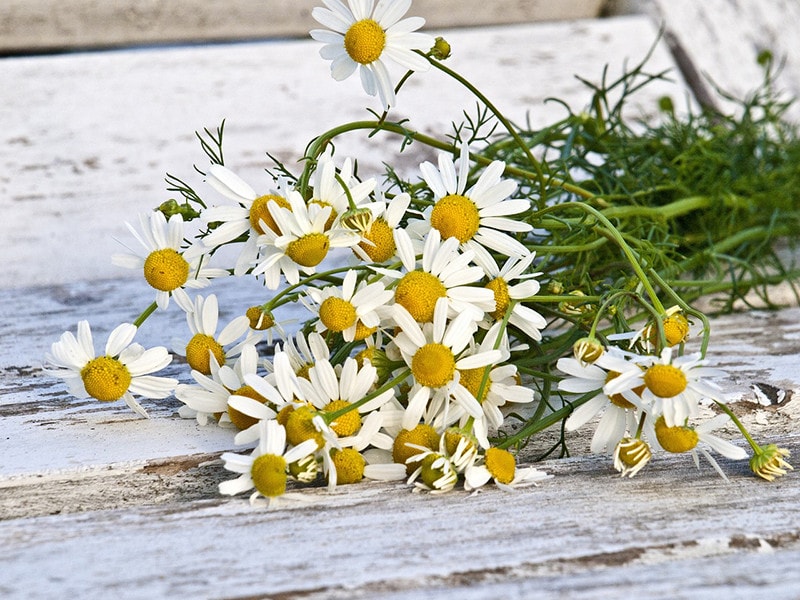
Chamomile is another herb that is safe for your furry friends.3 It's frequently used as a type of tranquilizer because it relaxes your dog’s muscles and calms anxiety. It has anti-inflammatory properties and helps with skin issues in canines.
You can give chamomile to your dog in the form of powder, liquid, or capsule if giving it orally, or you can use chamomile gels and creams when using it topically. However, be aware that some dogs are sensitive to chamomile and could develop allergic reactions.
Also, your dog shouldn’t consume chamomile in large amounts and for long periods.
Pros
- Calms anxiety in dogs
- Relaxes muscles
- Has anti-inflammatory properties
- Helps with inflammatory skin issues
Cons
- Ingestion for long periods and in large amounts is not recommended
- Causes allergic reactions in dogs sensitive to chamomile
4. Basil

Basil is non-toxic for dogs if given in moderation, and since it has multiple beneficial properties, it’s a great herb to give to your pet. You can give your dog fresh or dried basil inside of its food, although you should avoid using large quantities of basil.
This herb has anti-inflammatory properties, and it acts as an antioxidant. It provides multiple vitamins and minerals to your dog while calming anxiety.
However, some dogs are allergic to basil and could develop gastrointestinal problems if they consume basil in large amounts.
Pros
- Anti-inflammatory
- Antioxidant
- Provides calming effects on dogs with anxiety
- Contains minerals and vitamins
Cons
- Ingestion of large amounts can cause gastrointestinal problems
- Some dogs are allergic to basil
5. Cinnamon

Cinnamon is safe for dogs, and as it has a lot of benefits for your dog’s health, it’s a great herb to incorporate into your dog’s diet. This herb has anti-inflammatory and antibacterial properties, and it helps regulate your dog’s blood sugar.
Although cinnamon is beneficial for dogs, they should never consume cinnamon in large amounts because that can lead to stomach issues, such as vomiting and diarrhea. Also, small-breed dogs and puppies may be more sensitive to cinnamon, so it may be best to use other herbs for them.
Pros
- Anti-inflammatory
- Antibacterial
- Helps regulate your dog’s blood sugar
Cons
- Harmful when inhaled
- Not suitable for small-breed dogs and puppies
- Ingestion of large amounts can cause stomach issues
6. Cilantro
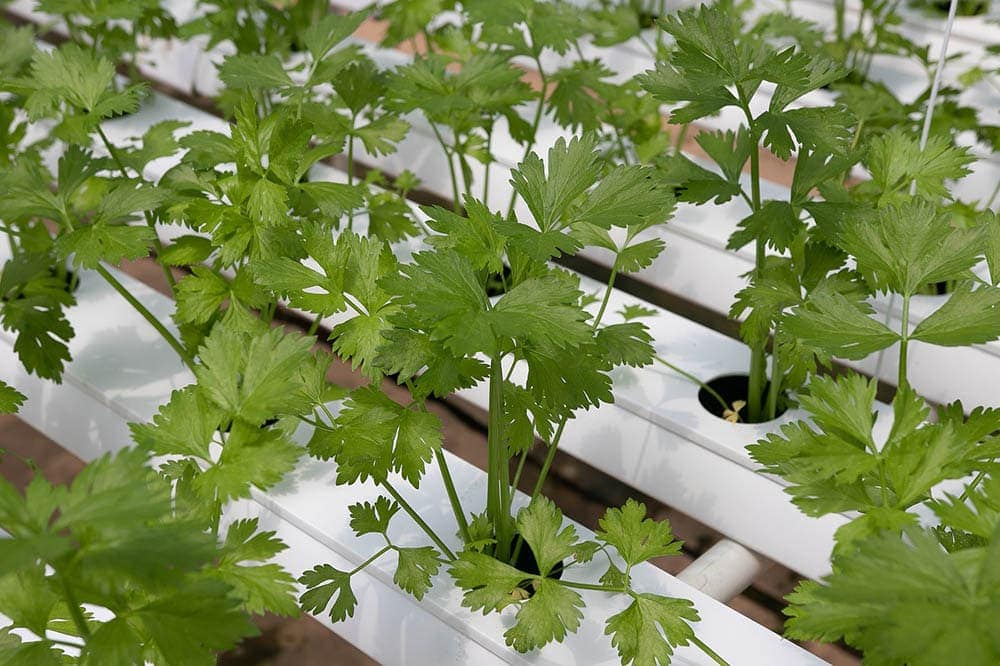
Cilantro is a great herb you can give to your dog because it has excellent health benefits. It contains plenty of vitamins and minerals and has antifungal and antimicrobial properties. Cilantro can also improve your dog’s breath, calm its upset stomach, and help with digestive issues.
Like with most other dog-safe herbs, you should provide cilantro to your dog in moderation. Some dogs can be allergic to cilantro, and consumption in large amounts could cause nausea, diarrhea, and vomiting.
Pros
- Plenty of vitamins and minerals
- Improves your dog’s breath
- Antifungal and antimicrobial properties
- Helps with digestive issues
- Can calm an upset dog's stomach
Cons
- Some dogs are allergic to cilantro
- Ingestion of large amounts can cause diarrhea, vomiting, and nausea
7. Dill
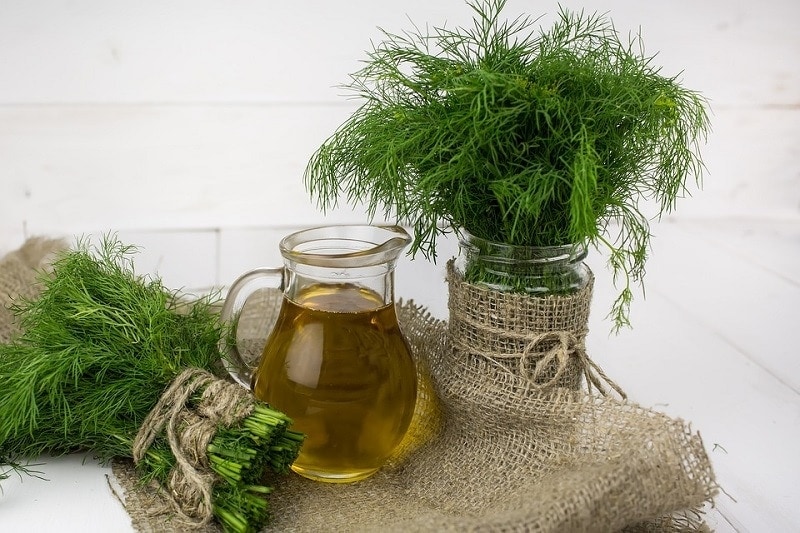
Dill is another herb that’s entirely safe for your canine. While dogs typically can’t consume large amounts of most herbs, they can eat dill without developing any problems. However, some dogs can be sensitive to dill if they’ve never tried this herb before.
You can give your dog dill if it suffers from gastrointestinal issues, constipation, or bad breath because this herb helps with these issues.
Pros
- Helps calm a dog’s gastrointestinal tract
- Helps with constipation
- Improves your dog’s breath
Cons
- Some dogs may be sensitive to this herb
8. Sage
I'm going to make some tea I can chill.
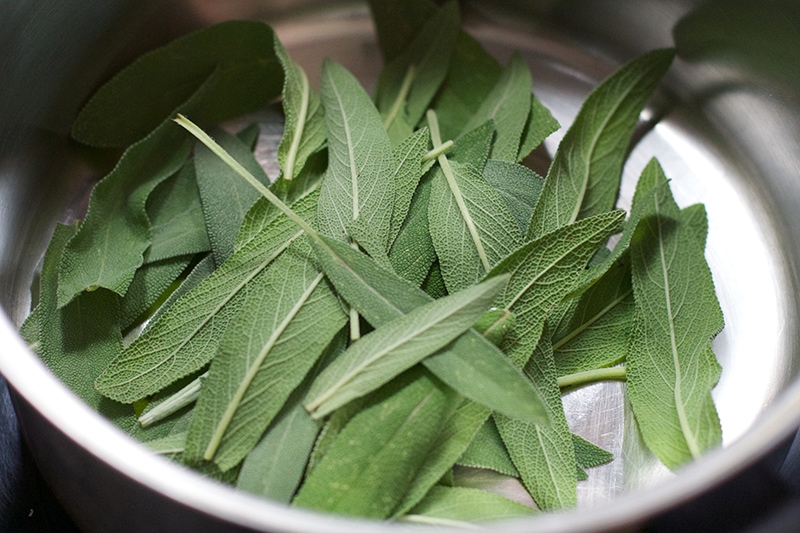
When looking for a non-toxic herb that’s safe for your dog, consider sage. Sage is full of vitamins and minerals and helps with dogs' gastrointestinal issues. It also has anti-inflammatory and antimicrobial properties while acting as an antioxidant.
Although sage is healthy for your dog, never provide it in large amounts because too much ingestion of sage could cause health problems.
Pros
- Full of vitamins and minerals
- Antioxidant
- Antimicrobial
- Anti-inflammatory
- Helps with gastrointestinal issues
Cons
- Ingestion of large amounts can cause problems
9. Curly Parsley
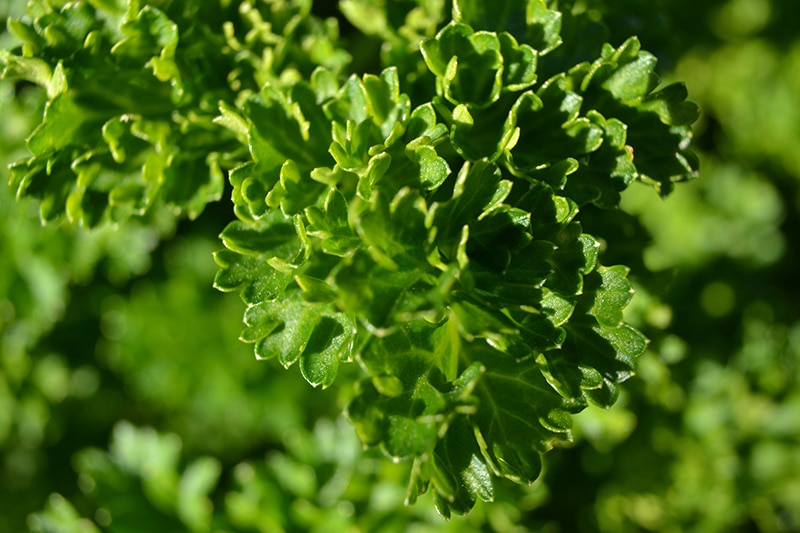
Parsley is also a good herb safe for your dog, although you must ensure you provide only curly parsley to your canine. Other varieties of parsley, such as spring parsley, are toxic to dogs. Also, even when providing curly parsley, do it in moderation to prevent health problems.
When given in moderation, curly parsley can have numerous benefits for your dog; it’s full of minerals and vitamins, acts as an antioxidant, and freshens your dog’s breath.
Pros
- Antioxidant
- Contains plenty of vitamins
- Freshens your dog’s breath
- Only curly parsley is safe for dogs
Cons
- Large amounts of parsley are toxic
- Spring parsley is toxic to dogs
10. Oregano
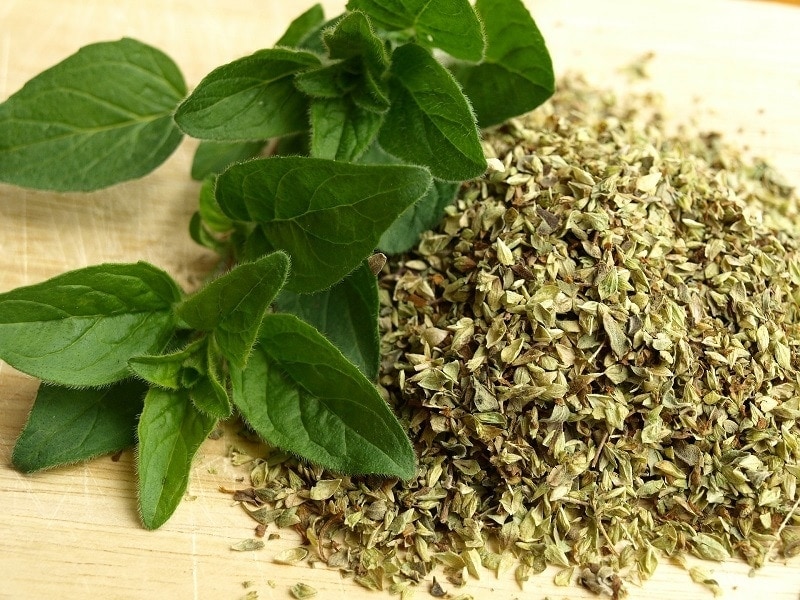
Oregano is another herb safe for your pup, so you can include it in your dog’s diet, although in moderation. It has numerous benefits because it has anti-inflammatory, antifungal, and antimicrobial properties. It also contains vitamins and minerals, and helps with gastrointestinal and respiratory issues in dogs.
However, your dog shouldn’t consume oregano in large amounts because that could lead to oregano toxicity. Also, never use oregano oil in your dog’s nutrition because it can be too strong and cause tummy issues.
Pros
- Anti-inflammatory
- Helps with respiratory issues
- Helps with gastrointestinal issues
- Antifungal
- Antimicrobial
- Contains plenty of vitamins and minerals
Cons
- Oregano oil is too strong for dogs
- Large servings of oregano can be toxic
11. Ginger

Ginger is an excellent ally for helping a dog suffering from gastrointestinal issues such as nausea and vomiting. It has been used as a medical herb for centuries because it has anti-inflammatory properties and promotes blood circulation. You can use it either as a tincture or a tea you’ll provide to your pup, but always consult your vet before adding it to your canine’s diet.
Like with most other medicinal herbs, you shouldn’t give large amounts of ginger to your dog because that could lead to nausea, gas, and heartburn. Also, don’t use ginger if your dog is pregnant or nursing because the herb could cause tummy problems.
Pros
- Helps with IBD
- Relieves nausea and vomiting
- Anti-inflammatory
- Promotes blood circulation
Cons
- Ingestion of large amounts can cause nausea, gas, and heartburn
- Not suitable for pregnant and nursing dogs
12. Turmeric

Turmeric is a well-known medicinal herb that’s safe for canines. It’s a powerful antioxidant with anti-inflammatory, antifungal, and antimicrobial properties. Turmeric also protects your dog’s stomach and liver and helps relieve joint pain.
When giving turmeric to your dog, consult your vet about the appropriate amount. Large amounts of turmeric could cause stomach issues, dizziness, and constipation in your pup. Also, turmeric is unsuitable if your dog suffers from kidney problems.
Pros
- Anti-inflammatory
- Antifungal
- Antimicrobial
- Protects stomach and liver
- Helps with joint pain
Cons
- Large amounts can cause stomach issues, dizziness, and constipation
- Not suitable for dogs prone to kidney issues
Conclusion
There are a bunch of different herbs that are safe for your dog and can help with various doggy problems and conditions if taken in moderation. Before giving any herb to your pet, ensure that it’s non-toxic and that it will have positive effects on your furry friend.
Sources
Featured Image Credit: Jumpstory
Get Hepper In Your Inbox


Pet care tips from our vets and experts, straight to your inbox.
You may opt-out at any time. View our Privacy Policy for more information.

Visnja is a content writer that covers various topics such as DIY, pets, home improvement, travel, gardening, and more.
She is a young mom and a college student, who didn’t have enough time to balance her personal and work life, so after multiple years of working a regular 9 to 5 job, she decided to pursue her passion and make a living out of it. She has been writing for a couple of years, helping people find valuable and interesting information online.
Join the conversation
Ask a question, share your story, or send private feedback.