Hepper is reader-supported. When you buy via links on our site, we may earn an affiliate commission at no cost to you. Learn more.
Do Turtles Bite People? What to Do if It Happens
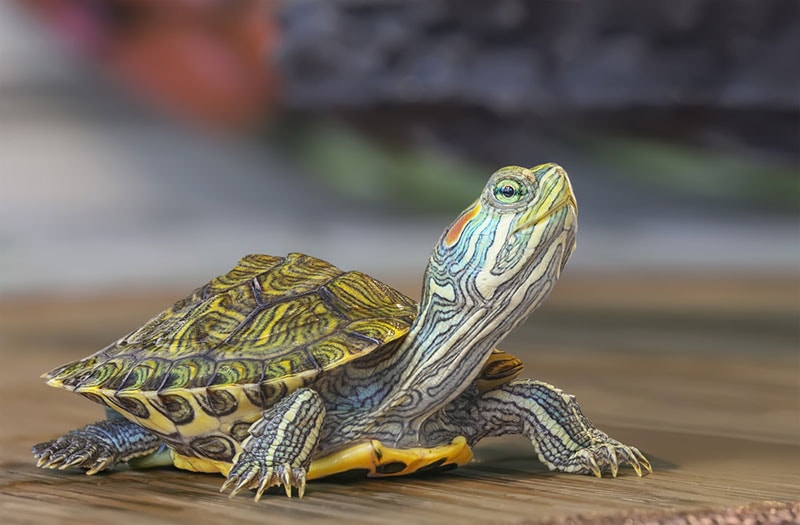
Many people keep exotic pets, perhaps because they’re unusual, even if they aren’t cuddly like a dog or cat. Roughly 6 million American households include at least one reptile, a group that has turtles among its ranks. Unlike many domesticated species, individuals don’t handle many of these animals for various reasons. The porous skin of amphibians makes holding them unadvisable. Some reptiles even bite, and turtles are on that list.

The Good
The good news is that, unlike some snakes, turtles aren’t venomous.1 The chances are you won’t have the same dire medical emergency with one of them as you would a coral snake or scorpion. Many people choose turtles and tortoises as pets because they are docile. After all, they don’t move fast, so they don’t pose the same kind of threat as faster animals that can strike quickly.
Most turtles are captive-bred, so they’re used to people and being handled by them. Many states, like Louisiana, prohibit listed species.
The Bad
Most animals, whether pets or wild species, avoid conflict and confrontations instinctively. It’s a product of survival and evolution. It’s less costly to prevent a fight when the stakes are high if you’re on the losing end. That’s why many animals behave in specific ways to avoid a meeting where it may come to blows.
Think of the howling of wolves, the scratching of felines, and the scent-marking of many species. Most turtles operate under the same instincts. They won’t bite a person unless provoked. Of course, the costs are higher at that point, especially for an animal unfamiliar with humans. Some species, like the common snapping turtle, are more likely to strike if on land as opposed to in the water. They are more vulnerable when out of their element.
The Ugly
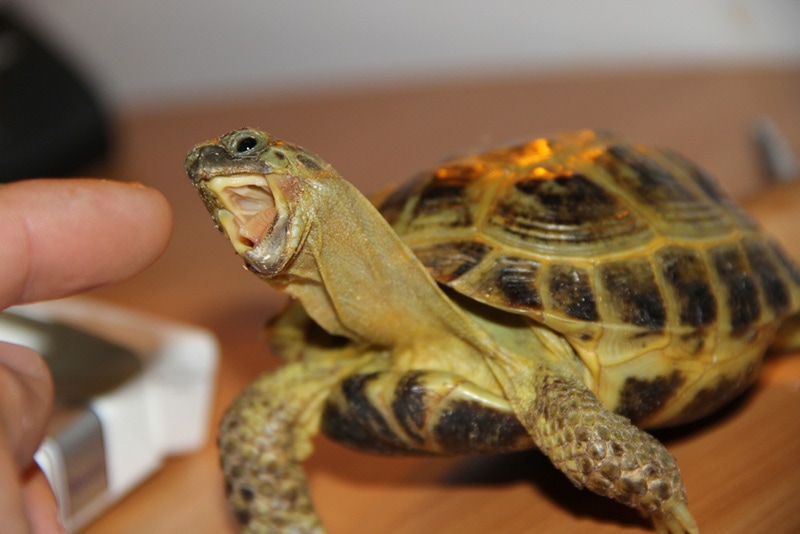
Some species are inherently aggressive, such as many softshell turtles. That makes sense since their carapaces or upper shells are their primary defense against predators. These reptiles are able to swing their heads back to clamp down on would-be aggressors. Their ability to bite is their backup defense against predation. That’s something to remember if you have one of these species as a pet.
Other turtles are particularly dangerous because of the diseases they carry. One of the most common is Salmonella. That’s why the small turtles you may have had as a kid are currently banned. You should wash your hands after handling these animals. However, it’s also a cautionary tale if you get bit by an aquatic turtle in the wild. The water in which they live might be laden with bacteria.
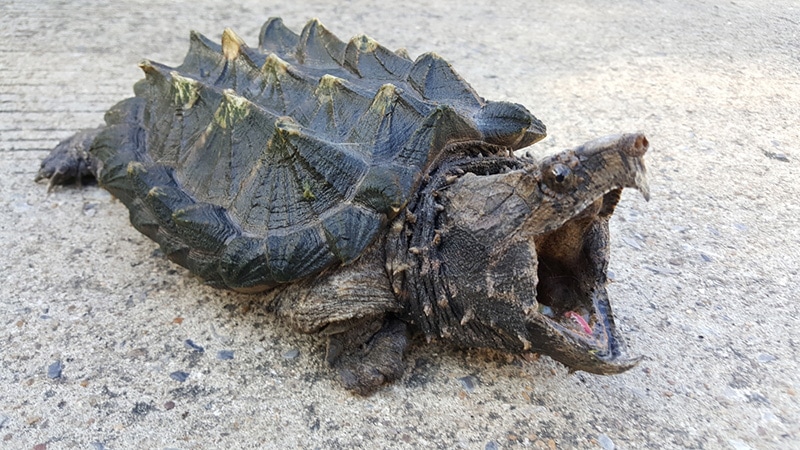
Many myths and folklore exist about the common snapping turtle and the alligator snapping turtle. Their species' names tell part of the story. These species have a powerful force behind their bite. One verified account details an amputation of a finger by the alligator snapping turtle. The fact remains that it can happen and is reason enough to use proper caution when in waters inhabited by turtles.
What to Do if You Get Bit
Not all turtles will bite hard enough to break the skin. Instead, they’ll leave a nasty bruise. However, you should treat an injury, regardless of whether or not it drew blood. Clean it thoroughly and cover it with a bandage. If the bite breaks the skin, we recommend seeing a doctor because of the risk of Salmonella. Getting injured by an aquatic animal may warrant a course of antibiotics to prevent an infection.
Final Thoughts
Turtles do not usually bite. However, that does not mean they aren’t capable of causing injury to humans. They can also set the stage for a potentially serious infection. We recommend erring on the side of caution and treating any animal bite aggressively. Sometimes, the complications are worse than the injury. We also suggest leaving wild turtles alone. Don’t provoke an animal that usually avoids conflict.
Sources
Featured Image Credit By: Miiko, Shutterstock
Get Hepper In Your Inbox


Pet care tips from our vets and experts, straight to your inbox.
You may opt-out at any time. View our Privacy Policy for more information.

Chris is an experienced pet writer specializing in science topics, with a particular passion for health and the environment. She has been a writer for over 15 years and lives with her husband and three cats in Michigan.
Beyond writing about cats and dogs, Chris loves to learn about wine. She has WSET 1 and 2 certifications and is currently pursuing her Certified Wine Specialist Award (CSW).
Join the conversation
Ask a question, share your story, or send private feedback.