Hepper blog

Search our database of over 9,984 posts with up-to-date information from our experts and veterinarians.

Hepper is reader-supported. When you buy via links on our site, we may earn an affiliate commission at no cost to you. Learn more.

Can You Microwave Dog Food? Vet-Approved Cooking Guide

By Jessica Rossetti · Reviewed & fact-checked by Dr. Marta Vidal-AbarcaVet Approved
Dr. Marta Vidal-Abarca
Reviewed & Fact-Checked byDr. Marta Vidal-AbarcaVeterinarian
Marta has been a veterinarian for over sixteen years working across the UK and Spain and as a remote veterinary consultant. She has wide experience in small animal internal medicine and surgery with a soft spot for cats.View authorThe information is current and up-to-date in accordance with the latest veterinarian research. Read about our vets
Share
Ask us a question in the comments
Man using microwave to heat dog food

Let’s say that you have half a can of dog food left after your dog’s dinner. This half will be your dog’s breakfast, but it has to be stored in the refrigerator until then. While humans can take leftovers out of the fridge and warm them up in the microwave, can the same be done for your dog’s food?

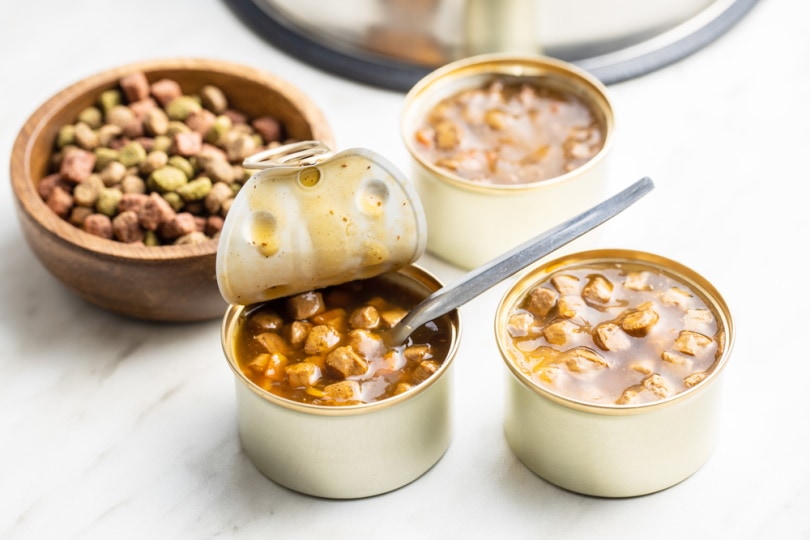
The answer is yes! Most canned foods can be warmed in the microwave, but it is not advised to heat raw food the same way. Microwaving raw food will cook it, and it won’t be raw anymore, ruining the desired benefits of feeding this type of diet to your dog in the first place.

Today, we look at how to microwave your dog’s food properly.

Why Should I Microwave My Dog’s Food?

Some dogs just prefer a warm meal. Many people like their food warmed and dogs are no different. If the food isn’t warm, it should at least be at room temperature. This enables your dog to smell and taste it the way that it was meant to be.¹ If the food is too cold, it won’t smell the same and may not entice your dog. Heating it is one way to keep your dog interested in it.

Elderly or blind dogs may need to rely on their sense of smell to find their food dish. Warm food will offer more of a scent to attract them. Some dog owners believe that wild dogs would kill and eat their prey while it was still warm, so warm food makes sense to provide to domestic dogs.
woman heating food in the microwave
Image Credit: Andrey_Popov. Shutterstock

How Do I Microwave My Dog’s Food?

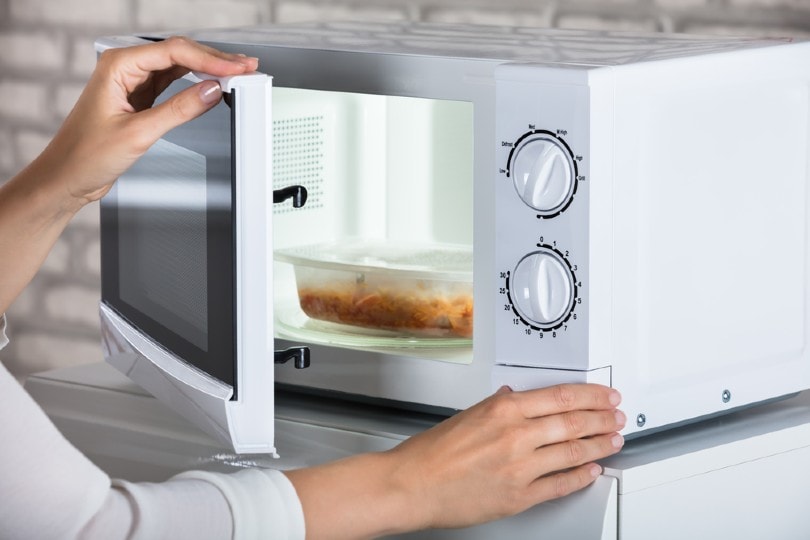
First, never microwave the food while it's in the can. Metal cannot go in the microwave, so transfer the food from the can to a microwave-safe dish first. You may want to cover this dish so the food doesn’t splatter.

Microwave the food at medium power in 10–20-second intervals until it reaches your desired temperature. Food between 93°F and 102°F is ideal.

Remember to mix the food. Microwaving can cause hot spots. One portion may feel cool while a blistering pocket is waiting underneath it. Stir the food until it’s warm and there are no hot spots that could burn your dog’s mouth.

Alternatives to Microwaving

If you don’t have a microwave or don’t want to microwave your dog’s food, there are a few alternatives.

Heat—but don’t boil—a pot of water on the stove, and empty your dog’s food into a sealed, plastic bag. Let the bag soak in the hot water until it’s warmed through. You can also use a double boiler for this if you have one.

Hot homemade broth or water can be mixed into the cold food until it warms it enough to be palatable. You can also microwave the liquid to warm it before stirring it in.

It's not a good idea to leave the food out of the fridge to warm up naturally until it reaches room temperature. This can take too long depending on the amount of food, your fridge settings, and the environmental temperature, and it will likely enable bacteria to grow on the food. To avoid making your dog sick, don’t leave their food out for longer than 2 hours.

French bulldog eating from bowl
Image Credit: Gryllus M, Shutterstock

Final Thoughts

Microwaving your dog’s canned food after it’s been in the fridge is a good way to entice them to eat by increasing the food’s flavor and scent. Cold food may not offer the same aroma, and dogs may not want to eat it.

If you choose to microwave your dog’s food, remember to stir it well before serving to eliminate any hot spots that could burn them. You can also use an alternative if you’d rather not use a microwave to warm the food. Microwaving raw food is not recommended because it can destroy the nutrients in it.


Featured Image Credit: Zen Chung, Pexels

Get Hepper In Your Inbox

Pet care tips from our vets and experts, straight to your inbox.

List

Select all that apply.

You may opt-out at any time. View our Privacy Policy for more information.

Jessica Rossetti
Authored by

Jessica Rossetti

Join the conversation

Ask a question, share your story, or send private feedback.
Rate this post
Required to post. Only our editors see your rating.
Who should see this?

A human reviews every comment before it appears. Your email is never published.

Picked to go with this article

Can I Warm Up Dog Food? Vet-Verified Facts & Advice

Can I Warm Up Dog Food? Vet-Verified Facts & Advice

Everybody can appreciate a warm meal from time to time, especially when it’s cold outside. Have you ever wondered if your dog might also appreciate their meal…

Brooke Billingsley
By Brooke Billingsley ·
Should Canned Dog Food Be Refrigerated? What You Need to Know

Should Canned Dog Food Be Refrigerated? What You Need to Know

Choosing the right dog food can be a daunting task, but it's important to do your research in order to choose the best food for your pup. Some of the most popu…

Nicole Cosgrove
By Nicole Cosgrove ·
How Long Can Wet Dog Food Sit Out? Surprising Vet-Reviewed Facts

How Long Can Wet Dog Food Sit Out? Surprising Vet-Reviewed Facts

There are many ways to feed your dog. While the vast majority of people simply purchase a commercial dry kibble to feed their pooch, others opt to cook everyth…

Dean Eby
By Dean Eby ·
How to Store Wet Dog Food - 5 Great Storage Ideas

How to Store Wet Dog Food - 5 Great Storage Ideas

Many dog owners are choosing to feed their dogs wet food; however, the most difficult part of transitioning a dog from dry dog food to wet dog food is that wet…

Sarah Psaradelis
By Sarah Psaradelis ·

Keep reading

More stories you might like

Can Dogs Eat Canned Chicken? Vet-Reviewed Facts & FAQ

Chicken is by far one of the most popular meats used in dog diets today. This white meat is used as the main staple meat ingredient not only for the flavor of…

Annaliese Morgan
By Annaliese Morgan ·
Can Dogs Eat Canned Chicken? Vet-Reviewed Facts & FAQ

How to Tell If Wet Dog Food Is Bad: 7 Vet-Verified Signs

Dog owners must be vigilant with feeding their dogs wet food because wet dog food has a shorter shelf life than dry dog food and is more susceptible to going b…

Jessica Kim
By Jessica Kim ·
How to Tell If Wet Dog Food Is Bad: 7 Vet-Verified Signs

How to Cook Eggs for Dogs: 3 Vet-Approved Recipes & Safety Guide

Many people love having eggs as part of their breakfast (or lunch or dinner). Eggs are delicious and nutritious, so they’re a great addition to any meal. But c…

Misty Layne
By Misty Layne ·
How to Cook Eggs for Dogs: 3 Vet-Approved Recipes & Safety Guide

Can You Mix Dry & Wet Dog Food? Vet-Approved Tips & Recommendations

We all want what is best for our dogs, which means feeding them the right food. Sounds easy, right? Unfortunately, there is a lot of confusion regarding what i…

Nicole Cosgrove
By Nicole Cosgrove ·
Can You Mix Dry & Wet Dog Food? Vet-Approved Tips & Recommendations

Raw vs. Cooked Dog Food: Vet-Reviewed Main Differences, Pros & Cons

In 1993, Australian veterinarian Ian Billinghurst1 wrote a book promoting raw food for pets. Raw feeding then became a trend that has recently seen a resurgenc…

Genevieve Dugal
By Genevieve Dugal ·
Raw vs. Cooked Dog Food: Vet-Reviewed Main Differences, Pros & Cons

How Much Wet Food Do I Feed My Dog? Vet-Approved Feeding Chart

Many dogs do best on wet food. If your canine is picky, the moisture and smell of wet food may encourage them to eat more. Plus, wet food is usually tastier. T…

Kristin Hitchcock
By Kristin Hitchcock ·
How Much Wet Food Do I Feed My Dog? Vet-Approved Feeding Chart

How to Boil Chicken for Dogs: 7 Vet Approved Steps

Boiling is one of the safest ways to prepare chicken for your dog. It’s quick, easy, and nutritious (as long as you don’t add extra seasonings!). There are cer…

Nicole Cosgrove
By Nicole Cosgrove ·
How to Boil Chicken for Dogs: 7 Vet Approved Steps

Can Fresh Pet Food Be Frozen? Vet Reviewed Facts to Consider

Fresh pet food is all the rage these days! Many people are becoming more conscientious about what they feed their pets, and fresh pet food is an excellent alte…

Kathryn Copeland
By Kathryn Copeland ·
Can Fresh Pet Food Be Frozen? Vet Reviewed Facts to Consider