Hepper is reader-supported. When you buy via links on our site, we may earn an affiliate commission at no cost to you. Learn more.
Do Rabbits Have Long Tails? Rabbit Anatomy Explained



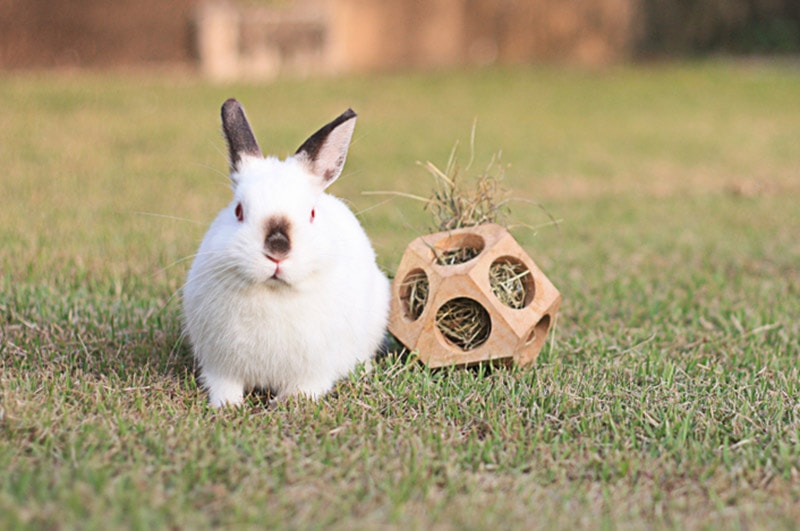
Humans have used rabbits for meat and fur for centuries, but they’ve also been popular companion animals since the Victorian Era. Most domestic rabbits are related to the European Rabbit, and over 300 distinct domestic breeds have been developed over the years. The more than 300 species of domestic bunnies come in a wide range of colors, coat lengths, and sizes. But do domestic rabbits have long tails? No, the average rabbit tail is around 2 inches long, although larger bunnies often have slightly longer tails.

Rabbit Anatomy Basics
While domestic rabbits range in size from the tiny Netherlands Dwarf to the sizable Flemish Giant, most share certain anatomical features. The smallest rabbits weigh around 2.5 pounds, and the largest can reach over 20 pounds. The average domestic rabbit weighs around 6 pounds, and most live for 8 to 12 years.

Rabbit Skeletons and Tails
Rabbits have close to 220 bones in their bodies, around 46 of which are in the spine. Rabbit tails typically include 16 vertebrae. Rabbit tails often curl under, making them appear shorter and more compact than they really are. Bunnies require gentle handling in part because their skeletons are so light and fragile.
Cats and dogs have skeletal structures that make up a greater percentage of their body weight than what you commonly see in rabbits. Rabbits’ short tails provide them with evolutionary advantages in evading predators by giving predators something more challenging to grab on to!. The white underside of rabbits’ tails also play a role in misdirecting animals giving chase. Rabbits also use their tails for communication and they are an important part of body language.
Rabbit Ears
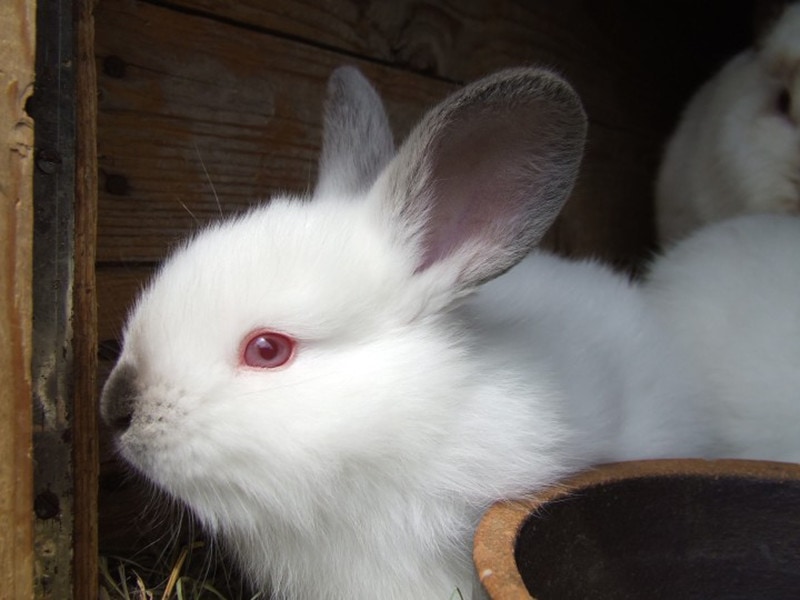
Rabbits can hear from 360 Hz to 42,000 Hz. Humans can hear far fewer frequencies, generally from 64 Hz to 23,000 Hz. Their long, outer ears are technically called pinnae, and they help direct sound waves toward rabbits’ inner ears. Some rabbits have ears that stand up, and others have lop or floppy ones.
Rabbits with ears that stand up can move their pinnae 270 degrees, and they can also move each ear independently, allowing them to pick up on multiple sounds simultaneously.
Rabbits regulate their temperatures largely through their ears, moving blood into their ears to cool off. Animals native to cooler climates often have smaller ears to limit heat loss. Their ears flop when they’re particularly relaxed or when rabbits are trying to cool off.
However, pets with naturally floppy ears sometimes have trouble hearing, as their ear canals are often narrow and kinked, making it more difficult for sound waves to reach their inner ears. They also frequently have problems with ear wax accumulation and ear infections.

Rabbit Eyes
Rabbits’ eyes sit on the sides of their heads. Bunnies can see almost 360º, even above their heads! However, most have a blind spot right in front of their noses. Rabbits with floppy ears, however, can’t see behind themselves; their ears block the view. This reduced field of vision is one of the reasons lop-eared rabbits are not in the wild.
Rabbits can sleep with their eyes open, and many only close their eyes to snooze when feeling particularly safe and comfortable. By sleeping with their eyes open, rabbits can detect motion through changes picked up by light receptors in their eyes and spring into action to avoid approaching predators.
Rabbits don’t have to blink that often—10 to 12 times per hour is about average. They have thin, transparent membranes that cover their eyes to provide hydration and protection from dirt and debris. They’re often referred to as third eyelids.
Bunnies can only see a limited range of green and blue colors. They don’t have the receptors to pick up on reds. Most don’t have great night vision, as they lack reflective tapetum seen in crepuscular predators such as cats. But they generally see pretty well in low-light situations.
Rabbit Noses
Bunnies have super-powerful noses. They often wiggle their noses when attempting to check out interesting smells, and the action stimulates their scent receptors. The nose-twitching sometimes stops when rabbits are sleeping.
Rabbits often exhibit fewer nose twitches when they’re mellow and relaxed. Bunnies’ noses often twitch more frequently when they’re scared, nervous, or excited about something and when their breathing rate goes up. Bunnies also use their noses to regulate their temperatures. They breathe almost exclusively through their noses and often breathe more quickly when trying to cool down.
Rabbits use smell to understand and interpret the world and even communicate with other bunnies. They rely on smell to find food, determine if what they’ve uncovered is safe to eat, and even find mates. Bunnies also use their noses to locate predators.

Which Animals Look Like Rabbits but Have Long Tails?
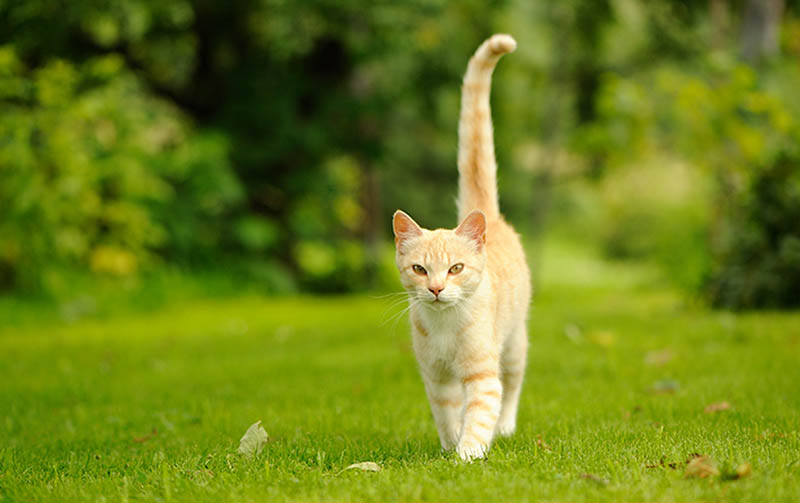
Hares look a fair bit like rabbits; they’re members of the same family, after all. They are larger than rabbits and often have longer legs and ears but their tails are not that long. Most are less friendly than rabbits and often live in pairs or alone. Long-tailed chinchillas, small mammals native to South America, are sometimes mistaken for rabbits. They’re about the size of squirrels and live in colonies in the wild.

Conclusion
Domestic rabbits don’t have long tails; the average is around 2 inches, but larger bunnies often have longer tails. There are over 300 domestic rabbit breeds, and bunnies range in size from tiny to species that weigh more than 20 pounds. Bunnies’ tail’s white underside is used to distract and confuse predators when they flee. It can also act as a signal to other rabbits, particularly when danger is present.
Sources
Featured Image Credit: Bobex-73, Shutterstock
Get Hepper In Your Inbox


Pet care tips from our vets and experts, straight to your inbox.
You may opt-out at any time. View our Privacy Policy for more information.
Lorre Luther a reformed lawyer from the United States, she moved to the Netherlands to follow her dream and become a writer. Currently living in Rotterdam, Lorre enjoys traveling and reveling in the astonishing beauty of our planet. As an animal lover, Lorre is convinced that cats are smarter than humans.
Join the conversation
Ask a question, share your story, or send private feedback.