Hepper is reader-supported. When you buy via links on our site, we may earn an affiliate commission at no cost to you. Learn more.
How to Prevent Tick Bites in Cats: 11 Vet-Approved Tips



In this article
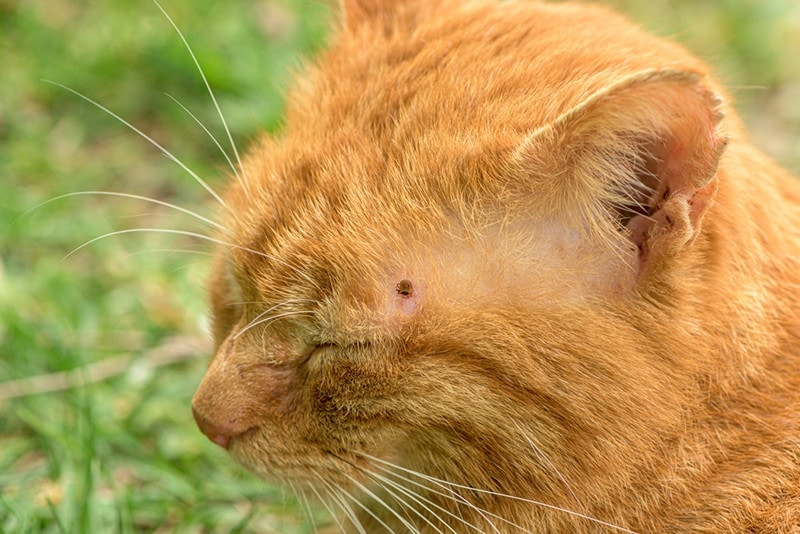
Ticks are nasty bloodsuckers that can spread disease to cats and humans. A tick bite can be life-threatening to your cat as they can transmit blood-borne diseases such as Mycoplasma haemofelis or Cytauxzoonosis, and they’re common all over the United States, especially in wooded areas. If your area has lots of ticks, you’ll want to think about ways to protect your cat from ticks before they get a bite.
Luckily, there are many different preventative treatment options available to help prevent ticks from attaching to your kitty. Along with chemical products, you can also help prevent ticks from biting your cats by changing your living space to make it tick-unfriendly. Here are six medical tips and five environmental tricks to help your cat stay safe.

The 11 Tips on Preventing Tick Bites in Cats
The 6 Medical Treatments to Prevent Tick Bites
1. Spot-on Treatment
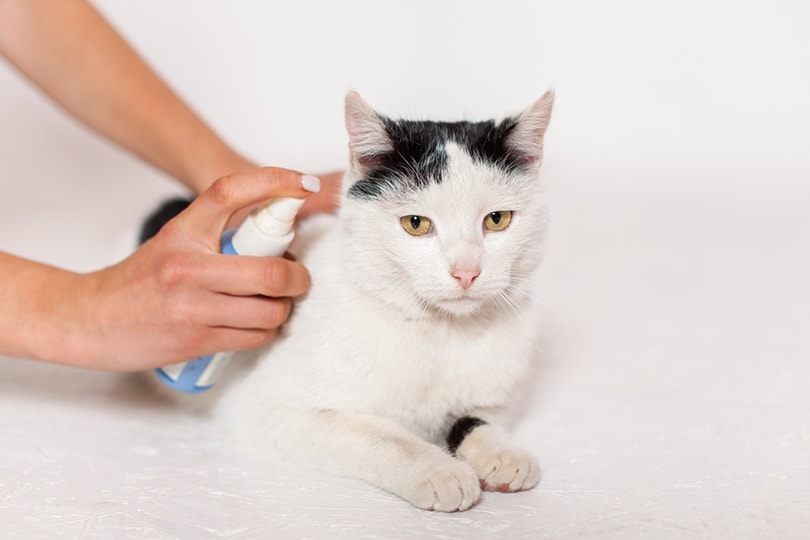
Spot-on treatments are one of the most common types of tick prevention treatments. These liquid treatments usually come in pre-dosed packages made for your cat’s weight. They contain a small amount of fluid that is applied to your cat’s skin, usually between its shoulder blades or the back of the neck so it cannot be licked off. Since you’re effectively putting a mild pesticide on your cat, it’s very important to follow all package instructions for dosing and applying. Contact your vet if your cat shows any abnormal reaction to the treatment.
Pros
- Effective for up to a month
- Relatively simple application
- Most products will protect against fleas and mites as well
Cons
- Must dose accurately
- Not suitable for kittens under a certain age or weight
- May leave traces of pesticide on furniture or touch transfer to humans
- Could lose effectiveness if your kitty gets wet soon after application
2. Oral Medications
Another popular option is oral medication. Like spot-on treatments, these are dispensed in weight-specific doses that are given once a month to help prevent tick bites. This can be an easy, mess-free way to get rid of ticks without worrying about transfer onto walls and furniture, or losing effectiveness if your kitty gets wet. It’s also ideal if you worry about touch-transfer of pesticides, especially if you have children.
Pros
- Easy, once a month
- No chance of pesticide spread
Cons
- Some cats refuse pills or may experience tummy upsets

3. Preventative Shampoos
If you bathe your cat regularly, you might want to look into a preventative shampoo. Tick shampoo is an effective way to get rid of ticks, and it is generally less toxic than a concentrated pesticide. However, most pet shampoos only work for about two weeks, and bathing your cat is pretty labor-intensive. Many cats won’t tolerate baths at all! If you don’t already bathe your cat a few times a month, it’s probably not worth it.
Pros
- Effective and safe
- Generally lower toxicity
- Good for owners who already bathe cats
Cons
- Most cats hate baths
- Labor intensive
- Shorter efficacy (two weeks)
4. Repellent Collars
Repellent collars are an easy, long-lasting way to protect your cat from ticks, but they aren’t a perfect option. To be useful, collars need to be well fitted—tight enough to touch the skin and stay in place but loose enough to fit two fingers underneath. They also mostly protect the head and neck. Although these are the most common places for ticks to bite cats, tick collars may not prevent ticks from biting other areas. When buying a collar, make sure that it is safe for cats. This is one product that you should only purchase from your vet to ensure you are getting a reliable and safe collar.
Pros
- Easy
- Long lasting
Cons
- Mostly effective for head and neck
- Can be uncomfortable
- Some collars have contained unsafe chemicals
- Cats can lose collars

5. Tick Dips
Tick dips are concentrated chemicals you add to water before applying to your pet’s fur with a sponge or bath. Unlike shampoos, they aren’t rinsed out of your pet’s fur. They are highly effective at preventing and treating fleas and ticks because they contain a relatively high concentration of pesticides, but this means that there is a higher level of risk involved too. Dips aren’t safe for kittens, and a slight change in concentration can cause them to be harmful to adult cats as well. In addition, many dips are dangerous if your cat licks itself while still wet.
Pros
- Very effective
- Relatively simple
Cons
- High risk of toxicity
- Not safe for kittens
- Need to prevent cat from grooming itself while wet
6. Tick Powders
Tick powders are designed to be rubbed into your cat’s fur, coating them with a fine layer of repellant. They work well at repelling ticks, and many can also be used to protect other areas of your home or yard—for example, by rubbing some tick powder into your cat’s bed. However, they do need to be reapplied about once a week, and they aren’t ideal for cats with asthma or other respiratory issues because they can cause lung irritation.
Pros
- Fairly effective
- Relatively safe
- Some can be used environmentally
Cons
- Can irritate lungs
- Must be applied weekly
One of the most important things to note is that cats should NEVER be treated with flea or tick products made for dogs, as these contain a substance called Permethrin, which is extremely toxic to cats. Signs of toxicity include twitching, tremors, hypersensitivity, seizures, blindness and death. If you think your cat may have been treated with a dog product, contact your vet immediately.


The 5 Environmental Tweaks to Prevent Tick Bites
7. Trim and Fence Your Yard
If your cat goes outdoors regularly, it’s best to make your yard as tick-unfriendly as possible. Keep bushes and grass trimmed and neat to reduce the breeding area for ticks. You’ll want to pull up weeds regularly and watch out for undergrowth that could harbor ticks. You can also fence your yard to reduce the wildlife that gets in and out, making it harder for ticks to get into your yard.
Pros
- Can be a long-term solution
- Helps reduce the presence of other pests
Cons
- Time-consuming

8. Use an Outdoor Cat Bed
If your cat likes to nap outdoors, consider buying a dedicated outdoor bed to prevent grass naps. Although outdoor cats will love spending time in tick-friendly grasses and undergrowth, any tricks that make them want to stay out of the grass will do a little bit to help. As some cats can be frustratingly blase about cat beds, think about providing a cardboard box or two as an alternative solution.
Pros
- (Most) cats love comfortable beds
Cons
- Bed may get dirty quickly
- May need more than one bed if you have more than one cat
- Cats are notorious for ignoring beds or quickly losing interest in them
9. Use House and Yard Treatments
If you know your home or yard has a tick problem, look for cat-safe pest control treatments. These can include sprays or powders. In fact, many cat powders designed to work in your cat’s fur can also be used environmentally. Whatever treatment you use, make sure to research whether it is safe for use in pet-owning homes and whether you need to take any safety precautions.
Pros
- Kills ticks at all life stages
Cons
- Can be expensive
- Must be done monthly

10. Check Your Own Clothing
We think of ticks as an outdoor hazard, but they can also hitch a ride inside your house. Ticks may get into your clothing or skin, fall off later, and find your cat. If you’ve been outdoors in an area with ticks—especially if you’ve walked through tall grass or dense undergrowth—make sure to check your body and clothing for ticks when you get home.
Pros
- Easy way to check for ticks
- Free!
Cons
- Must check your clothes every time you walk through tall grass
- May need another person to help check for ticks
11. Keep Your Cat Indoors
Cats may enjoy playing outside, but it isn’t necessary for their health and can be detrimental to their safety. There are many reasons to keep your cats indoors or in an enclosed outdoor space, and ticks are just one more. Even if your cat does go outside regularly, consider monitoring outdoor time during tick season and checking your cat’s fur whenever your cat reenters the house.
Pros
- Very effective in preventing ticks
- Keeping a cat indoors is better for their safety
Cons
- Can be difficult to keep the cat indoors if they are an escape artist
- Must have a litter pan

Last Thoughts
If you want your cat to stay happy and healthy, planning for tick prevention is a big part of that. Most areas in the United States have tick risks for at least part of the year, and cats with outdoor access are especially high risk. A combination of preventative treatments and environmental upkeep is the best way to make sure that your cat stays safe. Be extra careful when selecting tick prevention products as they have a higher risk of toxicity, and NEVER use a dog product on your cat.
I ended up putting pros and cons on the medications, but since these aren’t “either/or” solutions I didn’t put them here. I hope the inconsistency is okay.
Sources
Featured Image Credit: anastasya perfenyuk, Shutterstock
Get Hepper In Your Inbox


Pet care tips from our vets and experts, straight to your inbox.
You may opt-out at any time. View our Privacy Policy for more information.
Chelsea Flake Mortensen is a writer with a passion for pets. She grew up around everything from cats to chameleons and loves working with all kinds of animals. Chelsea has a BA in English and Creative Writing from Brigham Young University.
Chelsea loves reading, writing, sewing, and board games. She's lived in half a dozen US states and two countries. She is currently living in New England with her husband. Her articles have been featured in various magazines and literary journals for children and adults. Her writing has been translated into over 40 languages.
Join the conversation
Ask a question, share your story, or send private feedback.