Hepper is reader-supported. When you buy via links on our site, we may earn an affiliate commission at no cost to you. Learn more.
How to Clean Your Cat's Ears: Vet-Reviewed Step-by-Step Guide


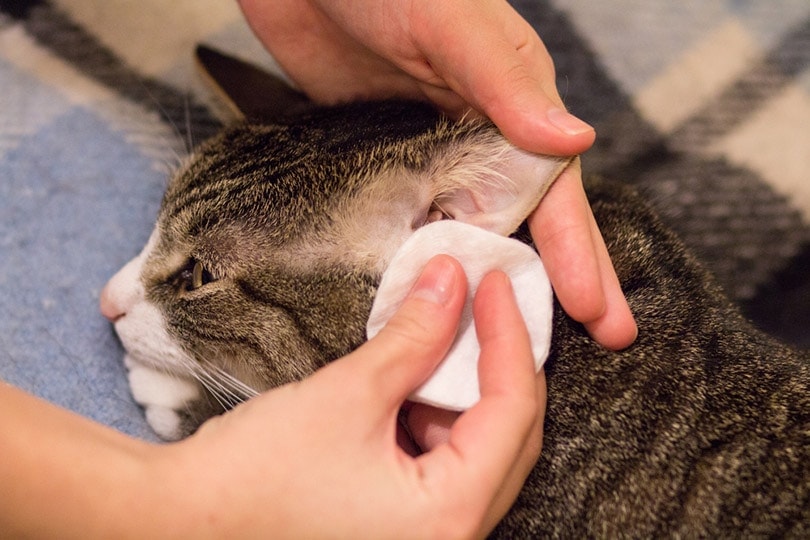
Cats are known for being very tidy animals with top-of-the-line self-grooming abilities. Chances are, you will not have to clean your cat’s ears very often, but occasionally, you may find yourself needing to do a thorough ear cleaning on your kitty.
Wax buildup, ear mite infestation, and ear infections are the most common reasons you may be tasked to clean your cat’s ears. No worries, we have got you covered. Below we will cover all the materials you need and the steps for a successful ear cleaning.

Materials Needed
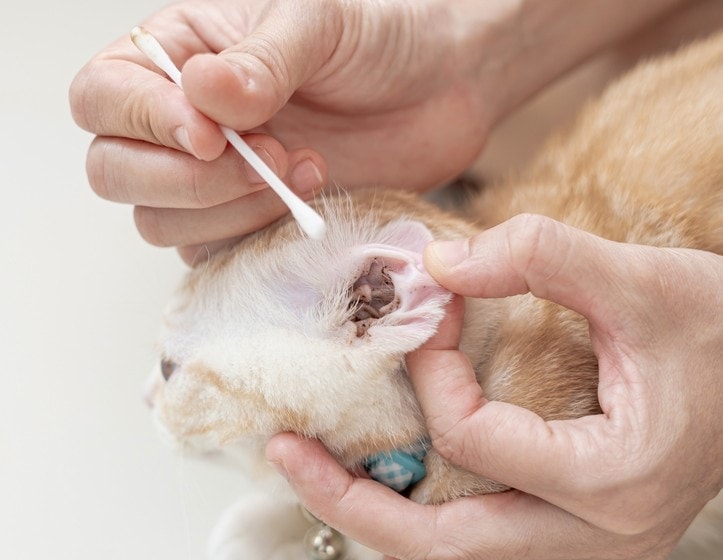
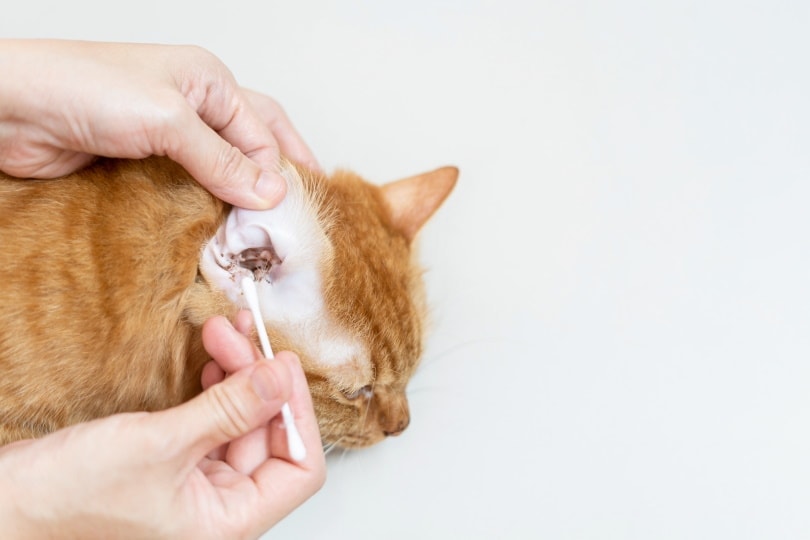
Ear cleaning does not involve a lot of materials. Keep in mind that Q-tips are not to be used for cleaning your cat’s ears due to the potential risk of injury. Cats can flail and try to escape, a Q-tip could easily slip too far down into the ear canal causing pain and pushing wax further in.
You can get your cat's ears cleaned efficiently by having these few items on hand:
Cats are famously good at grooming themselves, but sometimes they need a little extra help. Natural, hypoallergenic wipes like our Hepper Wash Wipes can help you keep your cat clean without causing any irritation. These wipes are specifically designed to work on all ages of cats, gently cleaning sensitive areas while effectively removing dirt and grime.

- Gentle Care For All Pets - Infused with moisturizing hypoallergenic ingredients & enriched with cucumber & aloe fragrance for healthier fur, coat & skin, the ultimate dog and cat cleaning wipes
- Deep Cleans From Head to Tail - Tackle the toughest dirt & messes with our extra strong pet wipes for dogs, cats and other pets while being gentle on sensitive areas like the face, ears, butt & paws
- Freshness On The Go - Each dog grooming wipes pack contains 30 counts of premium dog wipes that leaves your pets fresh. Packed in resealable packaging, keeping the cat wipes fresh & ready whenever

Cleaning a Cat’s Ears: Step-by-Step Guide
1. Restrain Your Cat
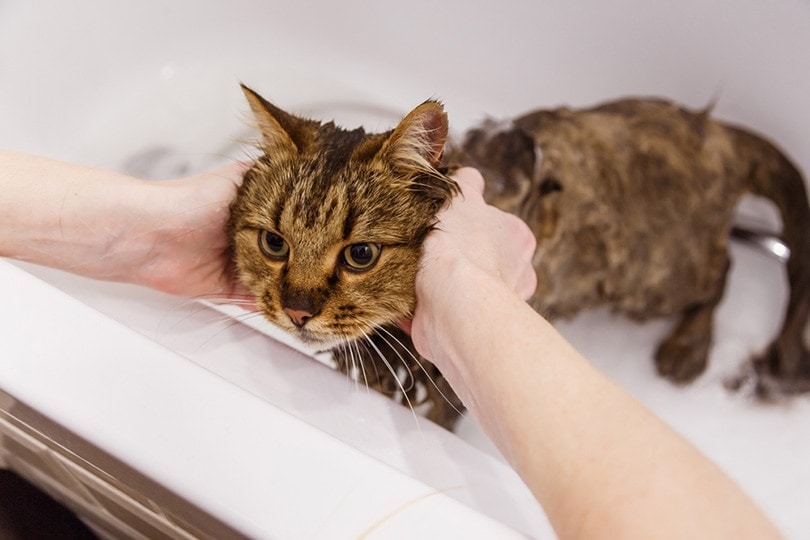
Make sure you are in a comfortable position so that you can keep a good grip on your cat throughout the process. If there is another person in the household, you may want to ask them to help out. Most cats do not take well to being restrained, having a spotter is never a bad idea. It is best to swaddle your cat comfortably in a towel or blanket to help keep them calmer so that you can maintain more control when you begin cleaning. Make sure you have your materials laid out and easily accessible.
2. Expose the Ear Canal
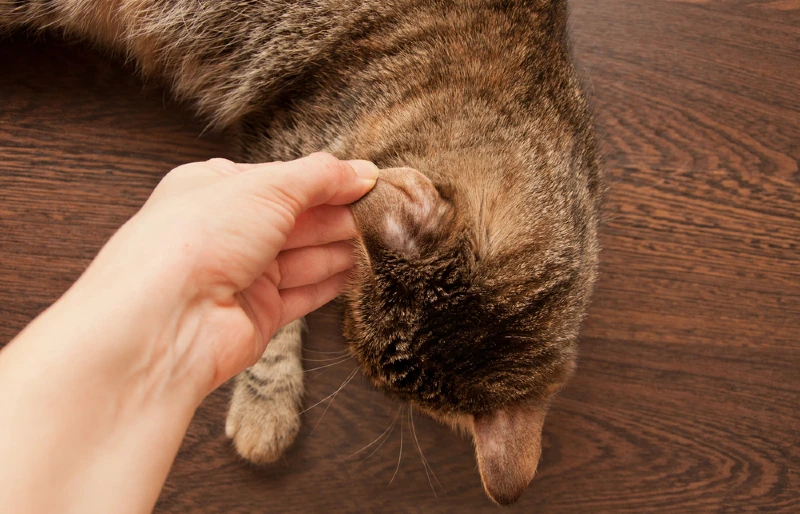
You will first want to take hold of the ear flap and pull back and up very gently so that the ear canal is exposed. Have the cleaning solution ready either in your other hand or in the hands of the person assisting you.
3. Apply Cleaning Solution
Place the tip of the bottle at the entrance to the ear canal and gently squeeze the recommended amount of ear-cleaning solution into the ear. Most solutions will recommend that you fill the entire ear canal but make sure to check the instructions from either the manufacturer or your veterinarian. The cleaner may spill out onto your lap or the floor.
4. Massage the Ear
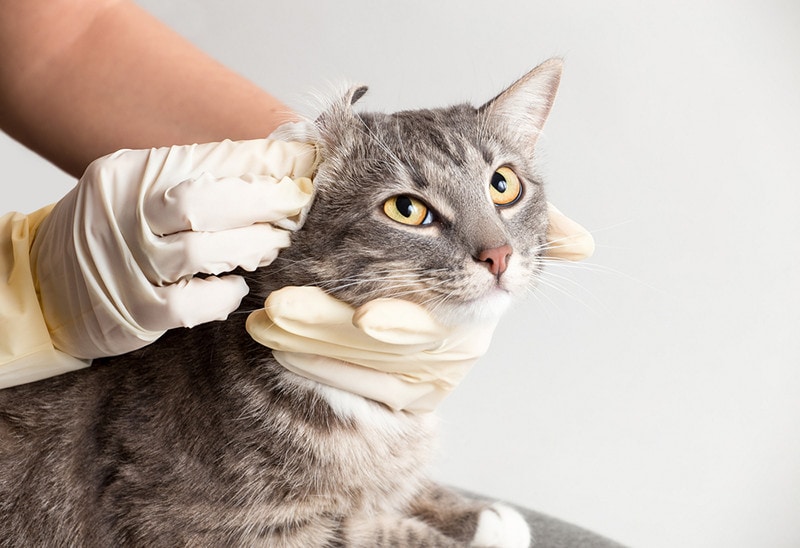
Keeping a secure grip on your cat, keep hold of the ear flap with one hand and very gently massage the base of the ear with the other (or have your help do this part.) Massage for about 10 to 20 seconds to allow the solutions to do their job and break down the debris in the ear. You will hear a squishing sound, this is completely normal.
5. Wipe the Ear
While keeping hold of the ear flap, use the cotton ball to wipe away the debris from the inner ear, up and out. Once the wiping is complete, allow your cat to shake their head freely to help dislodge any remaining solution and debris from down inside the ear canal.
Once your cat is done shaking its head, hold the ear flap and wipe away any debris that came up from the head shaking. There is no need to reach any deeper within the ear than the width of your finger will go.
6. Repeat and Reward
Repeat this step of the other ear and make sure you provide your cat with lots of positive reinforcement through praise and some kitty treats.
Additional Tips:
- To clean the nozzle between ears and at the end of treatment wipe it clean with a cotton ball soaked in sanitizer or alcohol. This will help thoroughly cleanse it for future use and prevent the spread of yeast or bacteria from ear to ear. Allow the nozzle to air dry before placing it in the other ear or it may be sore for your cat.
- Do not use hydrogen peroxide or isopropyl alcohol to clean your cat’s ears, both substances can cause irritation and pain within the ear canal. If infection or wounds are present, isopropyl alcohol can cause extreme pain. Stick with a regular ear-cleaning solution.
What If I Have Medication to Administer Afterward?
If your cat has an ear condition that requires the administration of medication, this step will be followed by ear cleaning so that the medication can get down into the ear properly without being blocked by debris.
While administering medication will be dependent on the prescription and your veterinarian’s instruction, the process is relatively simple and very similar to ear cleaning but with some key differences.
- Make sure your cat is still securely swaddled and comfortably placed on your lap, just like you did with the ear cleaning. Gently grab the tip of the ear flap and pull it back very slightly to expose the ear canal.
- Follow the instructions given by your veterinarian by placing the appropriate number of drops into the ear. Many of the nozzles are designed to go down into the first part of the canal to deliver the medication where it's needed.
- Keep hold of the ear flap and gently massage the base of your cat’s ear for about 10 seconds or the length of time advised by your veterinarian. This allows the medicine to cover the entire ear canal, which will ensure the effectiveness of the medication. Again, you will hear that distinct squishing sound.
- If the infection has spread to the flap as well, spread the medicine over the affected area by using a glove. Make sure to wipe off any excess with the cotton ball.
- Repeat this process as needed.
Common Ear Problems for Cats
1. Ear Mites
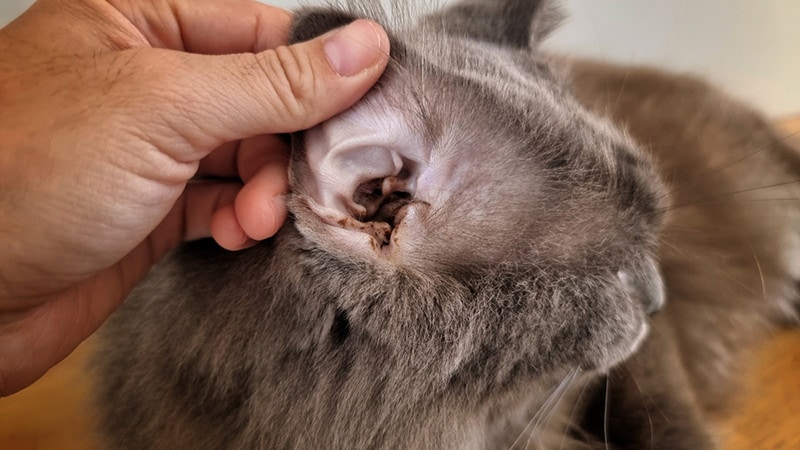
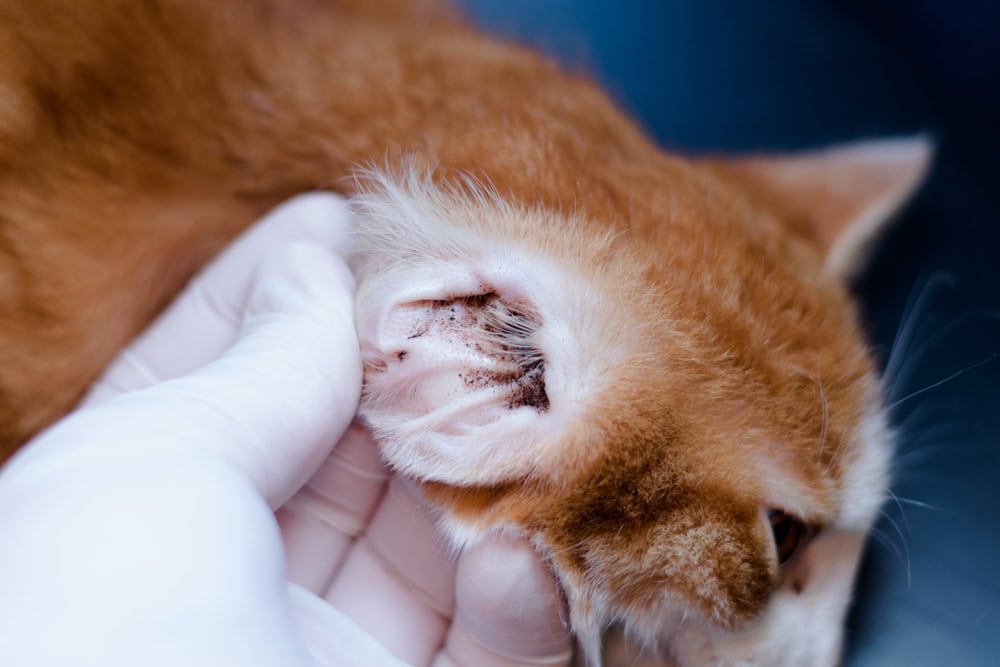
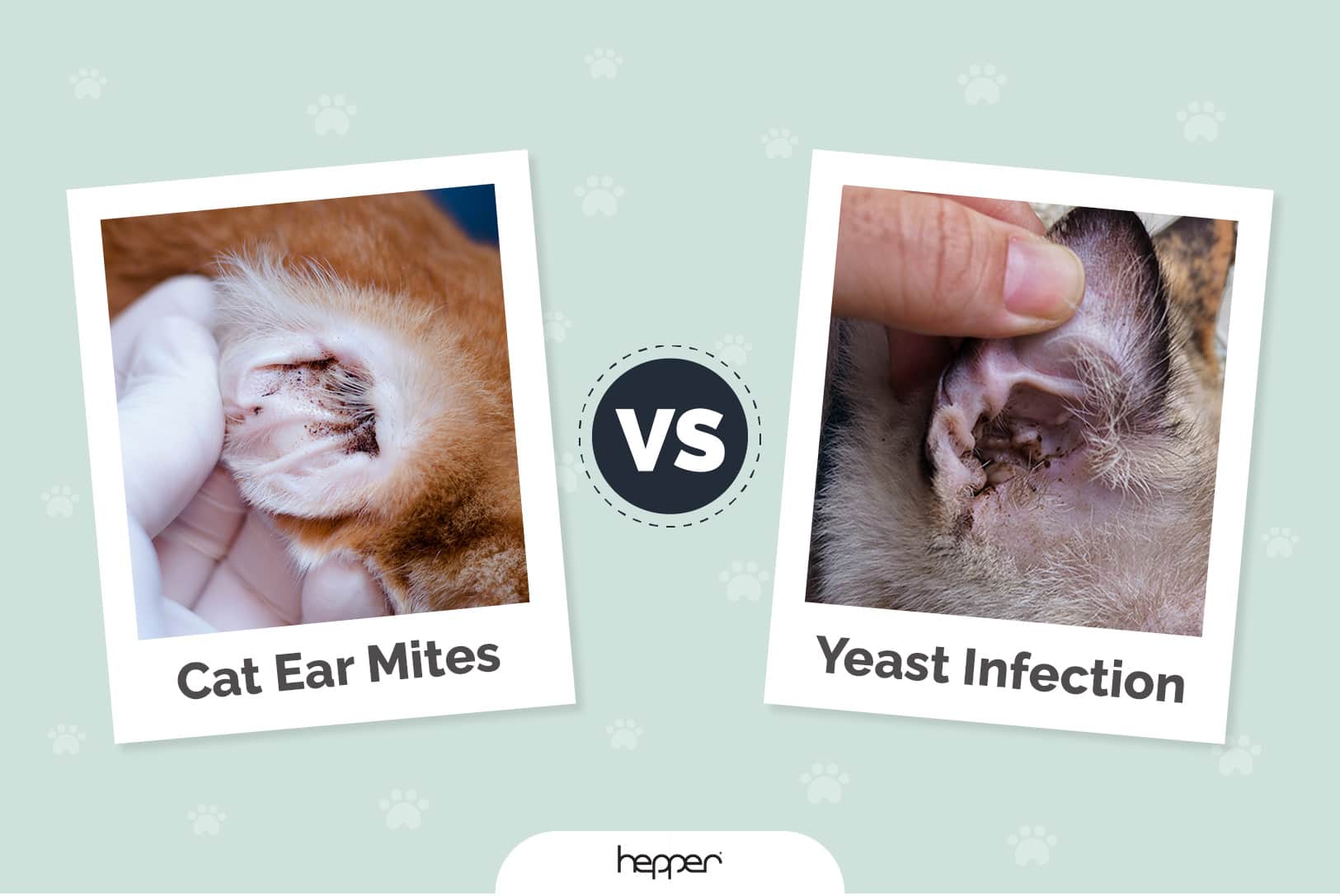
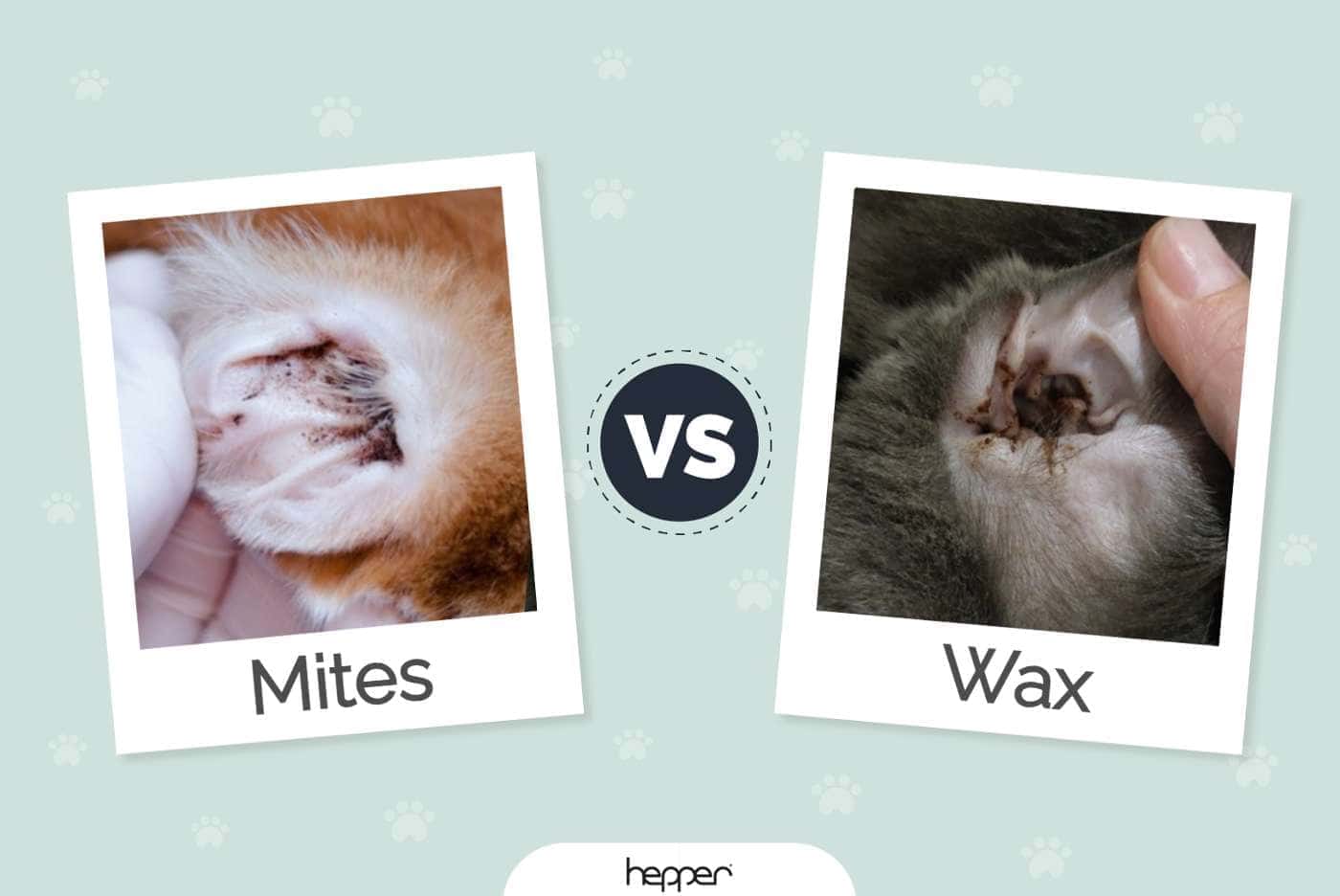
Ear mites are tiny little parasites that affect the ear and the skin surrounding the ears. Ear mites are most common in kittens and outdoor cats, as they tend to be more susceptible. They can pass very easily from one animal to another. The telltale sign of ear mites is the brown-colored debris that resembles coffee grounds within the ear. The mites themselves are barely visible to the human eye.
2. Ear Infection
Ear infections are typically caused by either bacteria or yeast. An ear infection of the outer ear may resemble ear mites but typically comes with other symptoms such as redness, swelling, discharge, and foul odor.
3. Allergies
It's not uncommon for allergies to cause itchiness within the ears. Allergies can be due to environmental factors or could even be related to food. It's best to get your cat’s allergies properly diagnosed so they can be treated accordingly, as allergies can be persistent, irritating, and complicated to control.
4. Ear Polyps
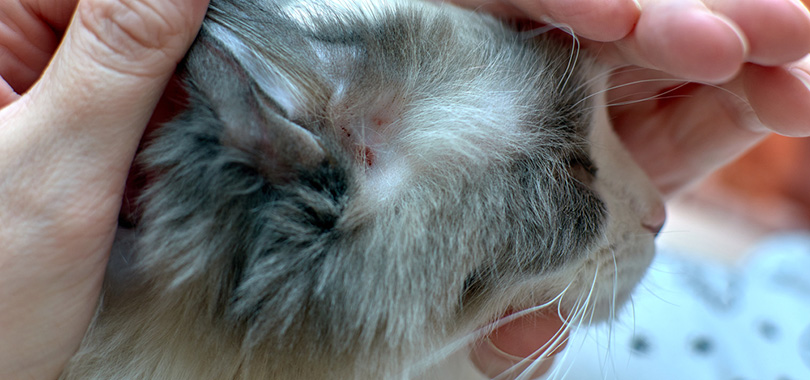
Ear polyps are a type of mass that is found within the ear. They are typically benign and usually appear as a result of inflammation within the ear or its surrounding tissues. They are sometimes referred to as inflammatory polyps for this very reason. They are more common in younger cats and upon diagnosis will need to be surgically removed.
5. Ringworm
Ringworm is a fungal infection that typically occurs on the outside of the ear on the area that is covered in fur rather than on the inside and within the canal. Hair loss, itchiness, redness, and flaky skin around the area are common symptoms of ringworm.
Most Common Signs of Ear Problems in Cats
- Scratching and pawing excessively at ears and head
- Sensitivity to touch
- Tilting of head to one side or the other
- Frequent head shaking
- Disorientation and balance issues
- Redness or inflammation of the outer/inner ear
- Foul odor
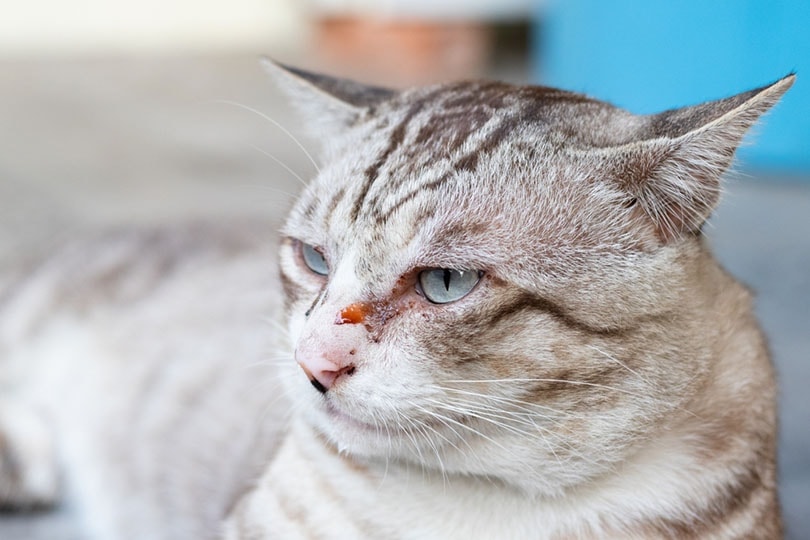
- Discharge that may be black, brown, or yellow
- Excessive brown ear wax or debris within the ear
- Partial or total loss of hearing
- Behavioral changes
How Often Should I Clean My Cat’s Ears?
A cat’s ears should only be cleaned as needed and no more than once every 2 to 3 months unless otherwise instructed by a licensed veterinarian. Most healthy cats will not require routine ear cleaning. Over-cleaning can lead to irritation and could even cause infection if done too often.
If you ever have questions about your cat’s ear health and whether they are due for a cleaning, reach out to your veterinarian and they will be able to evaluate and assist.
Conclusion
While cleaning your cat’s ears is not something you will be doing very often, it's best to know how to get the job done safely and effectively. Always use the necessary precautions when restraining your cat, as some kitties might not be so calm when restrained against their will.
If you think your cat may be experiencing any problems or is exhibiting signs that indicate there is something wrong within the ear, consult your veterinarian for proper diagnosis and treatment.
See also:
Featured Image Credit: Te9l, Shutterstock
Get Hepper In Your Inbox


Pet care tips from our vets and experts, straight to your inbox.
You may opt-out at any time. View our Privacy Policy for more information.
Lindsay is a wife, mother, nature enthusiast, animal lover, and business major. She was born and raised in the United States and now lives in Tulsa, Oklahoma. She shares her home with a German Shepherd, several snakes, tarantulas, and a couple of rescue cats.
Lindsay and her husband enjoy traveling the US with their children and photographing wildlife. Lindsey is passionate about proper animal care and education around it!
Join the conversation
Ask a question, share your story, or send private feedback.