Hepper is reader-supported. When you buy via links on our site, we may earn an affiliate commission at no cost to you. Learn more.
Hyperkeratosis in Dogs: Vet-Explained Symptoms & Treatment


In this article
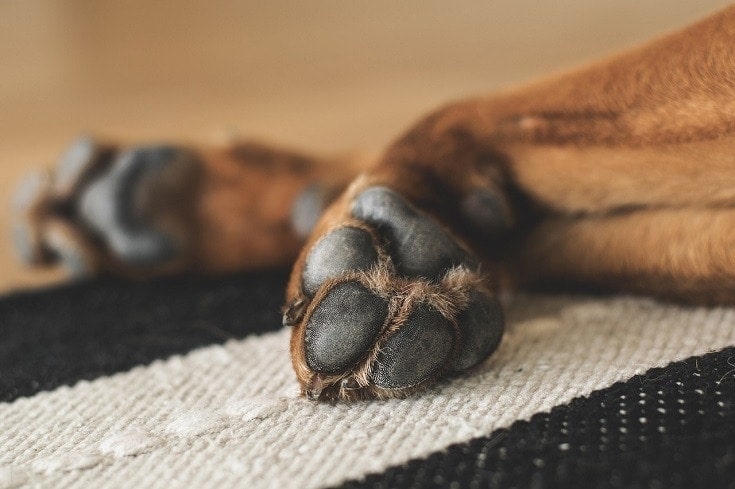
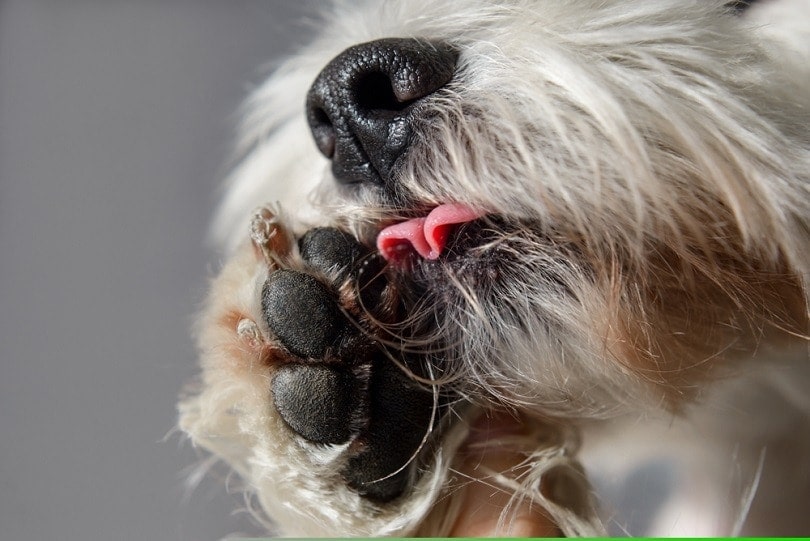
A dog’s nose should be moist and smooth, not ragged and dried out. Similarly, their paw pads are supposed to feel a bit like soft leather. They shouldn’t be rough, or dry, and seem to have hair follicles growing out of them. If you’ve never seen these symptoms in your pet, then you have nothing to worry about. But for dogs displaying these traits, the problem is likely hyperkeratosis.
What causes this condition and how can you tell when your dog has it? More importantly, how can it be treated? This relatively common ailment isn’t life-threatening, but it should be taken seriously, which is why we are going to answer all of these questions so you know how to deal with it should your pet display signs of hyperkeratosis.

What is Hyperkeratosis?
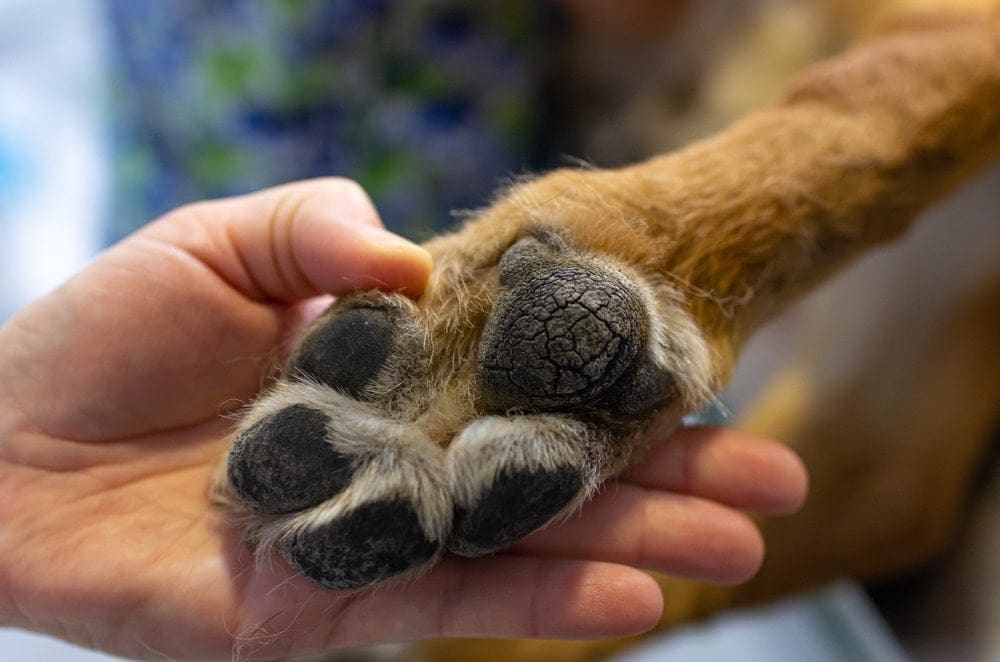
Like many medical conditions, hyperkeratosis is a simple condition with a complex name.1 When your dog’s body produces too much keratin, a protein that makes up its nose and paw pads, those areas thicken and become hard. If this persists enough, the skin can even crack, allowing infections to set in and causing serious discomfort for your four-legged friend.
Two Main Forms of Hyperkeratosis in Dogs
In dogs, hyperkeratosis takes two main forms. It can either be present in their paw pads, nose, or both.
1. Paw Pad Hyperkeratosis
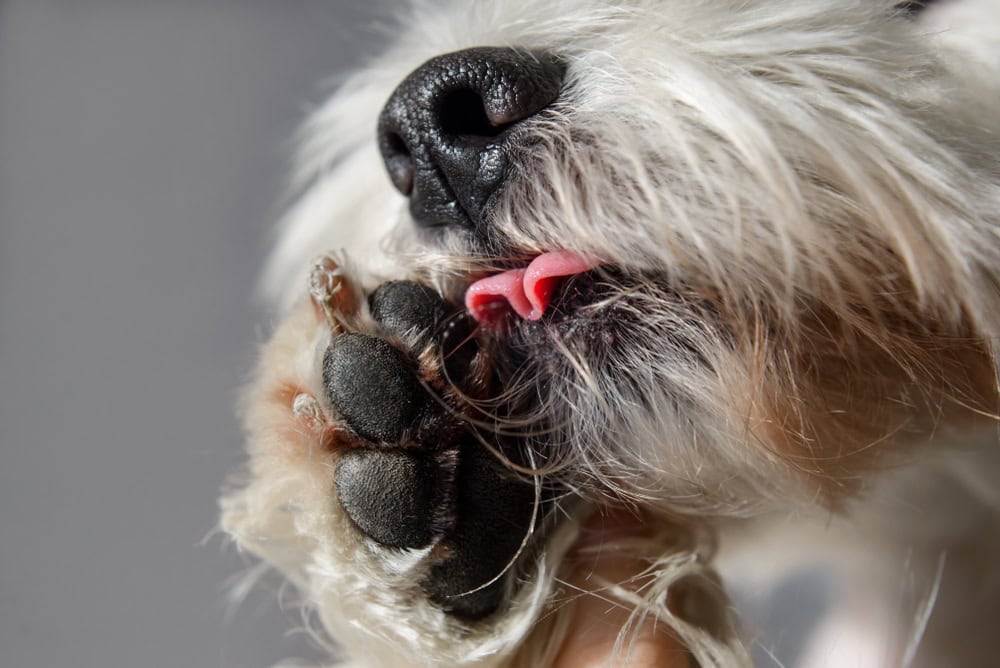
Paw pad hyperkeratosis is often called hairy feet hyperkeratosis because the skin on the bottom of the dog’s pads appears to grow hair. In truth, this is a crusty, dry growth of cracked skin and no hair at all.
2. Nasal Hyperkeratosis
Nasal hyperkeratosis is when dryness, hardening, and cracking affect the dog’s nose. This can cause it to seem frayed around the edges and the affected dog’s nose won’t be moist like it should.
What Causes Hyperkeratosis in Dogs?
Hyperkeratosis in dogs can be the result of several different causes.
Age – Senior dogs face a higher risk of hyperkeratosis.
Deficiencies – Particular deficiencies, for instance, zinc, can cause hyperkeratosis, among other problems.
Genetics – Some dogs are genetically predisposed to this condition. There are several breeds known to be most susceptible to hyperkeratosis. Those breeds are:
Diseases – Several diseases cause hyperkeratosis, including canine distemper, auto-immune diseases like pemphigus foliaceus, and parasites such as leishmaniosis.

Symptoms of Hyperkeratosis in Dogs
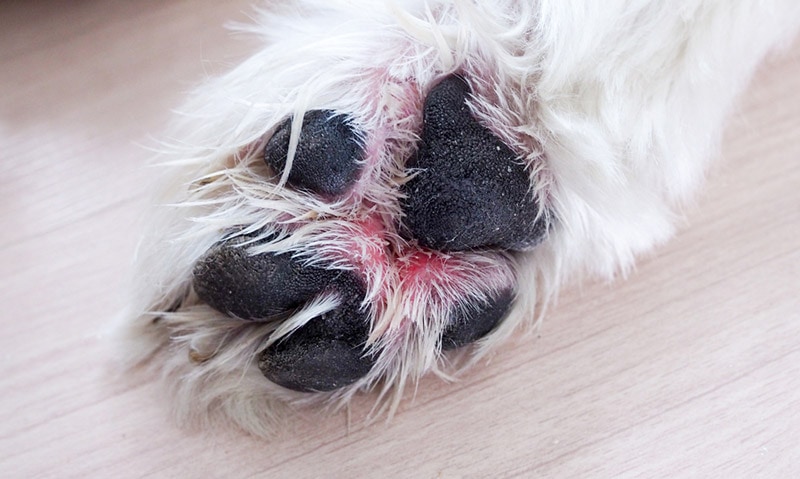
So, how can you tell if your dog has hyperkeratosis? Well, the first and easiest symptom to identify is dry, cracked skin with crusty growth that looks like hair. This is most commonly seen on the nose and paw pads. However, sometimes, you’ll even find it on the edges of the ears, skin on the stomach, and high-friction areas.
Treatment
If your dog has hyperkeratosis, a trip to the vet is a necessity. They’ll search for an underlying cause that may need to be treated. Open lesions can also be managed with antibiotics when needed.
Sometimes, ointments can be applied locally that will help to soften the thickened layer and allow keratolytics to help soften and dissolve the excess keratin. These types of products will require multiple daily applications to take effect and may require continued usage to prevent recurrence.

Another common treatment is to remove the excess skin, such as the growth on the paws that looks like hairs. But not all dogs will hold still for this, and injury can result if they do not.
One thing you can do at home to help is to keep your dog in the bathroom while you fill it with steam from the hot shower. This can help moisturize the cracked and dry skin of your dog’s paws and nose.

Conclusion
If you spot the signs of hyperkeratosis on your dog, you’d be forgiven for acting alarmed. While it can appear pretty rough, with cracked skin seeming to grow dry and crusty hairs, it is not a life-threatening situation. This can be a painful condition for your canine though, so it is best to get professional help immediately. With treatment, this condition can be managed, though it does take some time.
Related Read: Dog Distemper – Symptoms, Causes, and Treatment
Featured Image Credit: Julia Serdiuk, Shutterstock
Get Hepper In Your Inbox


Pet care tips from our vets and experts, straight to your inbox.
You may opt-out at any time. View our Privacy Policy for more information.
A true Renaissance man, Dean Eby has worked a variety of hands-on careers, including home building and remodeling, personal training, and now shares his experiences and understanding as a writer. An avid outdoorsman, Dean spends much of his time adventuring through the diverse terrain of the southwest United States with his closest companion, his dog, Gohan.
For Dean, few passions lie closer to his heart than learning. An apt researcher and reader, he loves to investigate interesting topics such as history, economics, relationships, pets, politics, and more.
Join the conversation
Ask a question, share your story, or send private feedback.