Hepper is reader-supported. When you buy via links on our site, we may earn an affiliate commission at no cost to you. Learn more.
Dog Eating Sticks: Vet Reviewed Reasons of this Behavior, Risks & Care Tips


In this article
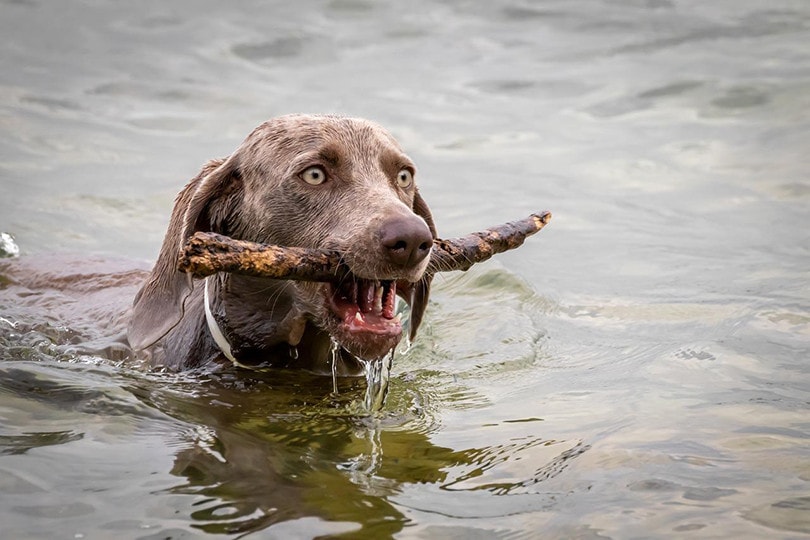
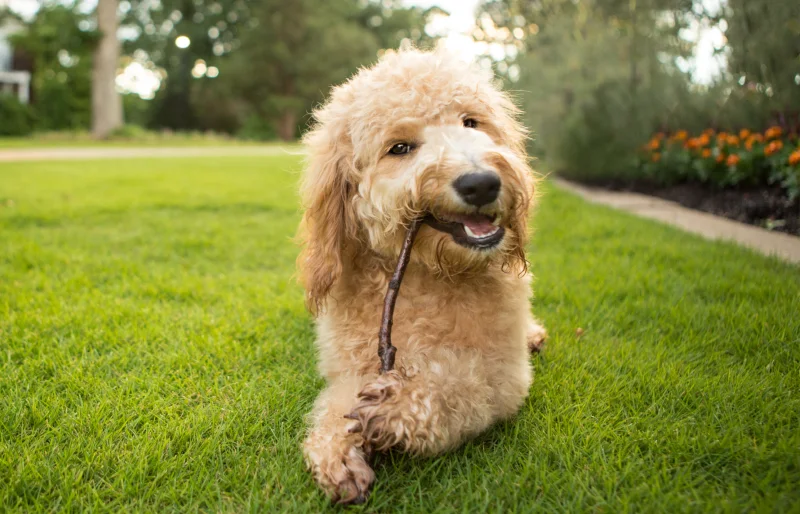
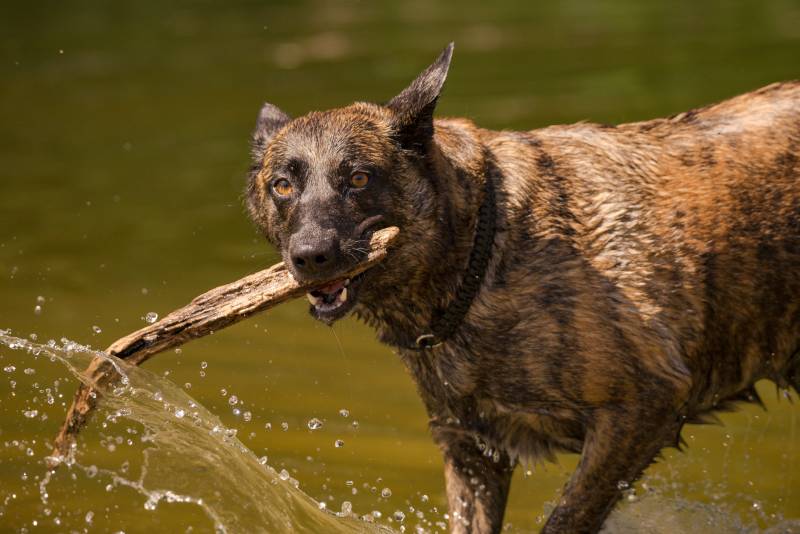
A dog playing with or eating a stick seems like a fitting image. Many dogs love sticks. They are fun and enticing to them, as well as natural, so they seem to smell and taste good to our furry friends as well. It is not uncommon to find your dog playing in the park, only to discover them to be proudly chewing on a stick.
This may appear to be a fun and harmless activity for them to do, and many pet parents let their dogs munch away on them. After all, they're enjoying themselves, so what's the harm in it? Unfortunately, there is quite a bit of harm that can occur, and letting your dog eat sticks is not a good idea or recommended. Multiple accidents and injuries can occur from dogs eating sticks. The stick being a choking hazard and causing problematic internal or external splinters, for example, are putting your dog at risk.

Why Do Dogs Eat Sticks?
Why are sticks so enticing to dogs? Surely, they don’t smell and taste as good as a Sunday roast or a side of salmon.
The truth is there are indeed several legitimate reasons to explain your dog’s love of eating sticks and twigs. Listed below are the most common reasons, and you might immediately notice the one that fits your dog, or maybe there are a few you relate to.
The stick simply tastes and smells good to them. This can be due to either food being dropped or coated on it, unmentionable dog smells they find divine beings on the stick’s surface or other animals’ scents. Even poop from foxes or birds on a stick, for example, is enough to draw a dog in.
It is a natural and normal instinct to chew, and they are simply carrying out this behavior.
The stick itself or its surrounding leaves can be rotting, making the stick seemingly smell attractive to them.
Teething puppies want to chew.
A condition called pica. This is the eating of unusual foods and substances; wood and sticks would be examples. This is often a sign of another illness or underlying health condition and will require a quick check by your vet to ensure all is in order.
Is It Safe for a Dog to Chew on a Stick?
While you don’t want to be a killjoy in your dog’s life, unfortunately, it is not safe for them to chew on sticks. Ideally, you need to remove the stick as soon as you notice them eating or playing with it. Try to replace it with a different toy, a game, a treat, or some other distraction to ease their disappointment. What they don’t understand is that you are protecting them from several nasty incidents that can easily result from chewing on and eating sticks. These include but are not limited to:
Parts of the stick can break off and become wedged at the back of the throat, creating a blockage and choking your dog.
Small pieces of wood can become trapped in between the teeth, across the roof of the mouth, in the gums, and under the tongue.
Perforating injuries and infections in the mouth.
Eye injuries or infections.
Splinters from the wood can affect any part of the mouth or the gastrointestinal tract.
Swallowed pieces of wood can also splinter and break off, risking any part of the digestive tract becoming pierced, cut, or retaining a splinter. Any of these situations can lead to infection and serious internal issues, such as peritonitis.
Swallowed pieces of wood can cause blockages in the gastrointestinal tract.
Toxicity risk. This is perhaps a small chance of occurrence, but should a toxic substance be on the wood, then poisoning also remains a real risk to your dog.
What Happens if My Dog Eats a Stick?
Should your dog eat a stick, particularly if they have swallowed parts of it, any of the above risks and potential problems mentioned could occur. The largest concern is a hole, tear, or blockage in the digestive tract. Any pieces that don’t cause a problem and pass in their normal poo may still cause pain during defecation or constipation due to sticks being difficult to digest.
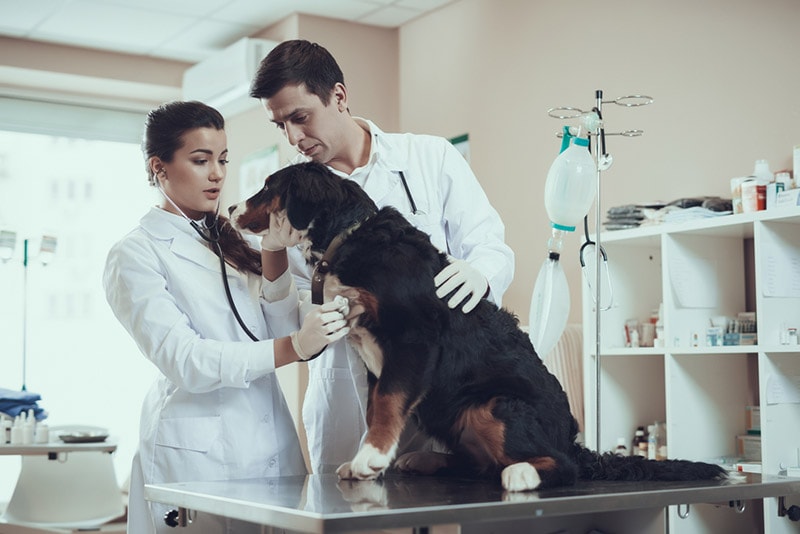
Below are signs that your dog is unwell, whether they chew sticks or not, call your veterinarian for advice and an examination. Don't delay, as this can worsen the problem.
Signs Of Problems Related to Stick Chewing
Conclusion
It’s an idyllic scene walking with your dog as you enjoy the fresh air and they chew on a stick, but unfortunately, doom and gloom could very well be just around the corner. It is unfortunately not a safe or healthy activity for them to partake in. Much to their annoyance, of course!
Instead, try using one of the plethora of toys and games to keep them distracted, or try keeping walks fresh by using different routes and areas to keep their noses busy instead of their mouths.
Sources
Featured Image Credit: Tara Lynn and Co, Shutterstock
Get Hepper In Your Inbox


Pet care tips from our vets and experts, straight to your inbox.
You may opt-out at any time. View our Privacy Policy for more information.
Annaliese began her career as a veterinary nurse in Edinburgh, later advancing her qualifications with a diploma in advanced veterinary nursing in surgery from London. Her work in small and mixed veterinary practices led her to become a head nurse, where she trained other veterinary nurses, managed the nursing department, conducted nurse clinics, and developed new patient care protocols.
Throughout her career, Annaliese has cared for thousands of patients and their owners, setting higher standards in nursing regimes with a focus on surgery and anesthesia. She co-authored multiple veterinary nursing textbooks and contributed to various mainstream publications in the UK and USA. After more than twenty years in the veterinary and pet care professions, she retired from clinical practice to pursue full-time writing. Having cared for thousands of patients and owners, Annaliese specialized in surgery and anesthesia. She was asked to co-author several veterinary nursing textbooks and contributed to a number of other publications in the UK and USA. After more than two decades in the veterinary and pet care industries, she retired her scrub suit and now works as a full-time writer.
Annaliese Morgan has been a dedicated veterinary nurse for over two decades, having completed a diploma in advanced veterinary nursing in surgery from London and qualifying from Edinburgh. Her professional experience includes managing a nursing department, training other veterinary nurses, providing patient care, and running nurse clinics in both small and mixed veterinary practices.
As an expert in surgery and anesthesia, Annaliese has treated thousands of patients and owners. In addition to being asked to co-author multiple veterinary nursing textbooks, she has written for a variety of publications in the UK and USA. After a long and successful career in the veterinary and pet care professions, Annaliese now dedicates her time to writing full-time. You can find out more about her work at www.annaliesemorgan.com.
Join the conversation
Ask a question, share your story, or send private feedback.