Hepper blog

Search our database of over 9,984 posts with up-to-date information from our experts and veterinarians.

Hepper is reader-supported. When you buy via links on our site, we may earn an affiliate commission at no cost to you. Learn more.

My Dog Ate Pine Needles, What Should I Do? Vet-Approved Explanation

By Chris Dinesen Rogers · Reviewed & fact-checked by Dr. Lauren DemosVet Approved
Dr. Lauren Demos
Reviewed & Fact-Checked byDr. Lauren DemosVeterinarian
As a veterinarian, Lauren is happy to share her experience in emergency medicine and cats, with everyone. She enjoys sharing insightful, real life tips for having cats as part of your life, and what to do in critical situations with your pets.View authorThe information is current and up-to-date in accordance with the latest veterinarian research. Read about our vets
Share
Ask us a question in the comments
My Dog Ate Pine Needles, What Should I Do

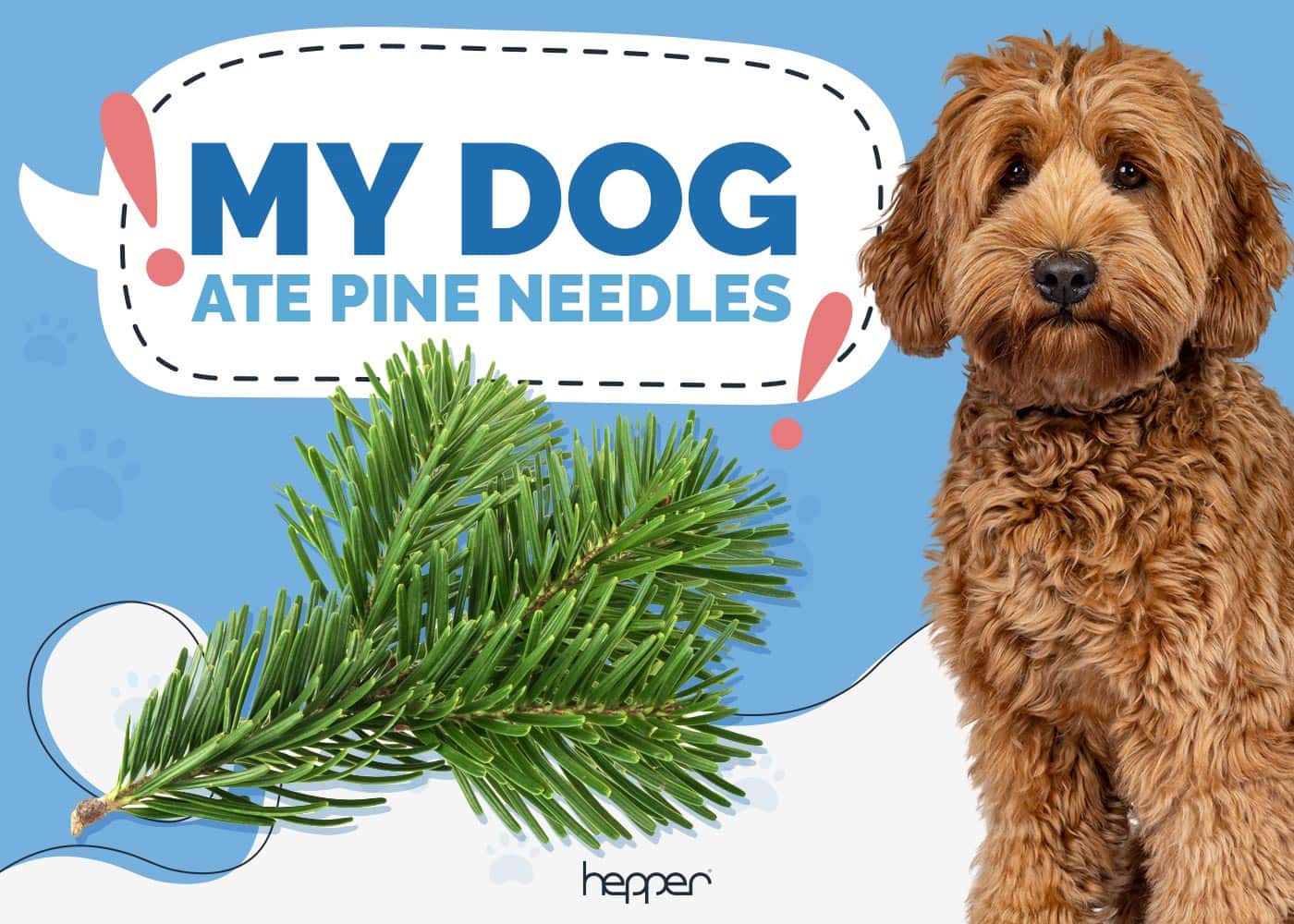
As strange as it seems, dogs do eat pine needles from time to time. A curious dog might chew on the Christmas tree or the pine in the backyard. There are several concerns regarding this, from mouth and paw wounds to allergic reactions from the pine oil to severe gastrointestinal issues. Some problems might not be apparent right away. Therefore, if your dog ate pine needles, we strongly urge you to contact your vet or go to an emergency veterinary clinic for treatment.

Skin and Mouth Wounds

Your dog may spit out the pine needles or vomit because of the foul taste of the oil. However, the more contact with the irritant, the more likely it is to cause injury from the sharp needles and sap.

The concern is with the needles puncturing the mucous membranes or skin around your dog’s mouth. Wounds here are prone to infections that may take some time to develop. However, a risk exists with the needles getting caught in your pup’s throat. Signs of this include retching, gagging, and pawing at their face.

Your dog may have held a branch down to chew on the needles. They could also hurt their paws or get stuck within their pads. You may see visible wounds, or your pet may limp and act like it’s in pain when putting weight on an affected foot.

vet checking boston terrier dog
Image By: Nestor Rizhniak, Shutterstock

Irritation and Allergic Reactions

The amount of exposure to pine oil is a critical factor for skin irritation and allergic reactions. Pine oil is toxic to cats and dogs. A sensitive pet may even have a negative reaction with very little skin contact.

Signs of atopic dermatitis or an allergic reaction may include redness, swelling, and inflammation. They can cause intense itching, with your dog in obvious distress. In severe cases, it can cause labored breathing.

Gastrointestinal Problems

The risk of more severe gastrointestinal problems is the reason behind our suggestion to seek veterinary help immediately. We mentioned the respiratory distress caused by an allergic reaction. There’s also the chance of poisoning if your dog ingests a lot of pine needles. This isn’t as worrisome as pine essential oils, however, because of the lower concentrations. Regardless, pine needles are problematic.

If your pet ingests a lot of them, they can cause an intestinal blockage, which is a medical emergency. An abscess that develops from the damage the pine needles cause your dog’s GI tract could also lead to a different type of blockage from the swelling. Several serious complications are possible, no matter what kind of issue you’re dealing with. Vomiting is often the first thing you may notice. 

Other signs include the following:

  • Loss of appetite
  • Lethargy
  • Abdominal pain
  • Dehydration
  • Shock

A GI obstruction is fatal if left untreated. Remember that the longer a blockage resides within your dog’s body, the greater the risk of additional injury and complications. It also increases the likelihood of a reaction to the pine oil and its potential toxicity.

Conclusion

A dog’s tendency to gulp its food—and other random objects—down often gets them in trouble. They may eat enough of something they shouldn’t that causes problems ranging from minor to serious.

Pine needles are not safe for your dog to consume. Their sharpness raises a red flag for external and internal injury, their oil content can be irritating or even dangerous, and, lastly, the risk of a GI obstruction means you should seek out immediate treatment.

See also:

Sources

Featured Image Credit: Pixabay

Get Hepper In Your Inbox

Pet care tips from our vets and experts, straight to your inbox.

List

Select all that apply.

You may opt-out at any time. View our Privacy Policy for more information.

Chris Dinesen Rogers
Authored by

Chris Dinesen Rogers

Join the conversation

Ask a question, share your story, or send private feedback.
Rate this post
Required to post. Only our editors see your rating.
Who should see this?

A human reviews every comment before it appears. Your email is never published.

Picked to go with this article

Can Cats Eat Pine Needles? Vet-Approved Safety Facts & FAQ

Can Cats Eat Pine Needles? Vet-Approved Safety Facts & FAQ

The holiday season is a magical and wonderful time of year that most families love to decorate and prepare for. For many cat owners, however, it can leave them…

Nicole Cosgrove
By Nicole Cosgrove ·
My Dog Ate a Toothpick! Here’s What to Do (Vet Answer)

My Dog Ate a Toothpick! Here’s What to Do (Vet Answer)

Unfortunately, it’s surprisingly common for dogs to eat toothpicks, especially since toothpicks are often used to skewer foods. Most dogs that eat toothpicks h…

Dr. Joanna Woodnutt
By Dr. Joanna Woodnutt ·
Can Dogs Eat Pine Cones? Health Concerns Reviewed

Can Dogs Eat Pine Cones? Health Concerns Reviewed

The weird things our dogs seem to fancy eating sometimes can be something of a surprise. As dog parents ourselves, we’ve witnessed our dogs attempt to hoover u…

Kit Copson
By Kit Copson ·
Intestinal Blockage in Dogs: Vet-Reviewed Signs, Causes, and Treatment

Intestinal Blockage in Dogs: Vet-Reviewed Signs, Causes, and Treatment

Dogs are curious creatures, and that curiosity can lead to dangers that all canine parents should be aware of. One such danger is an intestinal blockage. All d…

Rachael Gerkensmeyer
By Rachael Gerkensmeyer ·

Keep reading

More stories you might like

Dog Eating Sticks: Vet Reviewed Reasons of this Behavior, Risks & Care Tips

A dog playing with or eating a stick seems like a fitting image. Many dogs love sticks. They are fun and enticing to them, as well as natural, so they seem to…

Annaliese Morgan
By Annaliese Morgan ·
Dog Eating Sticks: Vet Reviewed Reasons of this Behavior, Risks & Care Tips

Foreign Body Ingestion in Dogs: Signs & Vet-Approved Next Steps

Foreign body ingestion is a common condition among dogs. It occurs when a dog swallows a non-food item, such as a toy, sock, or even a rock. If left untreated,…

Nicole Cosgrove
By Nicole Cosgrove ·
Foreign Body Ingestion in Dogs: Signs & Vet-Approved Next Steps

My Dog Ate Mulch, What Should I Do? Vet Approved Facts & FAQ

No matter what the mulch is made from, if you suspect your dog has eaten mulch or you’ve witnessed them eating it, contact your veterinarian as soon as possibl…

Kerry-Ann Kerr
By Kerry-Ann Kerr ·
My Dog Ate Mulch, What Should I Do? Vet Approved Facts & FAQ

My Dog Ate a Conker: Vet-Approved Facts & Safety Guide

Whether you call them buckeyes or conkers, horse chestnuts signal the beginning of autumn. You or your dog might kick them along the trail as you gather leaves…

Brooke Bundy
By Brooke Bundy ·
My Dog Ate a Conker: Vet-Approved Facts & Safety Guide

My Dog Ate a Stick: Our Vet Explains What to Do

Dogs often eat things without realizing the dangers of doing so. While some sticks may be small enough to pass through your dog without causing harm, others ca…

Dr. Stacie Grannum
By Dr. Stacie Grannum ·
My Dog Ate a Stick: Our Vet Explains What to Do

Are Poinsettias Poisonous to Dogs? Vet-Reviewed Signs of Toxicity

Poinsettias are absolutely stunning flowers that many plant enthusiasts love. Especially during the holidays, these gorgeous flowers line department stores and…

Ashley Bates
By Ashley Bates ·
Are Poinsettias Poisonous to Dogs? Vet-Reviewed Signs of Toxicity

Can Dogs Eat Acorns? Vet Approved Facts & Safety Guide

Acorns might be a winter staple for squirrels, but are they safe for dogs? Your dog might show an interest in eating acorns, but you shouldn’t let it. In fact,…

Chelsea Mortensen
By Chelsea Mortensen ·
Can Dogs Eat Acorns? Vet Approved Facts & Safety Guide

My Dog Ate a Rose, Do They Need to See a Vet? Vet Reviewed Facts & FAQ

Roses aren’t toxic to dogs. Therefore, if your dog eats some of your roses, there is typically no reason to visit a vet. As curious creatures, dogs are known t…

Kristin Hitchcock
By Kristin Hitchcock ·
My Dog Ate a Rose, Do They Need to See a Vet? Vet Reviewed Facts & FAQ