Hepper is reader-supported. When you buy via links on our site, we may earn an affiliate commission at no cost to you. Learn more.
Will Mice Leave if They Sense a Cat? What Science Says

In this article
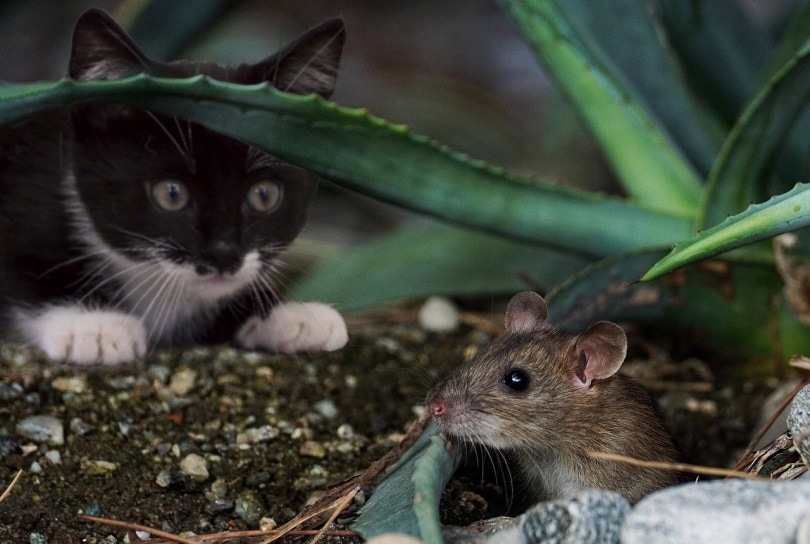
Large cats like bobcats and jaguars depend on rodents for food, and some house cats will chase and kill a mouse when the opportunity arises. If you have spotted a mouse on your property, you may have wondered, will mice leave if they smell a cat?
Yes, mice can detect chemical signals from felines and rats that convince them to keep their distance. However, the scent from predators may not persuade the rodents to vacate the area. If your home provides food, water, and shelter for a growing mouse population, a skilled feline is unlikely to eliminate all the pests. Read on to learn more.

Fear Caused by Scent

Scientists were unsure how mice could detect cats until an exhaustive study was conducted and published in the journal Cell in 2010. The study concluded that mice have an advanced sensory system, called the vomeronasal organ, that detects specific proteins from the urine and saliva of rats and felines. The organ is connected to sections of the brain involved in emotion, memory, and hormonal release. Researchers noticed that mice exposed to the proteins from predators would cease moving, carefully sniff the site, and stay close to the ground.
When scientists removed the vomeronasal organ in a group of test mice, the animals did not express fear when exposed to a healthy anesthetized rat. One mouse even curled up and went to sleep against the rat and never seemed bothered or threatened by its presence. This behavior proved how vital that organ is to a mouse’s survival and ability to evade predators. The proteins contained in a cat’s litter box can keep mice from entering a room, but it will not force them to find another home.
Cats Employed as Pest Control
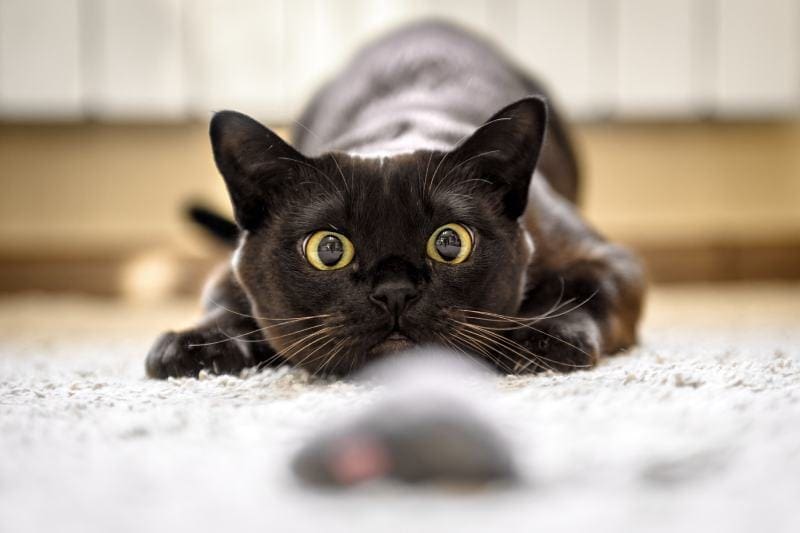
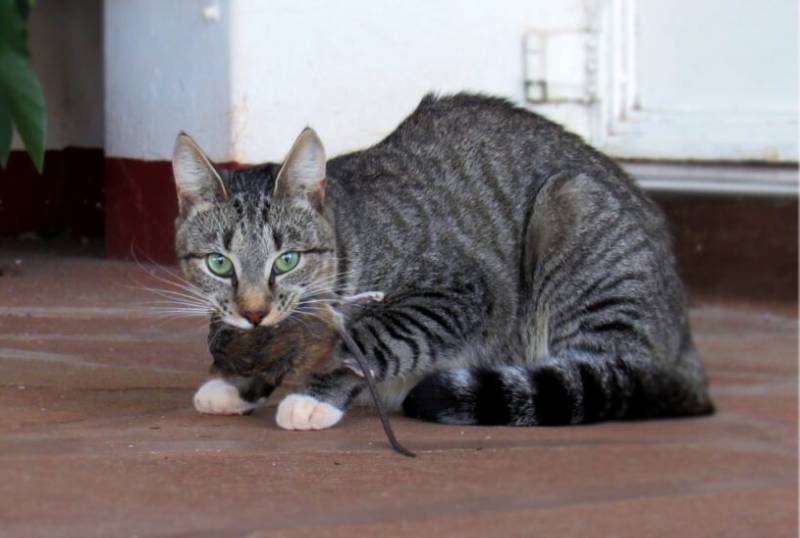
Whether your cat is well fed or pining for its next meal, a scurrying rodent is likely to attract its attention. Cats are instinctually driven to chase rodents even when they’re not hungry, but some cats are more skilled at pest control than others. Mice can climb thin cables and move straight up textured walls to escape predators, and only the most experienced hunter can reduce the rodent population in a home.
The Maine Coon, Siamese, Burmese, Japanese Bobtail, and Persian are some of the breeds known for their mousing skills, but they’re unlikely to eradicate every mouse if a nest has been established somewhere on the property. Although cats prey on rodents, they’re usually outnumbered by the pests in a home environment.
Rodent Advantages
An experienced mouser can keep the mice out of specific rooms in your home, but the cat cannot compete with a rodent’s reproduction cycle. Mice can birth litters every six weeks and produce up to 60 offspring per year, but the number can be much higher if you have multiple birthing partners on your property. If a home is guarded by an indoor cat, the mice can spend much of the day outside looking for food and return at night when the house is less active.
Mice do not travel too far from their nests, but the habitats are usually hidden and difficult to spot by non-professionals. Attics, crawlspaces, and spaces behind interior walls are common spots for nests, and the only way to eliminate the population is to remove the nest and its occupants. However, removing a nest is not a job for an average homeowner without pest control training. Although they’re tiny, mice are dangerous pests that can injure your family and pets and damage vital building materials.
The Dangers of Living with Mice

Your cat can chase away mice in your home and even kill a few, but coming in contact with a rodent is a dangerous experience that can harm or kill your pet.
Biting and Scratching
Mice have razor-sharp claws that allow them to travel and climb great heights effortlessly, but they’ll also use them to defend themselves and protect the nest. Feral cats are skilled hunters that can overcome a rodent without injuries, but domesticated animals are more likely to become injured from rodent fights.
Mice will bite an attacker in a fight, but the claws typically cause more damage. Mice attacks can harm sensitive areas like the eyes and nose, and the bacteria on their claws can cause more damage than the injury itself.
Disease Carrying
A scratch from a mouse can give your cat an infection or disease, but the little pests have other ways of spreading viruses. Mice have parasites like fleas and ticks that can be infected with deadly contaminates that can infect your cat when it’s bitten. After feeding, the mice can also leave infected droppings, urine, and hair scattered around your home that can infect your pet and family. Some of the diseases spread by mice include:
- Rabies
- Leptospirosis
- Salmonellosis
- Plague
- Hantavirus
- Hemorrhagic fever
- Lymphocytic Chorio-meningitis
- Tularemia
Keeping your home rodent-free is vital, and although your cat is unlikely to solve your problems, you can keep your pet and loved ones safe and prevent an infestation by making repairs and modifications to your property.
Professional Removal

Spotting a single mouse may not seem alarming, but it’s the first sign that you need help from a professional service. Unlike rats, mice are curious creatures that are unafraid of humans. Mice search for food at night, but you may see one grab a crumb in the daytime.
However, most of the population resides in a hidden nest, and you’re unlikely to get an estimation of the total numbers without help from pest control experts. Commercial traps and poisons can treat an infestation temporarily, but the pesticides can also harm your pet. Most pest control companies offer rodent treatments that will not hurt your cat, and some use humane techniques to collect the mice that are cleaner and more effective than poison.
Home Modifications
After the mice are removed, you can modify your home to prevent future infestations. Mice invade your house looking for shelter, food, and water, but if you block their access to the necessities, you can keep them away.
Yard Work
Keeping your yard clean will make your property less appealing to hazardous guests. Mice can build nests outside of your home in leaf piles, decaying firewood stashes, and other accumulations of debris. Clear your yard of old branches and yard waste, and be sure to turn your compost frequently to keep fresh organic material from sitting on the top layer. Using durable trash containers with lockable lids can reduce the attractive aroma of decaying food that attracts mice.
Food Removal
Premium pet food may keep your outside cat healthy, but it’s also attractive to rodents and other wildlife in the area. Remove food bowls after your pet has eaten and clean up food waste from outdoor dining and entertaining to prevent rodents from foraging in your area.
Repairs
Mice can crawl into tiny holes to access your home or roof. By examining the exterior and interior walls, you may find signs of rodent activity. Seal any holes you see in the walls or floors and check the roof near attic vents for evidence of gnawing. You can install a durable mesh screen over the attic vent to prevent entry while allowing air to continue to circulate.

Final Thoughts
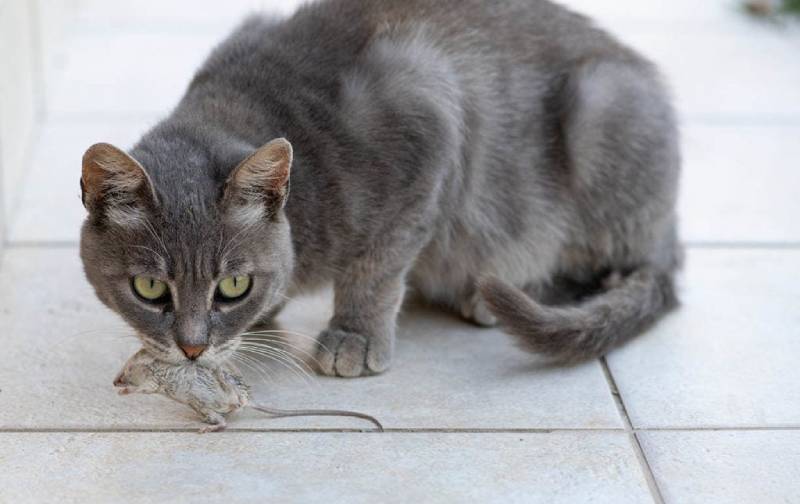
When mice encounter your cat’s scent, they can modify their routines and avoid the animal, but they’re unlikely to evacuate the area with their offspring. Cats can quickly kill a captured mouse, but the parasites and contaminants lurking on a mouse’s body pose a risk to your pet and family’s health. Using a professional service to eliminate the rodent population is the only method with a high success rate, but you can also renovate your home and property to protect your family and feline from another rodent invasion.
Related Read: Does Cat Litter Keep Mice Away? What You Need to Know!
Featured Image Credit: Monique Guilbault, Shutterstock
Get Hepper In Your Inbox


Pet care tips from our vets and experts, straight to your inbox.
You may opt-out at any time. View our Privacy Policy for more information.

Nicole is a lover of animals of all sizes but is especially fascinated with the feline variety. She’s the proud mom of Baby, a Burmese, and works every day so he can relax in the sunshine or by the fire. She’s always had a cat in her home and has spent countless days with others, observing behaviors and softening up even the grouchiest of the lot. Nicole wants to share her kitty expertise with you so you and your cat can live happy, healthy, and care-free.
Join the conversation
Ask a question, share your story, or send private feedback.