Hepper is reader-supported. When you buy via links on our site, we may earn an affiliate commission at no cost to you. Learn more.
Can Bearded Dragons Eat Bees? Vet Approved Facts & FAQ


In this article
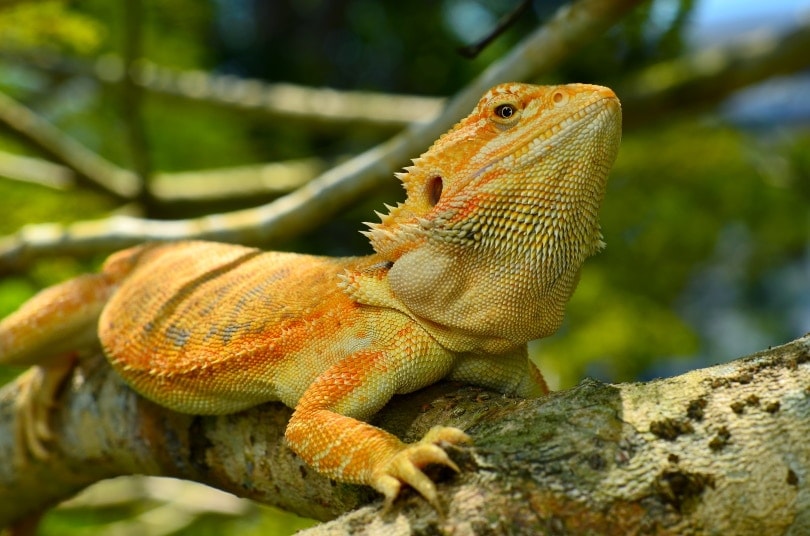
Bearded dragons love to eat insects, so if a bee wanders too close, it’s common to see your bearded dragon try to eat them. But while your bearded dragon might want to eat bees, that doesn’t mean you should let them.
Most of the time, it won’t present a problem, but if the bee happens to sting your bearded dragon in the wrong spot, or if your bearded dragon eats too many, it can cause issues. So, bees are not something that you should be feeding your bearded dragon.

Why You Shouldn’t Feed Your Bearded Dragon Bees
As a basic rule of keeping reptiles, you should only feed them live food (eg, crickets, mealworms) that has been sourced from a reliable pet food supplier, preferably one that specializes in exotic pets.
There are a number of reasons why you shouldn’t capture their prey yourself, including:
The types of live foods you will commonly find on the menu for your bearded dragon at your pet food supplier include mealworms, crickets, Dubia roaches, silkworms, and butterworms. Bees are one insect you won’t find on the list, and here’s why:
1. Anaphylaxis
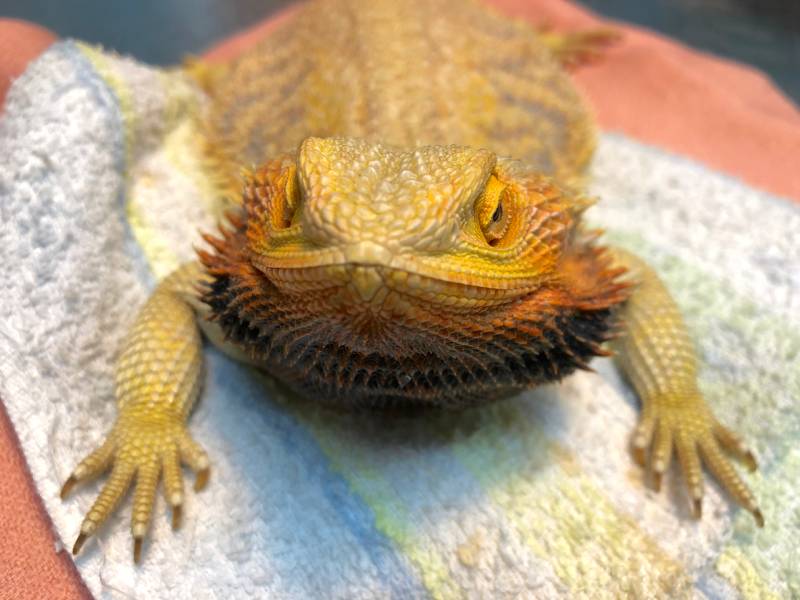
While most bearded dragons won’t have an extremely adverse reaction to a bee sting, some will. If your bearded dragon is allergic to bee stings, they can go into anaphylactic shock, which can be deadly for your bearded dragon.
2. Swelling
If a bee stings your bearded dragon, they’re likely to swell up. Minor swelling isn’t a huge deal for your bearded dragon, but sometimes the swelling can be too much, or they can swell up in a dangerous spot. If you don’t let your bearded dragon near a bee in the first place, this isn’t something you need to worry about.
3. Digestive Problems
Bearded dragons have extremely sensitive digestive systems, and the hard exoskeleton of a bee can create problems. Typically, a single bee won’t create a problem unless it’s a juvenile bearded dragon. However, if your bearded dragon eats a ton of bees, it can create problems.
4. We Need Bees!
Bees are pollinators, and currently, their population is on the decline around the world. If your bearded dragon accidentally eats a bee or two, it’s not going to cause any problems, but we still don’t see the point in letting them eat bees when it’s really not necessary!
Signs to Look For
If your bearded dragon does happen to eat a bee or two, you don’t need to rush them straight to the vet. Instead, keep a close eye on them to ensure they don’t have any adverse reactions. If they start to exhibit any of the following signs, take them to a vet right away.
- Acid reflux/regurgitation
- Swelling
- Puffing beard
- Lethargy
- Loss of appetite
What You Should Feed a Bearded Dragon
While you shouldn’t feed bearded dragon bees, there are plenty more foods you can feed them. Adult bearded dragons need between 20-50% animal-based protein in the form of live invertebrates (insects, worms etc), with the rest made up of leafy greens, vegetables, and the occasional fruit treat. Juveniles need a diet that is close to 80% protein to fuel their growth and development.
Below, we’ve highlighted five great food options you can feed your bearded dragons.
1. Crickets
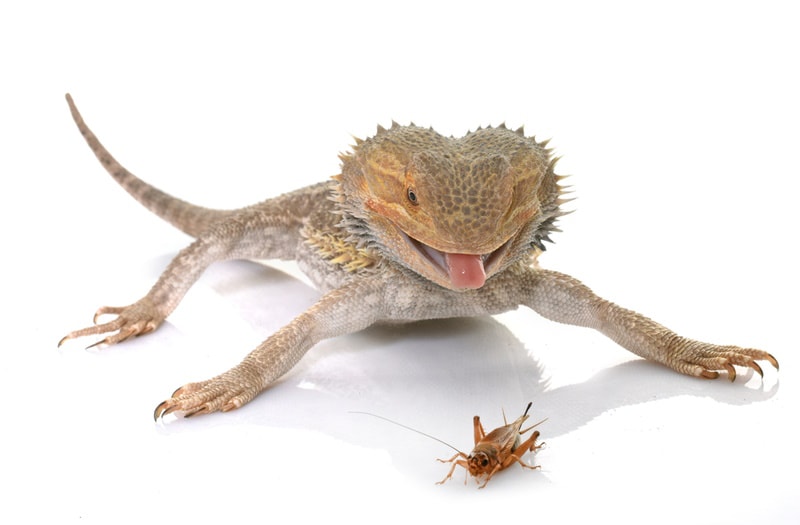
Your bearded dragon needs some protein in their diet, and one of the best protein options out there are crickets. Just keep in mind that they are a bit noisy and can escape if you’re not careful!
2. Dubia roaches
Bearded dragons love a good roach, and of all the varieties, Dubia roaches are an ideal option: they’re low in fat, high in protein, and they don’t tend to fly away or invade your home if they do escape!
3. Kale
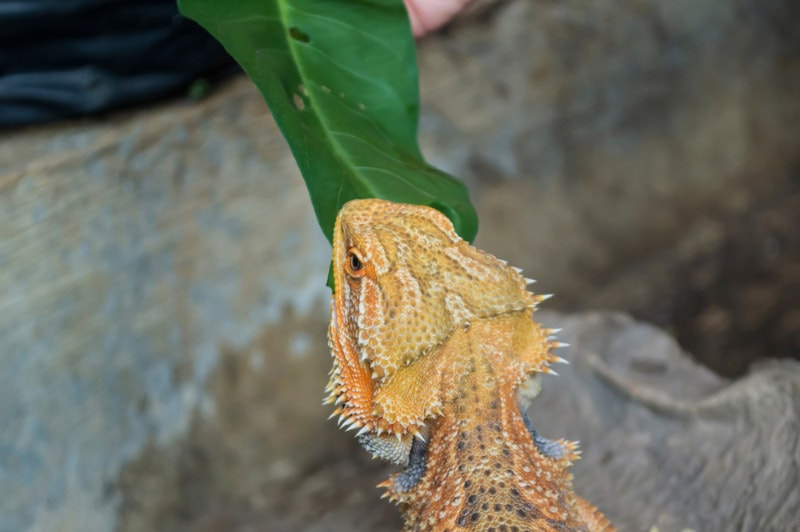
Kale is a dark green leafy vegetable, and these are great for bearded dragons. Bearded dragons can eat tons of kale, but be sure to mix it with other dark green vegetables because kale is also high in calcium. Bearded dragons need calcium, but too much can lead to some health concerns.
4. Radishes
Not necessarily a daily staple, but radishes are a great option for adding a little bit of variety into your beardie’s vegetable buffet. A few slices 3-4 times a week is plenty, but bear in mind that some individuals might find their peppery taste not to their liking.
5. Papaya
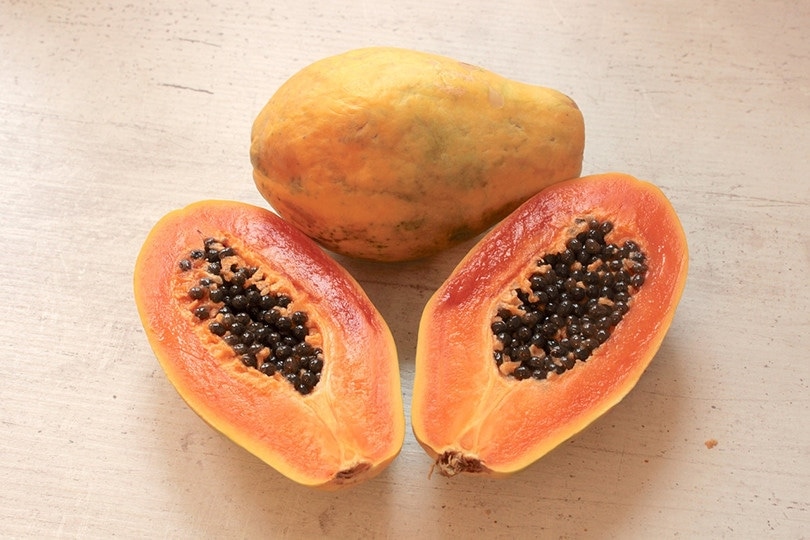
While your bearded dragons shouldn’t eat as much fruit as they do vegetables, there’s nothing wrong with giving your bearded dragons some fruit from time to time. It’s sweet and they’ll love the taste, but don’t give it to them all the time; otherwise, they can get hooked on the stuff. Papaya is a great option, because it has the ideal ratio of calcium to phosphorus, which is extremely important for reptile health.
What About Bee Pollen?
Yes! Although we don’t want to be feeding bees to our bearded dragons, bee pollen is actually a safe supplement that can have some great health benefits. It is packed with vitamins, has antibiotic properties, and can boost natural immunity.
As you can imagine, bee pollen is quite tasty for your beardie, so it can be useful to dust over foods that they’re not keen to eat. Plus, you can also use it to gut load (fatten up) your insects before feeding them to your bearded dragon.
Final Thoughts
While bee pollen can provide your bearded dragon with beneficial nutrients, you don’t want to be feeding them bees. Bees have multiple defense mechanisms that can create problems for your bearded dragons if they try to eat them, even if they can get away with it most of the time.
If your bearded dragon does happen to eat a bee or two, just keep an eye out for them and take them to the vet if they start to show adverse symptoms!
See Also:
Can Bearded Dragons Eat Dead Crickets? Vet Approved Facts & FAQ
Can Bearded Dragons Eat Grasshoppers? Vet Approved Facts & Safety Guide
Sources
Featured Image Credit: Piqsels
Get Hepper In Your Inbox


Pet care tips from our vets and experts, straight to your inbox.
You may opt-out at any time. View our Privacy Policy for more information.
Adam, a dedicated freelance writer and animal advocate, has a long history of rescuing animals and creating compelling written content. For over ten years, he has worked as a freelance writer, and his passion for rescuing animals extends even further back. Adam is also a proud father of three, always ready for a challenge and eager to embark on new adventures.
Join the conversation
Ask a question, share your story, or send private feedback.