Hepper blog

Search our database of over 9,984 posts with up-to-date information from our experts and veterinarians.

Hepper is reader-supported. When you buy via links on our site, we may earn an affiliate commission at no cost to you. Learn more.

Can Bearded Dragons Eat Kale? Vet-Reviewed Facts & Tips

By Nicole Cosgrove · Reviewed & fact-checked by Dr. Amanda CharlesVet Approved
Dr. Amanda Charles
Reviewed & Fact-Checked byDr. Amanda CharlesVeterinarian
Dr. Amanda Charles qualified as a vet in 2002 after graduating from the University of Liverpool and has been in small animal practice ever since. She has a postgraduate Certificate in Dermatology. She loves empowering pet parents by giving them up-to-date and accurate information and thrives off the variety that being a vet brings.Outside of work, Amanda has two very active young sons and an equally active Cocker Spaniel and Ragdoll cat, all of whom keep her very busy!View authorThe information is current and up-to-date in accordance with the latest veterinarian research. Read about our vets
Share
Ask us a question in the comments
Hepper_Can Bearded Dragons Eat_Kale

Kale is safe and nutritious for bearded dragons, though it should be fed in moderation with a variety of other vegetables.

Here’s everything you need to know about feeding kale to your bearded dragon as part of a complete and balanced diet.

Is Kale Safe and Healthy for Bearded Dragons?

As a part of a varied and balanced diet, kale is safe and healthy for your bearded dragon. It’s a nutrient-dense leafy green that has loads of vitamins and minerals, including:

  • Vitamins A, C, and K
  • Potassium
  • Manganese
  • Magnesium
  • Calcium

Kale is one of the few vegetables with a much higher calcium concentration than phosphorus, allowing bearded dragons to absorb it. Improper diets that are too high in phosphorus or too low in calcium and/or inadequate vitamin D3 can lead to health issues like metabolic bone disease (MBD), which compromises the dragon’s bone density. Eventually, this serious condition can progress to seizures, inappetence, muscle twitching, and severe lethargy.

Kale is also low in oxalates, unlike some other leafy greens. A diet too high in oxalates can cause issues with calcium absorption, leaving your beardie susceptible to MBD and other problems.
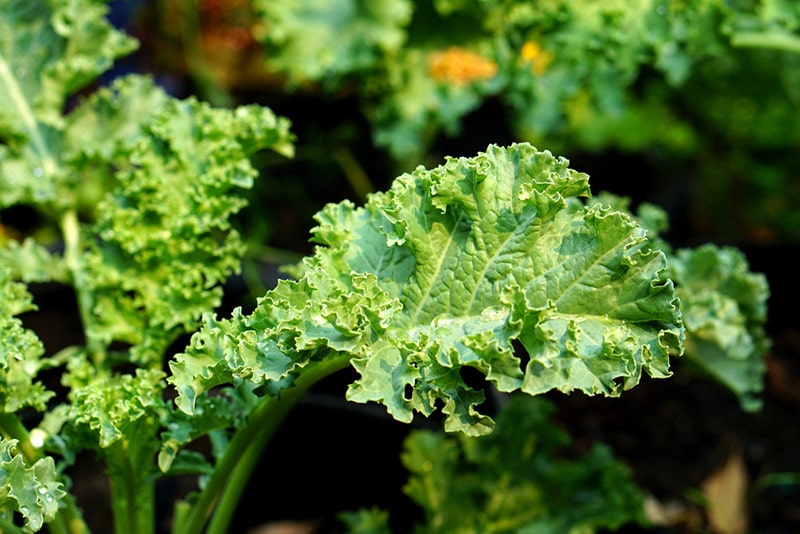
Close up of green curly kale plant
Image Credit: BlueSky_31, Shutterstock

How to Feed Kale and Precautions

All vegetables, including kale, should be fed raw (or lightly cooked) to retain nutrients. Make sure you wash your fruits and vegetables to clean off any pesticides, insecticides, or other contaminants that can hurt your dragon. If you do cook it, stick to boiling or steaming instead of frying or sauteing. Avoid using any seasoning on the fruits and vegetables for your dragon.

When you feed kale and other vegetables and fruits, be sure to chop everything up into small pieces that are easy for your dragon to eat and to ensure it gets a mix of different foods. Otherwise, your dragon may develop a preference for one food that can lead to an imbalanced diet.

Kale, along with mustard greens and cabbage, contains goitrogens that suppress the thyroid glance by interfering with iodine uptake. Feeding these veggies in excess can lead to hypothyroidism in your bearded dragon and a host of related symptoms.

Kale is also loaded with vitamin A. Bearded dragons need a certain amount of vitamin A in their diet as it is important for maintaining normal epithelial tissue and is vital for their immune function, vision, growth and reproduction. However, bearded dragons can also have problems if they have vitamin A in excess, causing vitamin A toxicity ( hypervitaminosis A). The levels may become too high if you feed too much kale as well as supplementing vitamin A. Speak to your exotics vet for advice on a balanced diet and supplements for your beardie.
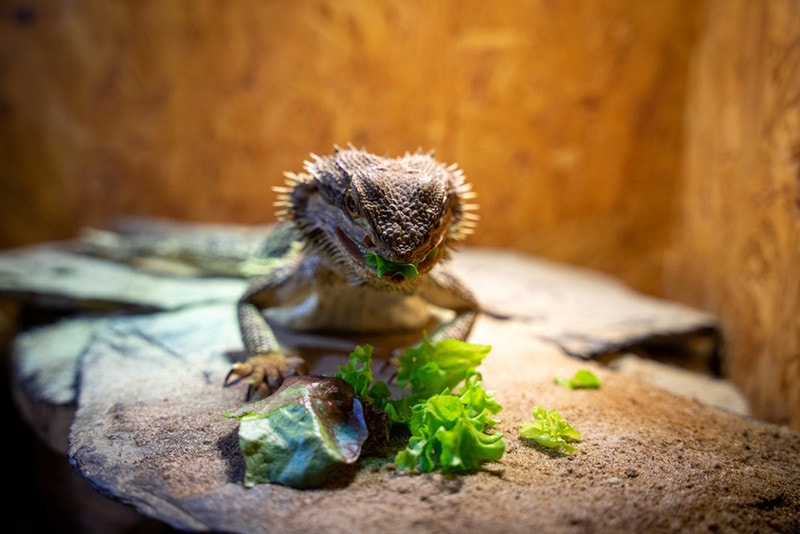
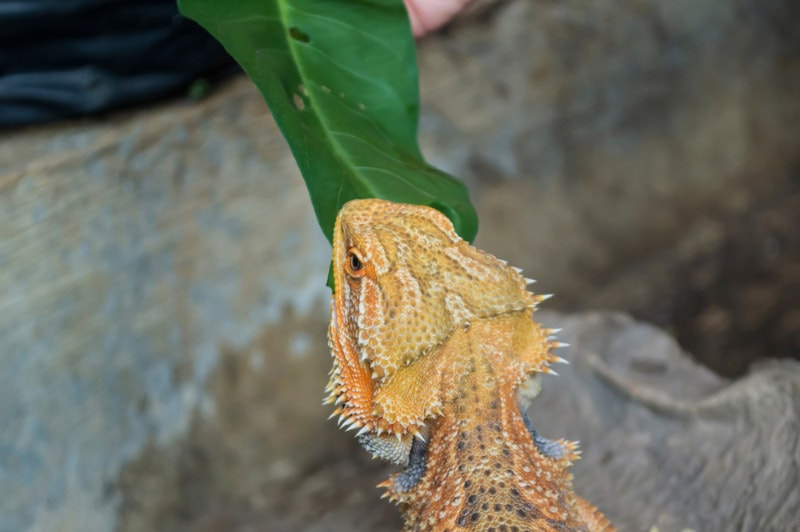
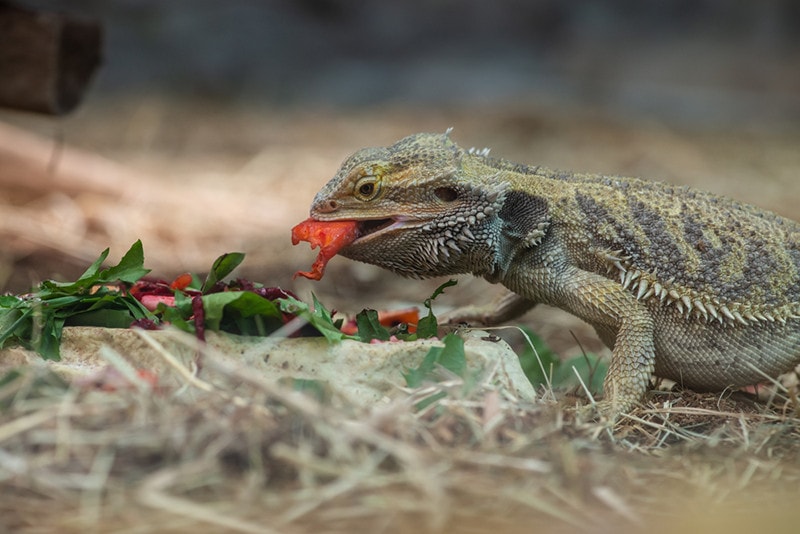
Bearded Dragon Eating
Image Credit: Jaz_Online, Shutterstock

Typical Bearded Dragon Diet

In the wild, bearded dragons eat both animal-based and plant-based foods. Young dragons tend to eat more animal protein, while adults eat more vegetarian diets.

80-90% of the plant material in a bearded dragon’s diet should be composed of leafy green vegetables and flowers. Only about 10% to 20% should be fruit.

For leafy green vegetables, it’s best to use:

  • Collard greens
  • Beet greens
  • Mustard greens
  • Turnip greens
  • Alfalfa
  • Bok choy
  • Swiss chard
  • Kohlrabi
  • Watercress
  • Clover
  • Green beans
  • Cilantro
  • Escarole
  • Dandelion
  • Kale

Leafy greens like Swiss chard, spinach, and beet greens should be fed sparingly. These vegetables contain oxalates that can bind calcium and other trace minerals, preventing absorption.

A smaller portion of the diet can include:

  • Cactus
  • Squash
  • Okra
  • Sprouts
  • Cucumber
  • Cooked sweet potato
  • Asparagus
  • Carrots
  • Peas
  • Corn

Fruit that’s safe for bearded dragons includes

  • Figs
  • Melon
  • Kiwis
  • Guava
  • Apricot
  • Dates
  • Raspberries
  • Strawberries
  • Apples
  • Pears
  • Starfruit
  • Grapes
  • Peaches
  • Mangos
  • Tomatoes

Though safe, these fruits should be fed sparingly to avoid an imbalance in your beardie’s diet.

For animal-based protein, bearded dragons can have calcium-dusted crickets, mealworms, and Dubia roaches. Hornworms and silkworms are good options on occasion. Waxworms and superworms should be fed sparingly, as they are high in fat.

All the insects provided should be feeder-quality insects sourced from reptile breeders, pet stores, or bait stores, never from your own home or garden. Wild insects may have diseases or contamination from fertilizers and insecticides that can be toxic for our beardie.
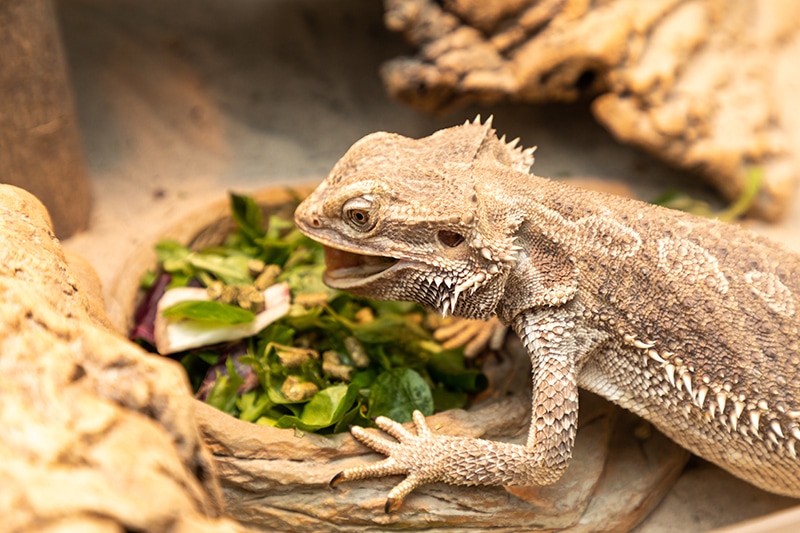
bearded dragon eating inside its terrarium
Image Credit: Nicole Lienemann, Shutterstock

Conclusion

Kale is one of many vegetables that are safe and healthy for your bearded dragon to eat. But like everything else, kale should be fed in moderation as part of a varied diet of appropriate foods. An unbalanced diet with too much kale may contribute to the development of health problems like hypothyroidism or vitamin A toxicity.

Related Reads:

Sources

Featured Image Credit By: Piqsels

Get Hepper In Your Inbox

Pet care tips from our vets and experts, straight to your inbox.

List

Select all that apply.

You may opt-out at any time. View our Privacy Policy for more information.

Nicole Cosgrove
Authored by

Nicole Cosgrove

Join the conversation

Ask a question, share your story, or send private feedback.
Rate this post
Required to post. Only our editors see your rating.
Who should see this?

A human reviews every comment before it appears. Your email is never published.

Picked to go with this article

Can Bearded Dragons Eat Broccoli? Vet-Approved Benefits & Risks

Can Bearded Dragons Eat Broccoli? Vet-Approved Benefits & Risks

If you're a proud owner of a bearded dragon, you're probably always on the lookout for new foods to keep your scaly friend healthy and happy. Among the various…

Nicole Cosgrove
By Nicole Cosgrove ·
10 Vet-Approved Greens for Bearded Dragons (With Pictures)

10 Vet-Approved Greens for Bearded Dragons (With Pictures)

Bearded dragons are interesting pets. These amazing reptiles are relatively easy to care for and can even be suitable pets for older children. To keep a bearde…

Melissa Gunter
By Melissa Gunter ·
Can Bearded Dragons Eat Collard Greens? Vet-Reviewed Diet Facts & FAQ

Can Bearded Dragons Eat Collard Greens? Vet-Reviewed Diet Facts & FAQ

If you’re a lover and owner of an exotic pet, especially a bearded dragon, you understand the fulfillment they bring. Not only are bearded dragons relatively e…

Melissa Gunter
By Melissa Gunter ·
Can Tortoises Eat Kale? Vet-Reviewed Nutrition Facts & FAQ

Can Tortoises Eat Kale? Vet-Reviewed Nutrition Facts & FAQ

Cute and quiet, tortoises live for up to 150 years and, provided their environment is set up correctly, are very undemanding pets. In the wild, 90% of their di…

Nicole Cosgrove
By Nicole Cosgrove ·

Keep reading

More stories you might like

What Vegetables Can Bearded Dragons Eat? 27 Vet-Approved Options

Vegetables are an extremely important part of a bearded dragon’s diet, regardless of their age. For young beardies under 4 months of age, the diet should consi…

Brooke Billingsley
By Brooke Billingsley ·
What Vegetables Can Bearded Dragons Eat? 27 Vet-Approved Options

Can Bearded Dragons Eat Cabbage? Vet-Reviewed Facts & FAQ

If you own a bearded dragon, you know that they are omnivores and veggies are part of their diet, but you might not know which are the safest to give your pet.…

Misty Layne
By Misty Layne ·
Can Bearded Dragons Eat Cabbage? Vet-Reviewed Facts & FAQ

What Do Bearded Dragons Eat as Pets? Vet Reviewed Diet

Bearded Dragons are omnivorous, meaning they consume a mixture of animal protein and veggies. In the wild, the exact animals and veggies the Bearded Dragons wo…

Kristin Hitchcock
By Kristin Hitchcock ·
What Do Bearded Dragons Eat as Pets? Vet Reviewed Diet

Can Bearded Dragons Eat Celery? Vet-Approved Nutritional Facts

Bearded dragons are omnivorous reptiles, meaning they eat both plant and animal material. While young beardies eat primarily insects and few vegetables, the re…

Chantelle Fowler
By Chantelle Fowler ·
Can Bearded Dragons Eat Celery? Vet-Approved Nutritional Facts

Can Bearded Dragons Eat Microgreens? Vet Approved Nutrition Facts

Bearded dragons are cute and popular reptiles with a gentle demeanor and friendly character. They are inquisitive creatures and make the perfect pet for the be…

Rachel Giordano
By Rachel Giordano ·
Can Bearded Dragons Eat Microgreens? Vet Approved Nutrition Facts

Can Bearded Dragons Eat Beetroot? Vet-Reviewed Health Facts

If you are always looking for new and flavorful items to add to your bearded dragon’s food menu, you'll want to know all you can about the numerous veggies and…

Ashley Bates
By Ashley Bates ·
Can Bearded Dragons Eat Beetroot? Vet-Reviewed Health Facts

Can Bearded Dragons Eat Leeks? Vet-Approved Pros, Cons & Tips

Due to their often gentle temperament and ease of handling, Bearded Dragons are a preferred pet among reptile lovers. Like any pet, when caring for a Bearded D…

Nicole Cosgrove
By Nicole Cosgrove ·
Can Bearded Dragons Eat Leeks? Vet-Approved Pros, Cons & Tips

Can Bearded Dragons Eat Brussels Sprouts? Vet-Reviewed Facts & FAQ

Although Brussels sprouts are considered safe to eat, they can only be enjoyed if given to your Bearded Dragon as an occasional treat. Feeding them too many or…

Kerry-Ann Kerr
By Kerry-Ann Kerr ·
Can Bearded Dragons Eat Brussels Sprouts? Vet-Reviewed Facts & FAQ