Hepper is reader-supported. When you buy via links on our site, we may earn an affiliate commission at no cost to you. Learn more.
Can Cats Eat Candy? Vet-Approved Facts & FAQ


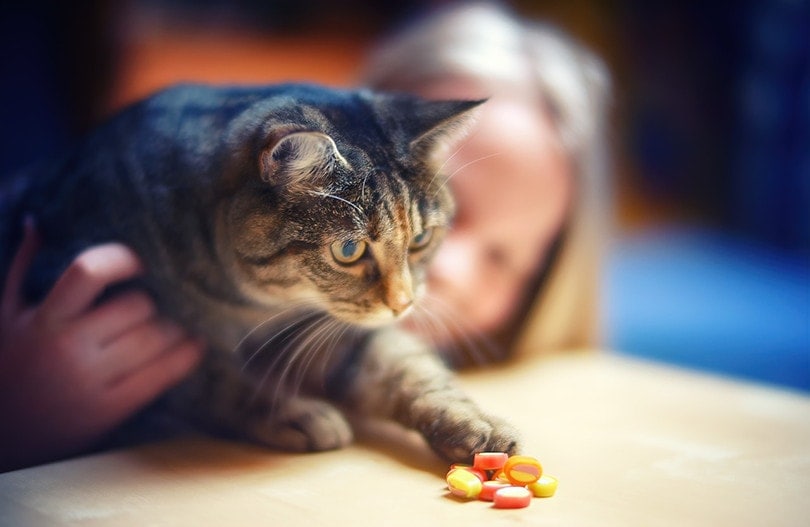
Chocolate and toffee and gummies oh my! No matter what your sweet tooth craves you will surely find a candy that suits your fancy. If you’re enjoying your favorite treat with a cat friend purring in your lap, you might be tempted to share the spoils. Not so fast, though, as none of these are healthy or appropriate for your cat, and some may even be toxic, such as chocolate.
So, can cats eat candy? Although there may be types of candy that are not directly toxic to cats, that doesn’t mean they should eat it. Candy is something cats should stay well away from. Lots of types of candy actually contain ingredients known to be toxic to cats. Even candy that won’t make your cat sick isn’t particularly healthy for them, however, and other treats make better choices.
In this article, we’ll go over some common candy ingredients and why you should avoid offering them to your cat..

Toxic Candy Ingredients To Avoid
Cats should not eat any candy at all. If they happen to steal something off your counter, analyzing the ingredients and contacting your vet is the next thing to do promptly. Knowing whether a particular candy is poisonous for your cat starts with learning what ingredients could be toxic for your kitty if ingested. There are some other dangers involved with your cat eating candy by mistake, but let’s start with the toxic ingredients to avoid at all costs.
1. Chocolate
Any chocolate candy is an automatic no-no when it comes to sharing with your cat. Chocolate toxicity is most common in dogs but chocolate is dangerous for a lot of animals, including cats. Avoid feeding even small amounts of chocolate to your cat because it’s hard to predict how much they need to eat before getting sick.
Chocolate contains two toxic compounds, theobromine and caffeine. The concentration of these compounds varies naturally in chocolate, which is why even a small amount of chocolate candy could be toxic. Some cats are also naturally more sensitive to these elements.
If your cat eats chocolate, you may notice vomiting, restlessness, and diarrhea. These can progress to more serious signs like seizures, heart issues, blood pressure issues, and trouble breathing. Severe chocolate toxicity can even kill your cat.
Don’t take chances. Never feed your cat chocolate candy and keep it stored safely out of reach to prevent accidental ingestion.

2. Nuts
While many nuts commonly found in candy–such as sweet almonds and peanuts–aren’t toxic to cats, nuts aren’t a natural part of a cat’s diet and could still upset their stomach and cause diarrhea if eaten. Macadamia nuts, however, should also be avoided, as they may be toxic to cats and could cause both digestive and neurological issues.
3. Raisins
Any candy with raisins is potentially toxic to your cat. Grapes and raisins can cause kidney issues and even kidney failure in cats. While not every cat will have a bad reaction to raisins, the potential dangers are too serious to risk. Avoid feeding any raisin candies to your cat.
4. Xylitol
Sugar-free candy and gum are often sweetened with a substance called xylitol, which is a known toxin to dogs. Xylitol causes dangerously low blood sugar levels and long-term liver damage in dogs if ingested. According to a study of xylitol ingestion in cats, however, our feline friends don’t seem to react to the sweetener the same way that dogs do.
Because the study had a small sample size of cats and didn’t discover much information on the long-term effects of xylitol versus short-term, most experts still recommend that cats not ingest food or medications containing this sweetener to be on the safe side.

Candy: A Choking Hazard For Cats
Even candy that doesn’t contain any toxic ingredients can still be dangerous for cats. The size, shape, and texture of many candies can pose a choking hazard to your cat. Cats typically don’t chew their food well and small, hard candies could be dangerous to them.
Gummy candies or sticky candies, like caramels, could also be hard for a cat to chew and get stuck in their mouth, posing a choking threat.
Candy Isn’t Healthy for Cats
Humans know that eating a lot of candy isn't healthy for us, but the same is true for cats. Candy offers minimal nutritional value for cats, who can only process nutrients from animal-based food sources.
Eating foods like candy that aren’t part of their regular diet can cause digestive issues for cats. In addition, there is anecdotal information that consuming fatty foods may predispose some animals to develop a painful, dangerous condition called pancreatitis, although the exact cause for this illness in cats does not seem to have an obvious identifiable cause. Candy adds calories to your cat’s diet without offering any nutritional benefit in return, a concern when so many pet cats are dealing with obesity.
Last But Not Least…
In case we haven’t already given you enough reasons to avoid feeding your cat candy, here’s our final pitch: your cat can’t taste anything sweet anyway.
Yes, a research study indeed confirmed that the cat's sense of taste differs from many other mammals because they cannot recognize sweet flavors. Dogs, on the other hand, not only recognize sweet flavors but actually like them, explaining why the vast majority of chocolate and xylitol toxicities occur in our canine friends.
Summary
So, to recap, many types of candy contain cat-toxic ingredients such as chocolate. Even non-toxic candies pose a choking hazard to your cat and don't offer any nutritional benefit either. And they won't even be able to enjoy eating it because they can't taste sweet flavors. Keep your sugary treats to yourself and feed your kitty a nutritionally balanced cat food instead.
See Also:
Sources
Featured Image Credit: jplenio, Pixabay
Get Hepper In Your Inbox


Pet care tips from our vets and experts, straight to your inbox.
You may opt-out at any time. View our Privacy Policy for more information.
A lifelong lover of all creatures great and small, Elizabeth got her first cat at 5 years old and at 14, she started working for her local veterinarian. After spending more than 20 years working as a veterinary nurse, Elizabeth decided to step away to become a stay-at-home parent to her daughter. Now, she is excited to share her knowledge with our pet parents. Elizabeth lives in Iowa with her family, including her two fur kids, Linnard, a husky mix and Algernon, the worldʻs most patient cat. When not writing, she enjoys reading, watching soccer, and spending time outdoors with her family.
Join the conversation
Ask a question, share your story, or send private feedback.