Hepper blog

Search our database of over 9,984 posts with up-to-date information from our experts and veterinarians.

Hepper is reader-supported. When you buy via links on our site, we may earn an affiliate commission at no cost to you. Learn more.

Can Dogs Eat Horse Hooves? Vet Reviewed Health Concerns

By Cassidy Sutton · Reviewed & fact-checked by Dr. Chyrle BonkVet Approved
Dr. Chyrle Bonk
Reviewed & Fact-Checked byDr. Chyrle BonkDVM (Veterinarian)
Chyrle Bonk, an Idaho native, who spent four years in Oregon pursuing her veterinary degree before returning to her beloved home state. An outdoor enthusiast, she explores Idaho's expansive landscapes with her husband and two boys whenever possible. Their family includes an assortment of pets and livestock, featuring two dogs, two cats, two horses, a pony, and a seasonal group of cows numbering between 80 and 150.View authorThe information is current and up-to-date in accordance with the latest veterinarian research. Read about our vets
Share
Ask us a question in the comments
Hepper_Can Dogs Eat_Horse Hooves

Horse hooves, or more aptly their trimmings, make a coveted treat for some dogs, but their safety sparks some debate. So, which is it? Should you worry that your dog is eating horse hoof trimmings? The answer isn’t so simple. Although horse hooves are sturdy natural chews for dogs, they also carry certain risks, so you should speak to your vet before offering them to your dog. For more information about why this is, keep reading.

What Are Horse Hooves Made Of?

Essentially, horse hooves are made of keratin. It’s the same substance that makes up your fingernails. When a horse’s hooves are trimmed, it involves clipping off the excess keratin like you do on your own finger and toenails. Since keratin is such a hard protein, horse hooves help to protect a horse’s foot and support their weight. This hardness also makes it attractive for dogs to chew on.
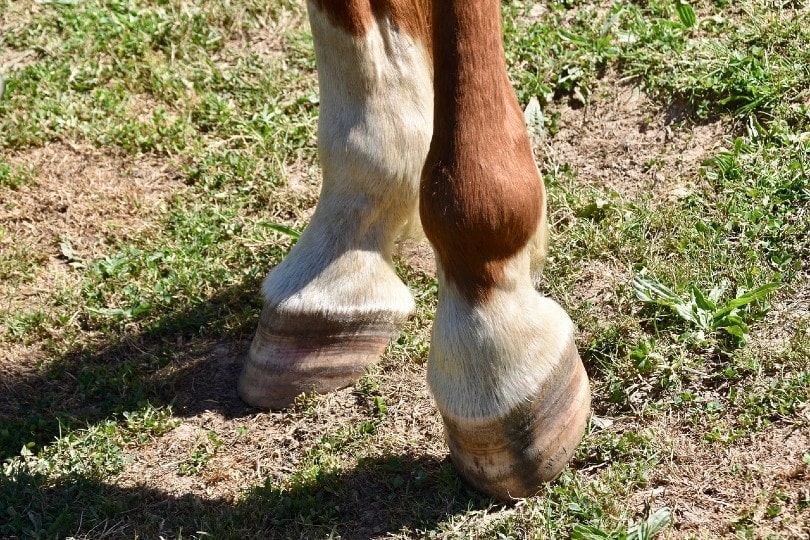
Horse Hooves
Image By: JACLOU-DL, Pixabay

What Are the Risks and Benefits of Offering Horse Hooves?

Horse hoof trimmings can make a tough and all-natural chew for dogs. Chewing on them can help scrape the plaque off of your dog’s teeth, reducing the risk of dental disease (and saving you some time and money). They also shouldn’t contain harmful preservatives or chemicals that some synthetic commercial chews can. But that doesn’t mean they’re the perfect treat.

On the downside, keratin isn’t easily digestible. So, consuming a large number of horse hoof trimmings can lead to digestive upset complete with vomiting, diarrhea, stomach pain, and even intestinal obstructions. On top of that, horse hoof trimmings are often small or sliver-shaped, increasing the potential for choking or injuries to the mouth, throat, or lower areas of the digestive tract.

You also want to avoid horse hoof trimmings that have been treated with chemicals for diseases like thrush. If you decide to allow your dog horse hoof trimmings, discuss with your vet first as there may be a safer option.

What About Other Hooves and Feet?

You will more than likely run across other animal feet turned into treats. Cow hooves and chicken feet can be purchased at most pet food stores, mom-and-pop butchers, and local farms. But, just because you can buy them, doesn’t mean you should. Hard chews like these all have the potential to create digestive issues and injuries, so consult your vet before giving any of these types of treats.
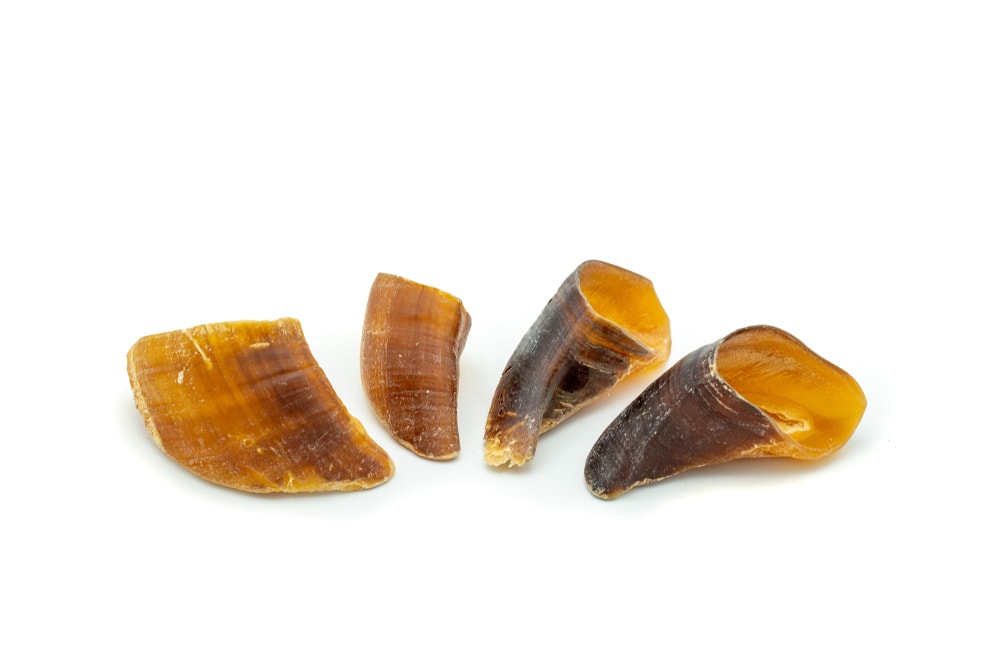
Dried Cow Hoof
Image By: Tienuskin, Shutterstock

Can Dogs Chew on Horse Bones?

As with other types of bones, allowing your dog to chew them always carries some risk of tooth fractures and digestion issues, including puncturing of the digestive tract and obstructions. So, giving them may not be worth the risk. Instead, you may choose other chews with less of a risk.

Conclusion

Horse hooves are a tough-to-chew, natural snack that your dog will more than likely love. However, with the potential to create digestive issues, it’s best to offer a few if any at all. Contact your veterinarian if you have questions about suitable dog chews for your pup.

Sources

Featured Image Credit: Osetrik_Shutterstock

Get Hepper In Your Inbox

Pet care tips from our vets and experts, straight to your inbox.

List

Select all that apply.

You may opt-out at any time. View our Privacy Policy for more information.

Cassidy Sutton
Authored by

Cassidy Sutton

Join the conversation

Ask a question, share your story, or send private feedback.

Rate this post
Required to post. Only our editors see your rating.
Who should see this?

A human reviews every comment before it appears. Your email is never published.

Picked to go with this article

Can Dogs Eat Cow Hooves? Vet Reviewed Facts & FAQ

Can Dogs Eat Cow Hooves? Vet Reviewed Facts & FAQ

Cow hooves are a polarizing treat among dog owners, though if dogs had their say, they’d likely have one every day. Technically speaking, dogs can’t EAT cow ho…

Chantelle Fowler
By Chantelle Fowler ·
Is Rawhide Bad for Dogs? Vet Approved Risks, Facts & Safety Guide

Is Rawhide Bad for Dogs? Vet Approved Risks, Facts & Safety Guide

Rawhides have been a go-to chew for dogs for many years and were first touted for preventing the destruction of various household items like shoes and furnitur…

Lindsey Lawson
By Lindsey Lawson ·
Can Dogs Eat Pigs’ Feet? Vet-Reviewed Health Concerns

Can Dogs Eat Pigs’ Feet? Vet-Reviewed Health Concerns

Many people don’t like the idea of certain meats; cow cheek or tongue, sweetbread, and pig trotters may not be as appealing as the more sanitized vision of a s…

Chris Dinesen Rogers
By Chris Dinesen Rogers ·
Can You Give Your Dog an Antler? Learn About Safe Dog Treats!

Can You Give Your Dog an Antler? Learn About Safe Dog Treats!

Chewing is a natural behavior that dogs engage in for various reasons. Giving dogs various chew toys and treats can help them relax and may clean their teeth.…

Jessica Kim
By Jessica Kim ·

Keep reading

More stories you might like

Dog Eating Sticks: Vet Reviewed Reasons of this Behavior, Risks & Care Tips

A dog playing with or eating a stick seems like a fitting image. Many dogs love sticks. They are fun and enticing to them, as well as natural, so they seem to…

Annaliese Morgan
By Annaliese Morgan ·
Dog Eating Sticks: Vet Reviewed Reasons of this Behavior, Risks & Care Tips

Why Do Dogs Chew Bones? Instinct, Benefits & Potential Risks (Vet-Approved)

Dogs and bones are traditionally believed to go hand in hand, and many dogs enjoy gnawing and chewing on bones. Some dogs may enjoy chewing on bones because th…

Jessica Kim
By Jessica Kim ·
Why Do Dogs Chew Bones? Instinct, Benefits & Potential Risks (Vet-Approved)

Can Dogs Eat Hay? Find Out if It Is Safe!

Being a dog owner comes with a lot of responsibility. You must provide your dog with all the necessities and love they need to be happy and healthy. You must a…

Melissa Gunter
By Melissa Gunter ·
Can Dogs Eat Hay? Find Out if It Is Safe!

Rawhide Alternatives for Dogs: 10 Healthy & Safe Options

Rawhide was once exceptionally popular for dogs. However, there are several drawbacks to giving your dog rawhide, one being digestive problems and another bein…

Kristin Hitchcock
By Kristin Hitchcock ·
Rawhide Alternatives for Dogs: 10 Healthy & Safe Options

My Dog Ate a Conker: Vet-Approved Facts & Safety Guide

Whether you call them buckeyes or conkers, horse chestnuts signal the beginning of autumn. You or your dog might kick them along the trail as you gather leaves…

Brooke Bundy
By Brooke Bundy ·
My Dog Ate a Conker: Vet-Approved Facts & Safety Guide

Can Dogs Eat Chicken Feet? Vet-Approved Nutrition Facts

Chicken feet may not be the first thing that pops into your mind when looking for a dog treat, but they are worth considering. Not only can your dog eat chicke…

Hanh Duong
By Hanh Duong ·
Can Dogs Eat Chicken Feet? Vet-Approved Nutrition Facts

Can Dogs Eat Cartilage? Vet-Approved Facts & FAQ

There are few things in this world that a dog won’t try to eat. The question is, what is safe for your dog to consume? Cartilage is the flexible connective tis…

Jordyn Alger
By Jordyn Alger ·
Can Dogs Eat Cartilage? Vet-Approved Facts & FAQ

Can Puppies Have Rawhide? Benefits, Substitutes & FAQ

Puppies have puppy teeth and they just gotta chew! But you don’t want your adorable new floor chewing up your shoes, furniture, or anything else that they can…

Kathryn Copeland
By Kathryn Copeland ·
Can Puppies Have Rawhide? Benefits, Substitutes & FAQ