Hepper is reader-supported. When you buy via links on our site, we may earn an affiliate commission at no cost to you. Learn more.
Cat Ear Mites vs Yeast Infection: Visual Differences (Vet-Approved)


In this article
Disclaimer: This article has been approved for medical accuracy by a qualified veterinarian. However, the purpose of this article is not to diagnose your cat or prescribe treatment. Every case is different, and cat owners are urged to seek veterinary treatment for the best health outcomes for their pets. Any opinions expressed are those of the writer.
Smelly, irritated ears can indicate that your cat has a health condition. Is it an infection or ear mites? While yeast and bacterial ear infections are relatively common in dogs, they're not uncommon in cats unless they have an underlying issue. If you suspect your cat has an ear infection, they may also have ear mites since they can cause ear infections.
However, this isn't always the cause, especially in older cats or cats with allergies. We'll examine the differences between the two conditions to help you determine how to care for your cat.

Visual Differences
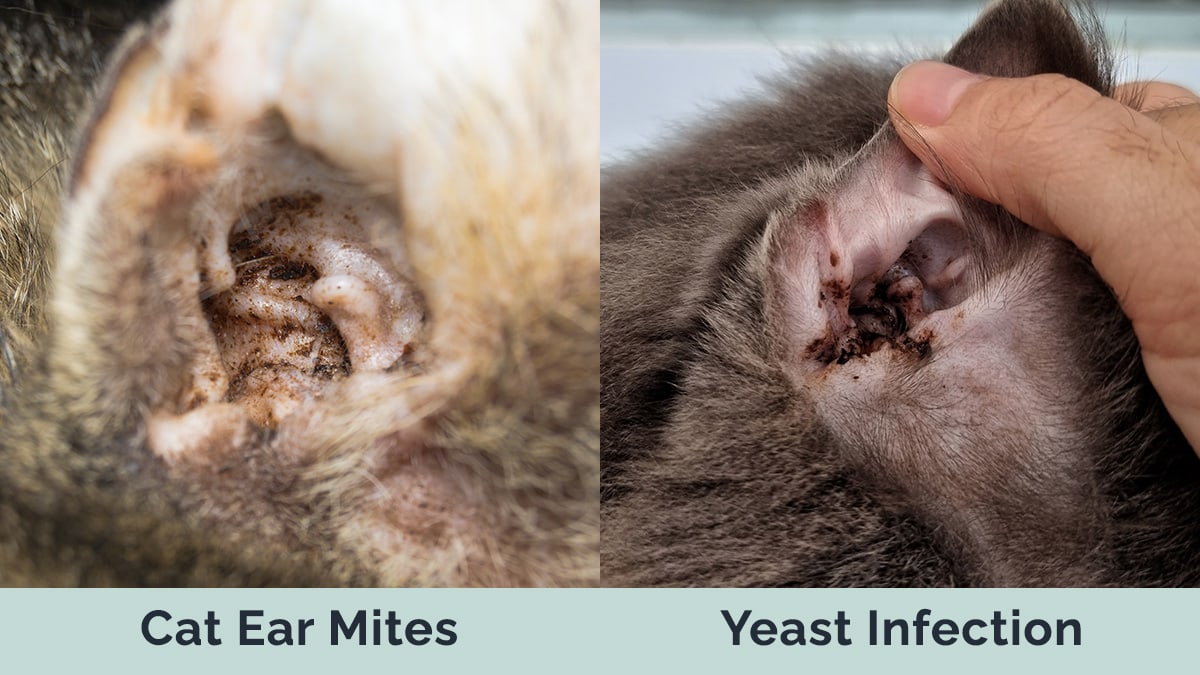
At A Glance

Overview of Ear Mites
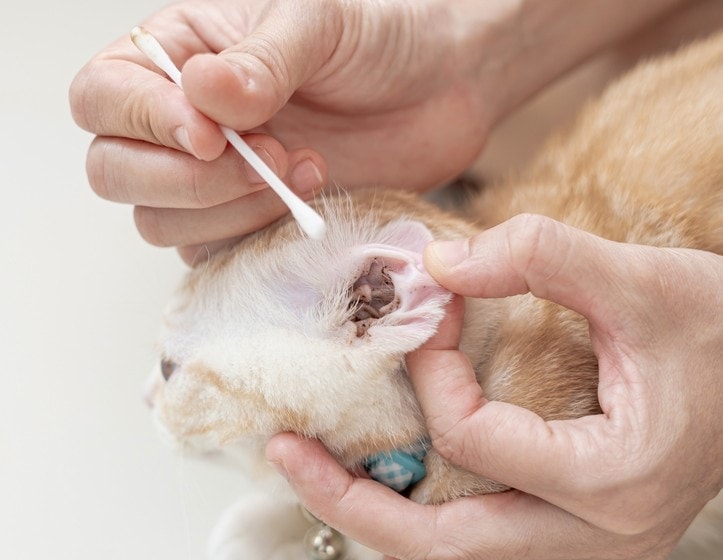
Virtually all cats can get ear mites. They're incredibly contagious, so if one cat in your household has them, it's usually only a matter of time before they all become infested. They can also move between species. Thankfully, this particular type of mite—officially known as Otodectes cynotis—rarely infects humans.1
Ear mites are a common issue in cats, but they aren't a very serious condition as long as you treat them quickly. If ignored, ear mites can turn into secondary infections, such as yeast infections, which can eventually affect your cat's hearing.
Signs of Ear Mites
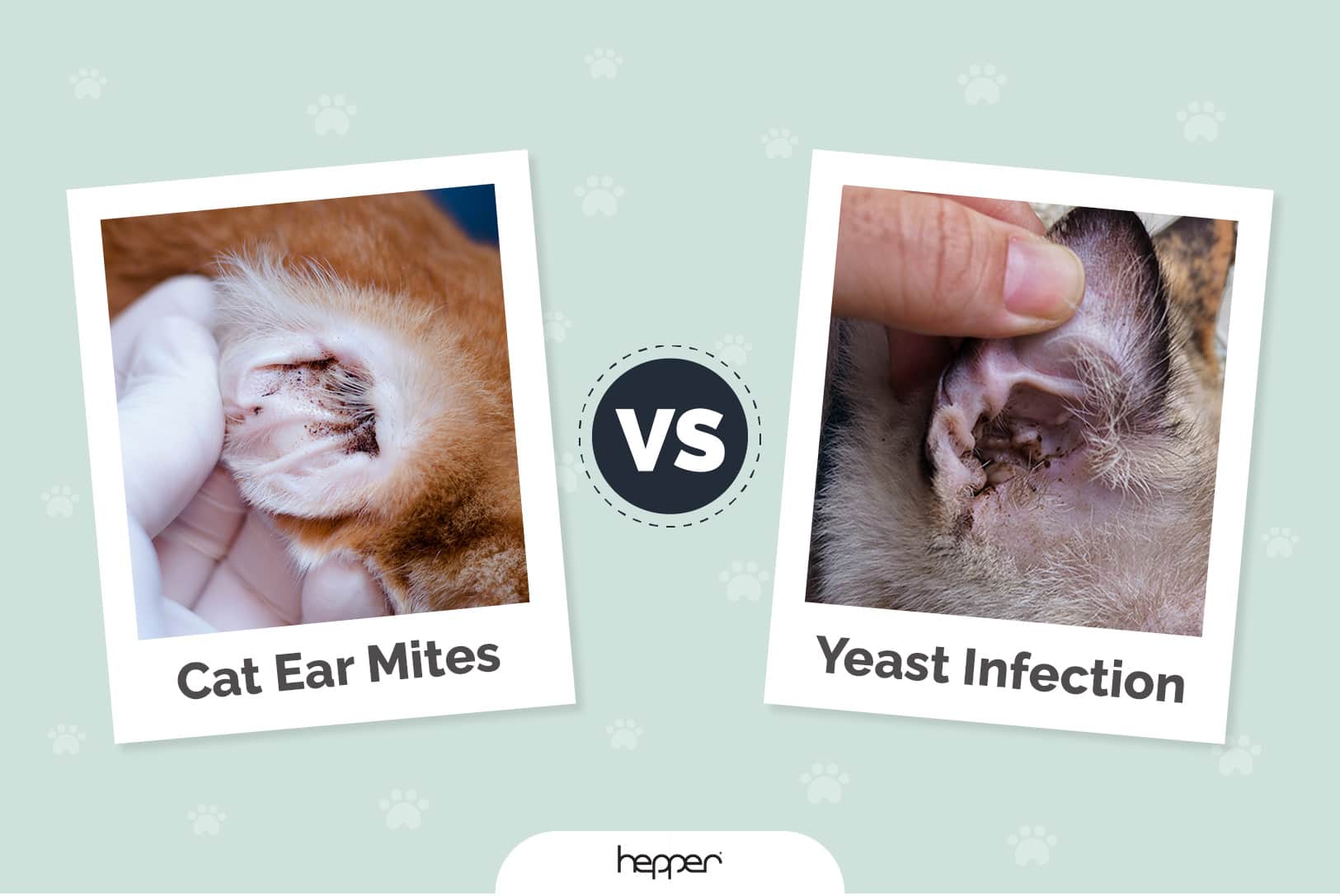
The signs of ear mites are fairly easy to spot. Cats meticulously groom themselves, so if their outer ear (also called their pinna) looks dirty, they likely have an active infection. Signs of an ear mite infestation include:
- Redness
- Voluntarily shaking head
- Scratching
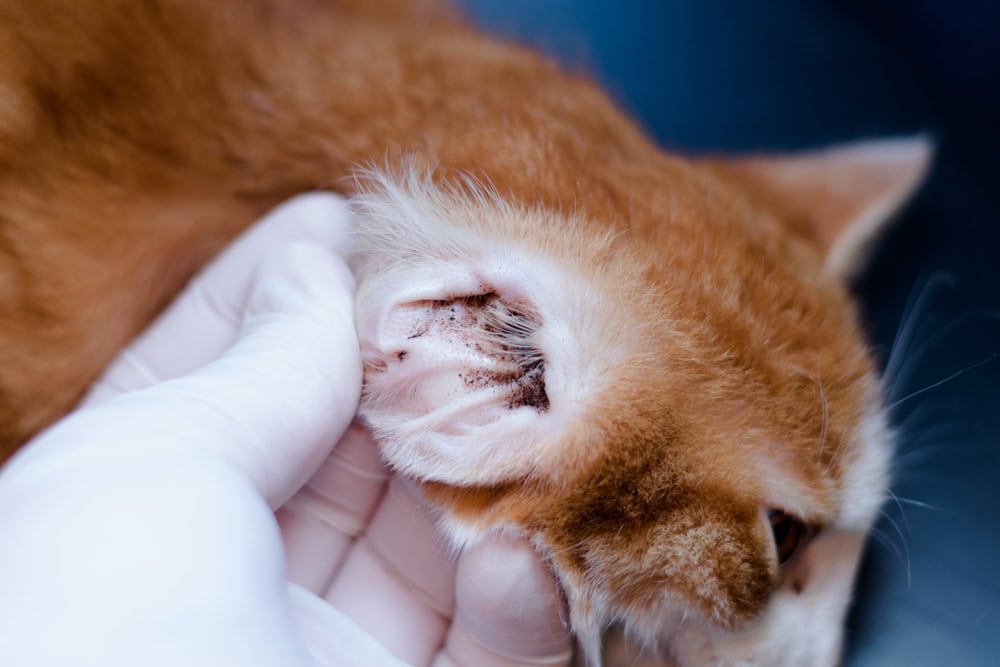
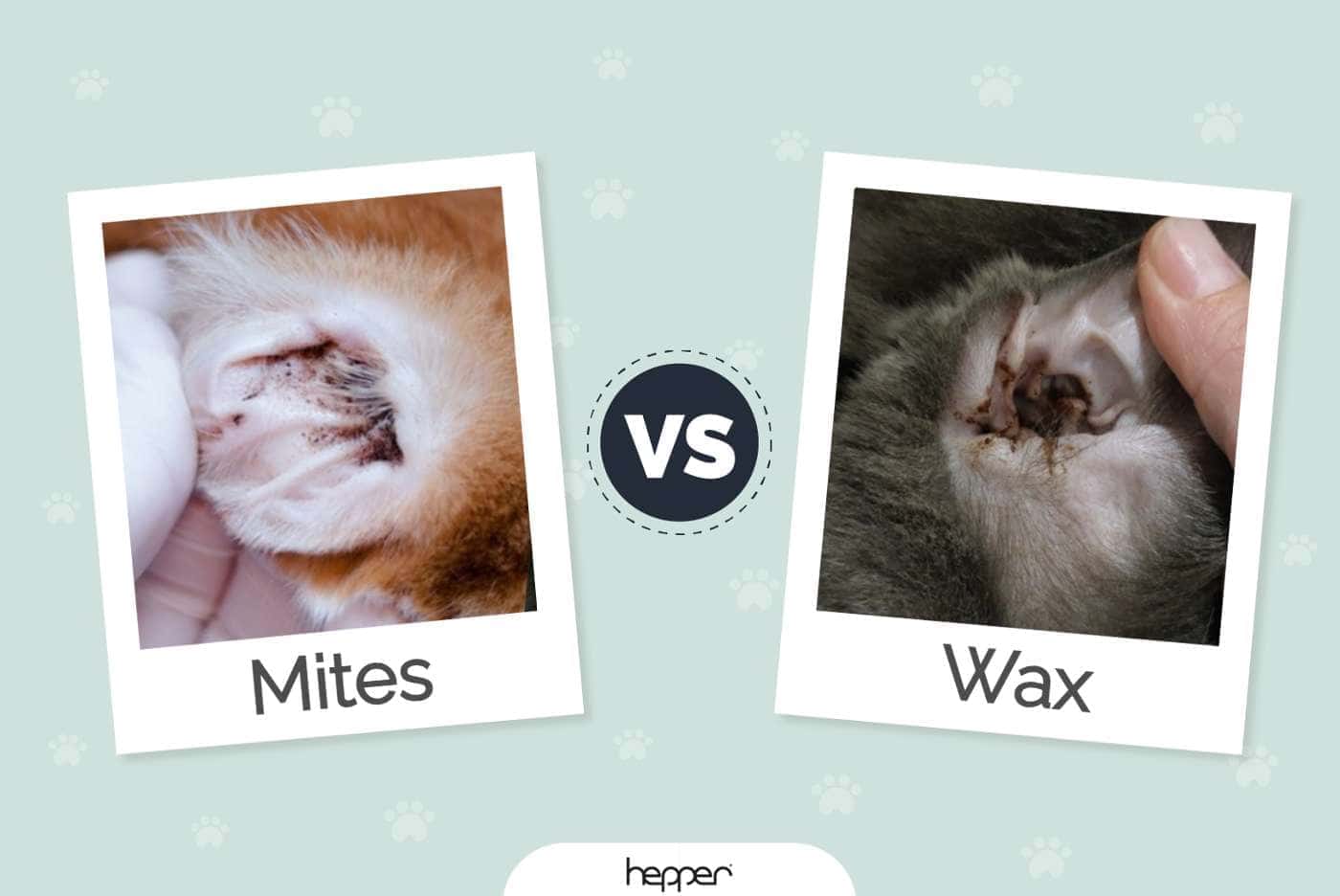
- Brown or black specks that resemble coffee grounds
- Excessive black or brown-looking ear wax
How Are Ear Mites Diagnosed and Treated?
If you take your cat to the vet, they will likely test a swab of debris taken from your cat's ears. Ear mites are visible under the microscope. If you've caught the problem fast enough that no infection has occurred, your cat will probably need their ears thoroughly cleaned, and you'll be sent home with medication for ear mites.
Your vet might also schedule a follow-up appointment in a couple of weeks to ensure the infestation is cleared. It can take 3 to 4 weeks to clear an infection due to the life cycle of ear mites.
Overview of Yeast Infection
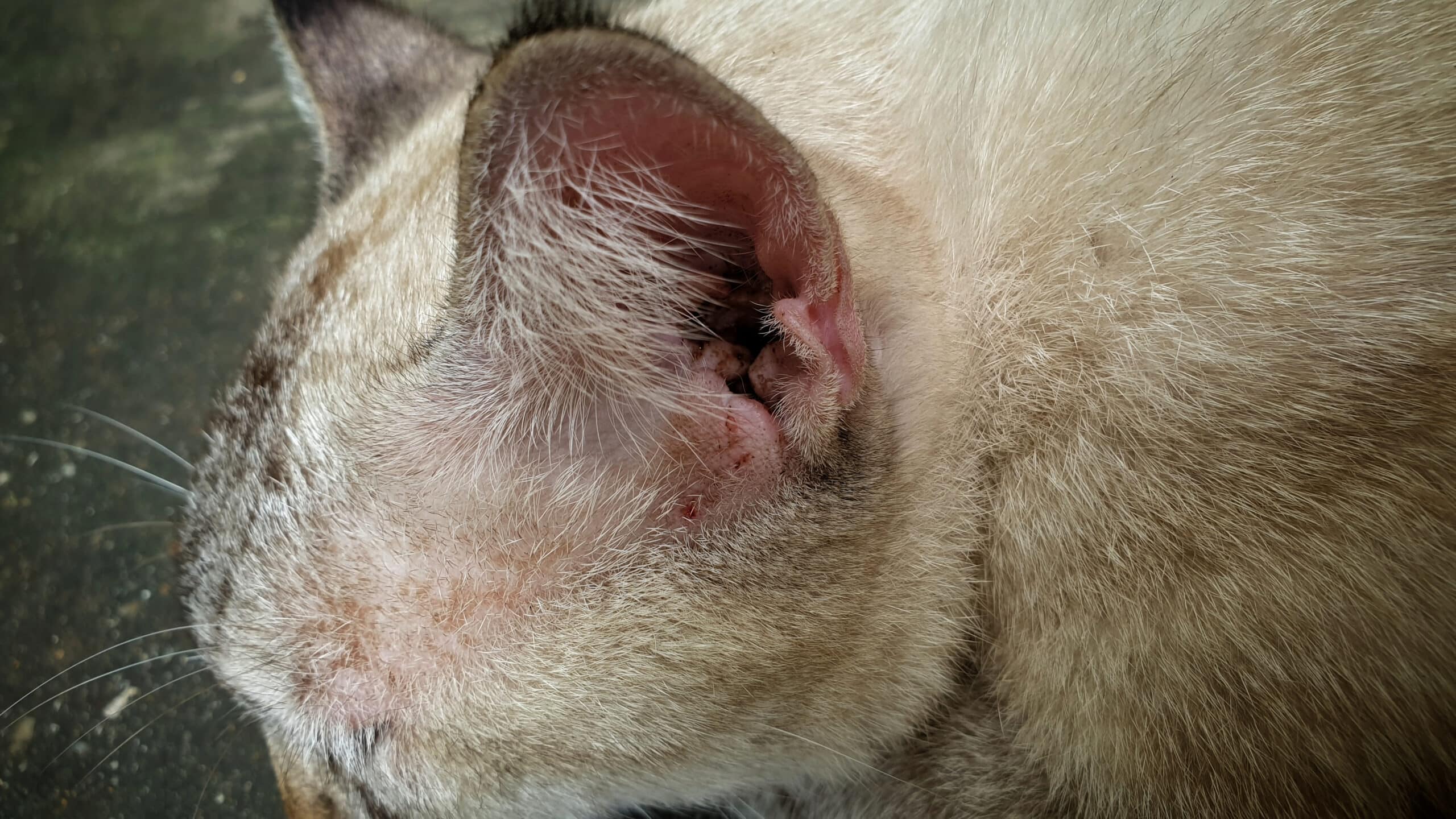
Yeast infections aren't common in cats. Thankfully, when they occur, they most often affect the pinna, or outer ear, and ear canal rather than the middle or inner ear. However, if an infection isn't dealt with quickly, it can spread to the middle or inner ear, which can cause hearing loss.
Signs of a Yeast Ear Infection
A yeast infection is characterized by a sour smell but can present a variety of signs, including:
- Redness
- Itchiness
- Excessive scratching or shaking
- Discharge in the ears
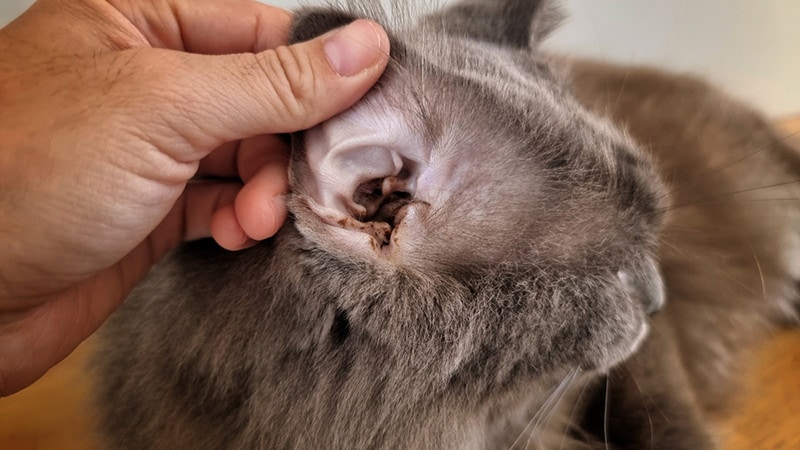
- Excessive brown-colored wax
If the middle ear becomes infected, the signs can include head tilting, hearing loss, facial drooping, abnormal eye movements, loss of balance, and stumbling.
How Are Yeast Infections Diagnosed and Treated?
Allergies or an under-performing immune system may cause secondary infections in cats, such as yeast infections. If your vet suspects an allergy, they might suggest medication, switching your cat's diet, or making other lifestyle changes. Ear mites also frequently cause yeast infections, so your cat may need multiple treatments.
Your vet will take a swab of the debris in your cat's ears for a cytology test to determine whether the infection is caused by bacteria or a fungus such as yeast. In severe cases, they may even need to assess whether the infection has perforated your cat's ear drum before proceeding with treatment. Your cat may need to be sedated for this test. Prognosis is usually good, however, and most cats recover their full hearing except in very severe cases.
For most situations without ear drum perforation, your vet will treat a yeast infection by cleaning the ears and then applying drops with a mixture of antifungal, antibacterial, and anti-inflammatory medications. You may also be sent home with more ear drops and instructions for keeping your cat's ears clean.
How Common Are Ear Mites in Cats?
There's a common misconception that says you're a dirty person or a bad pet parent if you or your pet develop a parasite infestation. However, that's not always the case. Rest assured, many cats have ear mites at some point in their lives, especially if they go outside. It shouldn't be embarrassing to take your cat to the vet for ear mites. Your veterinarian can assure you that they see them every day and will be eager to provide you with the treatment your cat needs to feel better.
Should I Take My Cat to the Vet for an Ear Problem?
You should take your cat to the vet to properly diagnose and treat any ear problem. They can take a cytology slide to determine the root cause of their ailment and prescribe the exact medicine they need. With your vet's permission, you can try cleaning your cat's ears at home if you suspect an ear mite infection using an appropriate cleaner specifically formulated for cats. However, you'll still need treatment from your vet to kill the mites and their eggs and any bacteria or yeast in the ear.
It's always best to take your cat to the vet quickly in case they have an infection. Trying to treat an infection at home isn't recommended because it might have spread to the middle or inner ear. Plus, they'll likely need antibacterial or antifungal drops that only your vet can prescribe.
Final Thoughts
Ear mites are common problems in cats, especially those that encounter other felines frequently. Yeast infections are a little less common and are commonly caused by ear mites. While ear mites aren't anything to be ashamed of, you should take your cat to the vet as soon as possible to prevent the problem from progressing into an infection, which can result in permanent hearing loss.
Sources
https://vcahospitals.com/know-your-pet/tympanic-membrane-rupture-and-middle-ear-infection-in-cats
https://www.petmd.com/cat/conditions/ears/cat-ear-infections
https://www.hillspet.com/cat-care/healthcare/cat-ear-infections?lightboxfired=true
https://vcahospitals.com/know-your-pet/ear-infections-in-cats-otitis-externa
Featured Image Credit: (L) Todorean-Gabriel, Shutterstock | (R) RJ22, Shutterstock
Get Hepper In Your Inbox


Pet care tips from our vets and experts, straight to your inbox.
You may opt-out at any time. View our Privacy Policy for more information.
Brooke Bundy is a freelance writer who graduated from the University of North Georgia with a B.S. in Media Studies. She is interested in storytelling across different mediums. When she isn’t writing, Brooke loves to spend time with her dog, and three cats, in New Orleans, Louisiana. Brook enjoys gardening, cooking, brewing coffee, and making her pet's house a home.
Join the conversation
Ask a question, share your story, or send private feedback.