Hepper is reader-supported. When you buy via links on our site, we may earn an affiliate commission at no cost to you. Learn more.
How Long Will It Take My Cat to Adjust to a New Home? Vet-Approved Facts & Tips


In this article
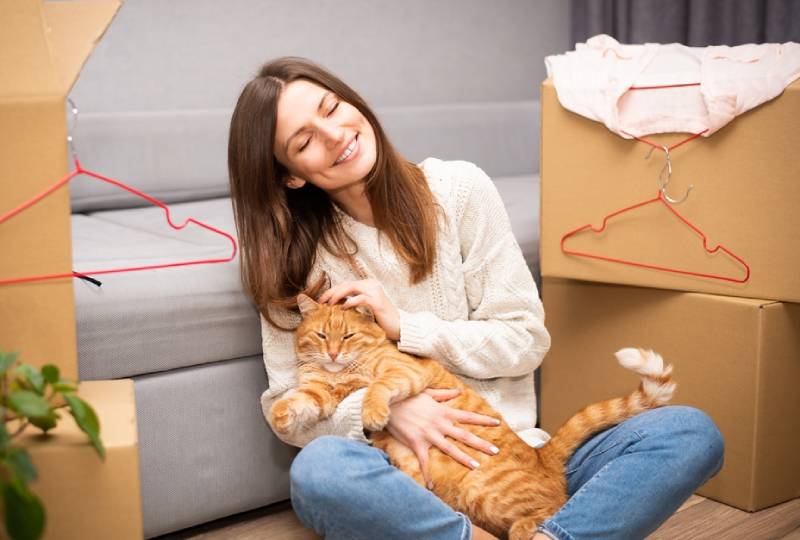
Moving is one of life’s most stressful events. It can be nerve-wracking, frustrating, and exhausting, but it’s also exciting — for us, anyway. For our cats, it's scarier and more anxiety-ridden than anything else. Or, perhaps you are bringing home a new cat that you’ve just adopted. Becoming familiar with a new home, new people, and potentially other pets can be highly stressful.
How long it takes a cat to adjust to a new home depends on the circumstances, but it shouldn’t take much longer than 1 or 2 weeks.
Here, we discuss what measures you should take to make a smooth transition for your cat, whether they are moving to a new home or are newly adopted.

How Long Will It Take My Cat to Get Used to a New Home?
Several different variables will influence how long it takes a cat to adjust to a new home, such as:
- Family situation: If this is a new cat moving into your home for the first time, it can take longer for the cat to adjust, particularly if you have a full household with children, other pets, etc.
- Cat’s age: Kittens are getting to know their entire world, so they tend to adapt much quicker than an older cat. If your cat is an adoptee or you’ve moved to a new home, it can take older cats longer to adjust because the whole situation can be confusing. Cats are creatures of habit and don’t relish change.
- Previous trauma: Any cat that has been through some kind of trauma in the past will take longer to adjust to new surroundings.
- Behavioral issues: If a cat hasn’t been properly socialized, there will likely be behavioral problems. This can make adjusting to new circumstances more difficult. Cats that have been well-socialized tend to be more well-adjusted and can handle change better.
- The new place: If the new home is quite different from the old one, this can be disorienting to many cats. For example, if you move from a house in a quiet neighborhood to a condo on a busy city street, your cat will need time to get used to the different sights, smells, and sounds. If your cat is an outdoors cat and they can’t go out anymore, it can take quite a while for them to adjust.
So, while the average time to adjust to new surroundings might be about 1 to 2 weeks, some cats might adapt quicker, while others will need more time. Some cats only need a few hours to adjust! If it’s been a month and your cat still seems out of sorts, speak to your vet, and they can either advise you or refer you to an animal behaviorist for extra help.

Preparing to Bring an Adopted Cat to a New Home
Here are a few steps that will allow the transition to a new home to go smoothly for an adopted cat.
- Put in bedding: Bring bedding or an article of clothing to the adoption place, and leave it with the cat that you are interested in adopting. This way, they will become familiar with your scent.
- Set up a room: Before bringing your cat home, set up a room that will be your new cat’s room during the adjustment period. It should contain a litter box, water, food, toys, a scratching post, and a soft bed. Make sure it’s a safe space for cats (remove plants, cleaning products, and anything else that could potentially harm your cat).
- Bring the litter: When it’s time to take your new cat home, bring the cat’s litter too. This way, your cat will have something that smells like them, which will help make them feel more comfortable.
- Introduce your cat to the room: Once your new cat is home, put them in the room and leave the door open — unless you have other cats and dogs or children running around. In that case, you might want to keep the door closed until your cat seems comfortable in their room.
- Allow your cat to explore: When you place the cat in their room, leave them alone for about an hour. This way, the cat can explore on their own.
- Let your cat come out on their own: Leave the door open (if it isn’t already open), and let your cat come out when they’re ready. Don’t force them out.
- Reassure them: Speak calmly and gently and reassure them. Let your cat run back into the room so they can seek refuge when needed.
- Play with them: Try playing with your cat if they seem ready to interact. Provide them with pets if they are willing.
Give your newly adopted cat plenty of time to adjust. If the litter box is being used and they are eating, you should not be concerned.
If the cat has been traumatized in some way or if you have a noisy household with other pets, the cat might need longer to feel comfortable in its new home.

Preparing for a Move With Your Cat
If you’ve had your cat for a while and are moving to a new home, there are a few steps that you should take to keep your cat as comfortable as possible.
- Update ID: Before moving, ensure that your cat’s ID and/or microchip are updated to reflect the new address. If the unthinkable occurs and your cat escapes, the updated info will help reunite you with your cat.
- Keep up appearances: Try to keep things as close to normal as possible while preparing to move. But bring boxes in sooner rather than later, so your cat becomes familiar with them before moving day.
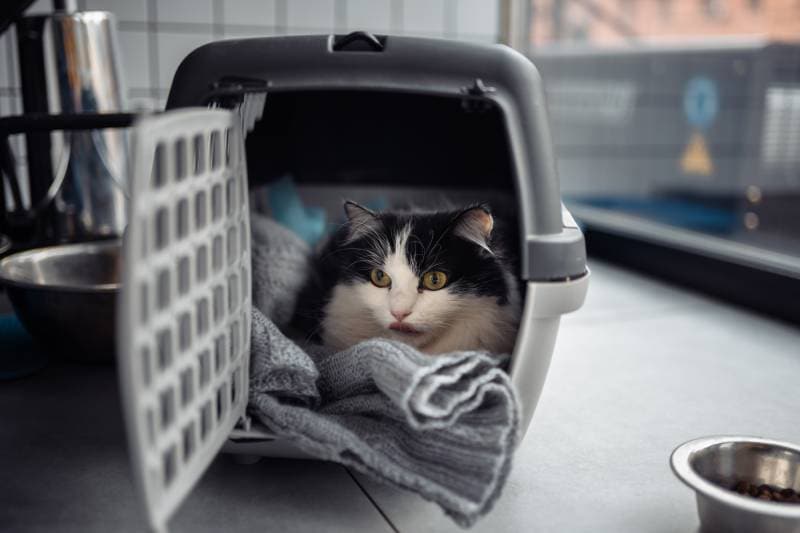
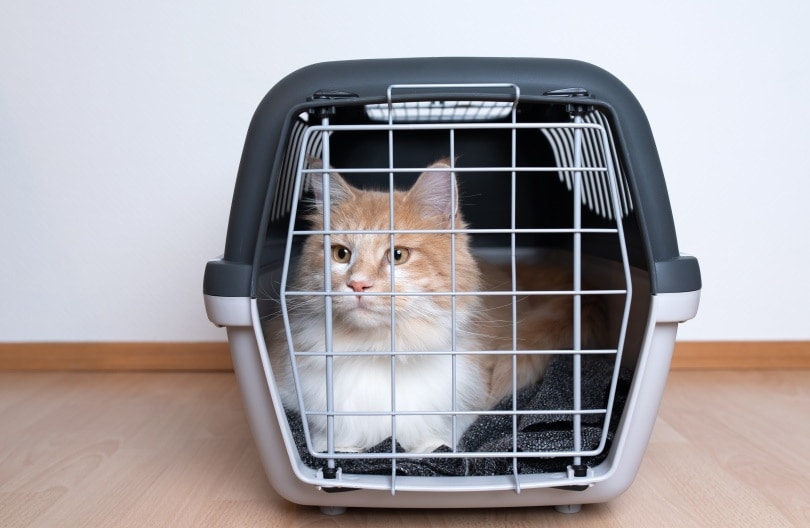
- Use a carrier: If your cat hasn’t been in a carrier before, you’ll want your cat to become familiar with it long before the move. Place it in a quiet corner, put a blanket and cat toys inside, and keep the door propped open. Your cat will probably explore it, so it should become a haven before the move.
On a moving day, place your cat in the carrier and out of the way of the movers. If you’ve never taken your cat in the car before, try going on a few rides while they are in the carrier before the move.
Introducing Your Cat to a New Home
Now that you’ve arrived at your new house, you’ll need to leave your cat in the carrier until you’ve had a chance to cat-proof one room, unless you were able to do this in advance. Open the carrier, and let your cat come out when they are ready.
- Room set-up: Set up one room just for your cat. It should have a prepared kitty litter box, food, water, and familiar furniture and other things from your original home.
- Comforting: Once the noisy activity has stopped and the movers have left, spend time with your cat in the room. You might need to leave your cat in this room for a day or so if they are particularly stressed.
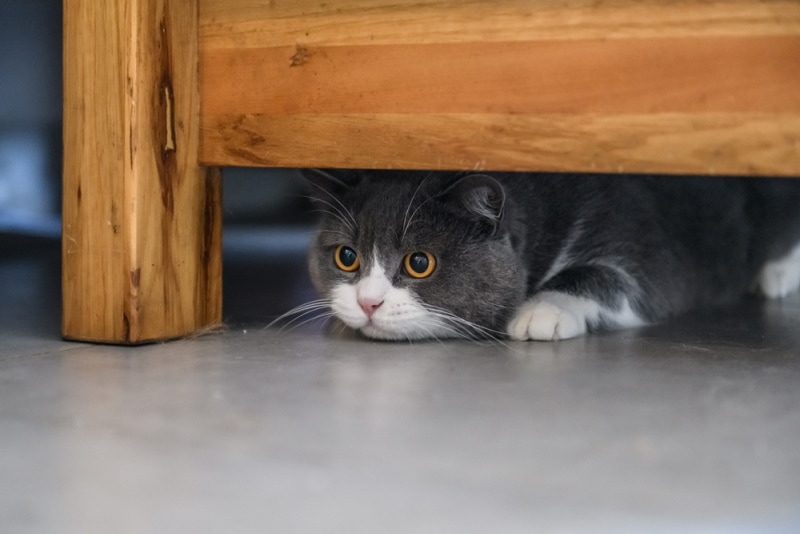
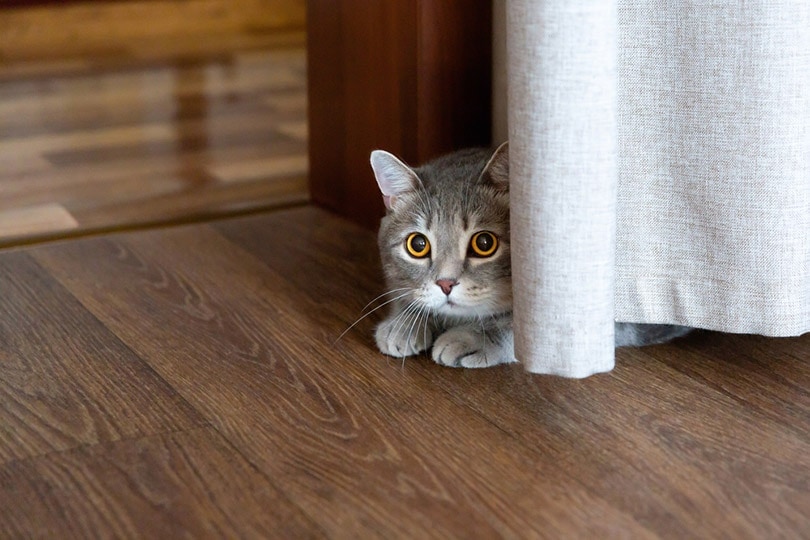
If your cat is hiding, don’t force any interactions. Just sit in the same room with them, and read a book or do some other quiet activity.
- Outdoor cat: If your cat goes outdoors, you’ll want to wait for at least 2 weeks before letting your cat outside. The cat needs to get familiar with "home" first. Only let your cat out for short periods of time in the beginning.
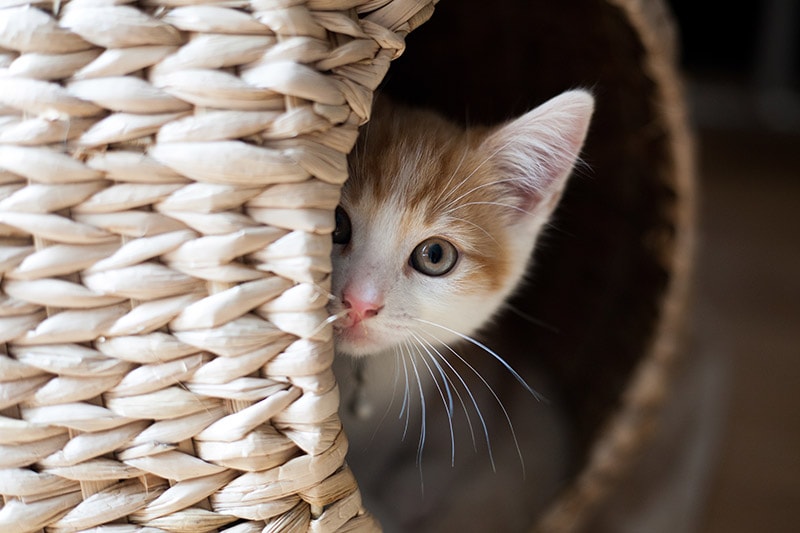
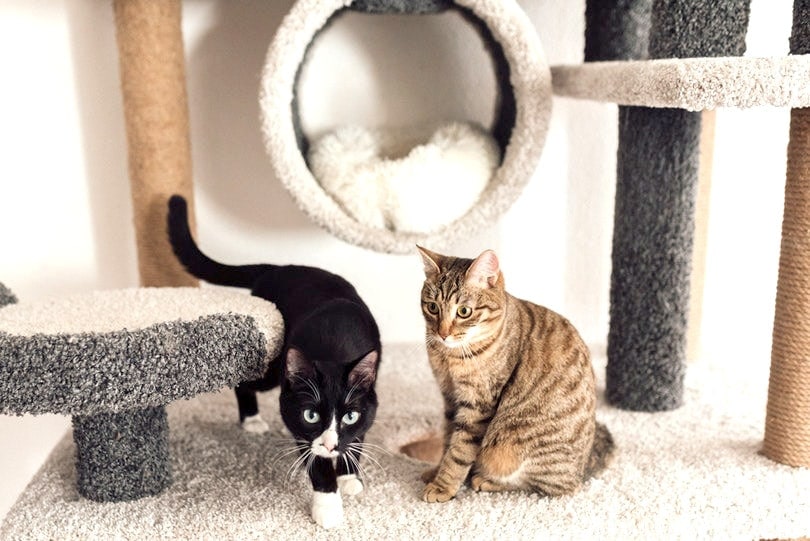
- Hiding places: Have places around your home that your cat can escape to when they are stressed. Leave closet doors open, or find other ways to create cozy spaces for your kitty. Invest in a good cat tree and scratching post. This also works for newly adopted cats.
- Escape-proof: Some cats might look for escape when they are introduced to a new home. Make sure all the doors and windows are shut until your cat seems settled in.
Some cats need time to adjust, so sitting on the floor quietly and allowing your cat to come to you can be the best way to deal with a nervous cat.
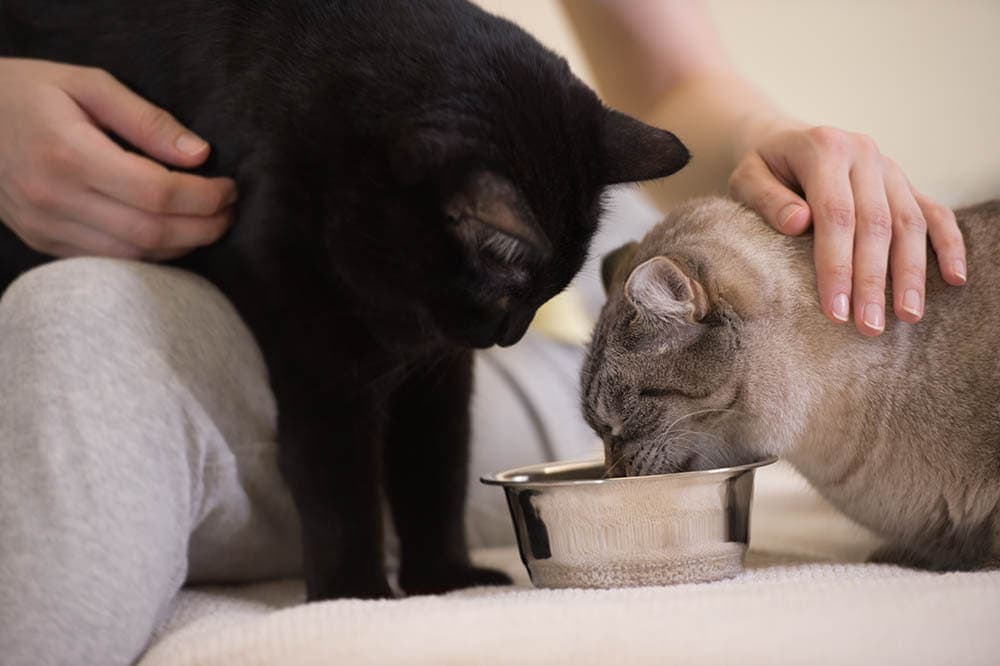
Make sure the cat has access to food and clean water. Don’t worry if your cat doesn’t eat much on the first day; it is perfectly normal in this scenario. Avoid feeding the cat in its hiding spot. You can try adding pieces of a healthy treat such as plain, boiled chicken to its food or giving them as treats if the cat approaches you. This will help to create a positive association with its new home. The cat will get the message that it is not so bad around here and good things are available. The cat should not go more than 1 day without food.
Speak to your vet if you’re worried, particularly if your cat is skittish, as they can give you further advice.
Final Thoughts
No one truly enjoys moving and cats like it even less. But if you follow these steps and properly prepare the new home in advance of your cat being moved in, it should go a long way to ease some of their stress.
Keep everything as calm and quiet as possible, and take the time to reassure your cat throughout this process. Give your cat time, and let them explore everything on their own terms. Before you know it, your cat will be happily playing and getting the zoomies. Now you just need to unpack!
Featured Image Credit: Nils Jacobi, Shutterstock
Get Hepper In Your Inbox


Pet care tips from our vets and experts, straight to your inbox.
You may opt-out at any time. View our Privacy Policy for more information.
Kathryn was a librarian in a previous lifetime and is currently a writer about all things animals. When she was a child, she hoped to work in zoos or with wildlife in some way, thanks to her strong love for animals. Unfortunately, she's not strong in the sciences, so she fills her days with researching and writing about all kinds of animals and spends time playing with her adorable but terribly mischievous tabby cat, Bella. Kathryn is hoping to add to her family in the near future – maybe another cat and a dog.
Join the conversation
Ask a question, share your story, or send private feedback.