Hepper is reader-supported. When you buy via links on our site, we may earn an affiliate commission at no cost to you. Learn more.
My Dog Ate a Squirrel: Here’s What to Do (Vet Answer)

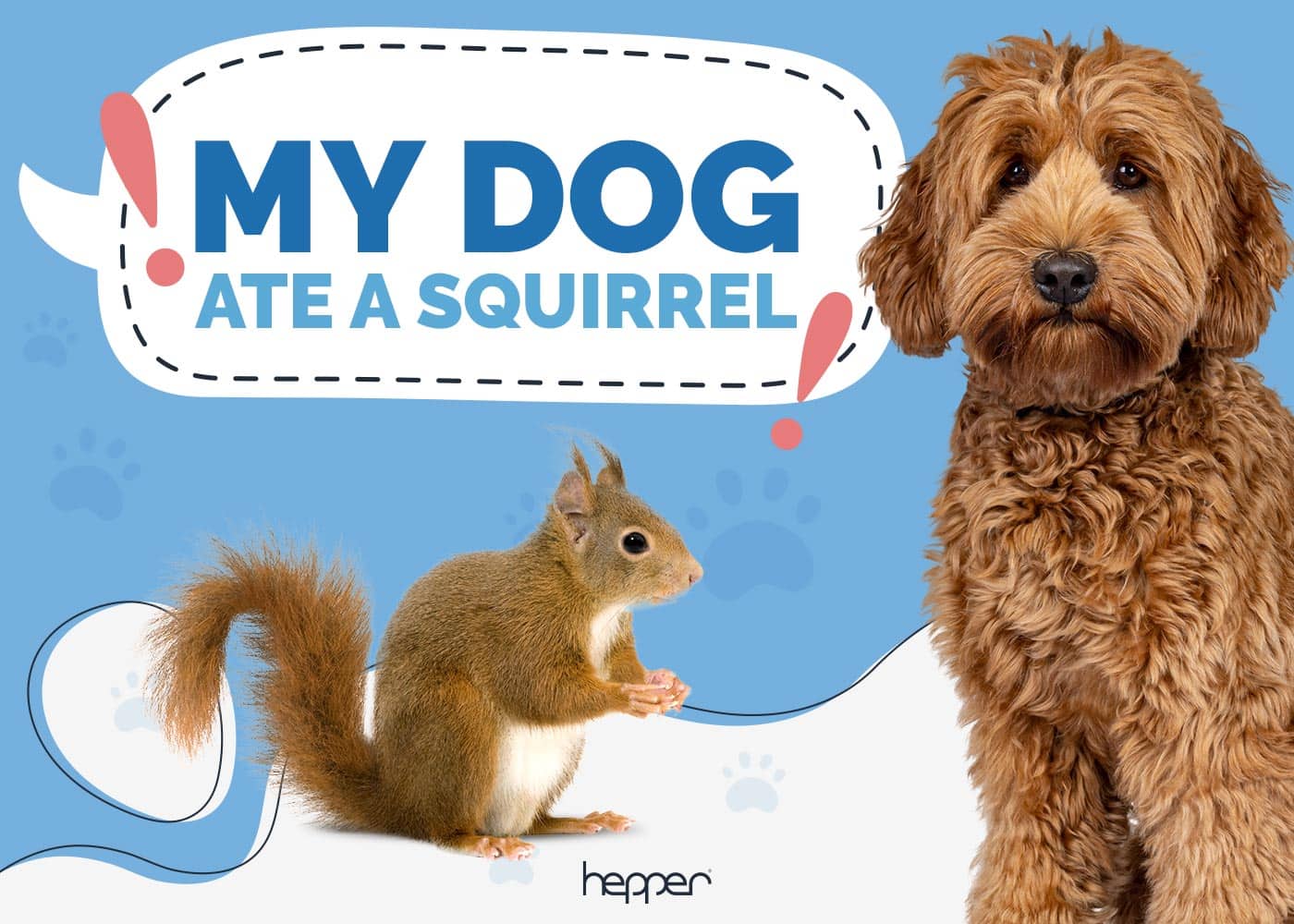
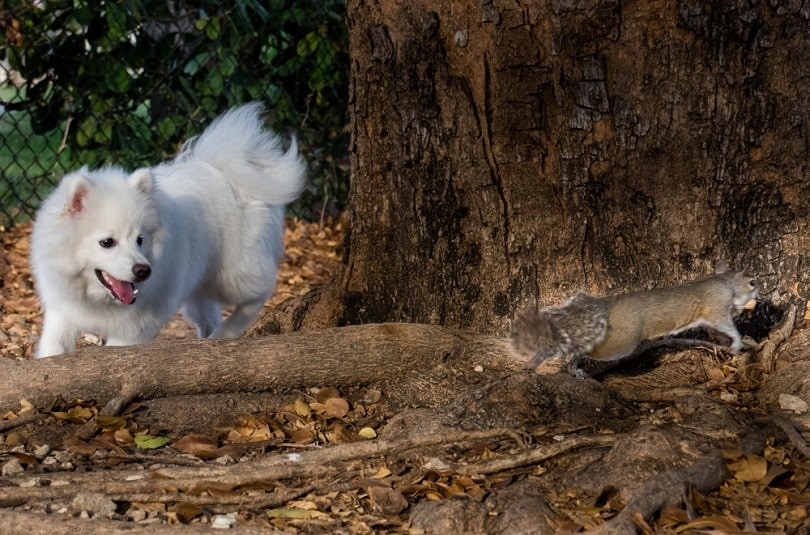
Chasing squirrels is probably a pretty ideal pastime in the minds of most dogs! The furry little rodents are quick and typically able to evade our canine friends, but what happens if they catch one? Or if they stumble across the remains of a dead squirrel and gobble it up before we can stop them?
There are a few concerns associated with both of these scenarios, but in most cases, the likelihood of a significant problem is low. If your dog has just eaten all or part of a squirrel, here is our step-by-step guide for what to do next.

What to Do if Your Dog Has Eaten a Squirrel
1. Don’t Panic
In most cases, no immediate action is needed, but if you have any concerns about your pup’s health, do not hesitate to contact a veterinarian.
Examples of situations that would warrant urgent veterinary attention include:
2. Do Not Attempt to Induce Vomiting Unless Recommended By Your Veterinarian
If your pup has eaten all or part of a squirrel, most vets would probably advise against inducing vomiting (either at home or at the clinic). The risks of aspirating (breathing in) vomited material or suffering an injury to the esophagus from the squirrel carcass likely outweigh the risks associated with letting it pass through.
An exception would be if you suspect the squirrel might have died from rodenticide poisoning (i.e., mouse or rat bait) because the products can also be highly toxic to dogs.
If your dog finds a dead squirrel somewhere, contact your veterinarian immediately.
3. Check Your Pup for Wounds
They may be small, but squirrels have sharp nails and teeth that can injure dogs during a scuffle. Check your pup carefully for any evidence of scratch or bite wounds, especially on their face.
Wounds can be painful for your dog and may become infected, so it is a good idea to have any injuries checked out by a vet.
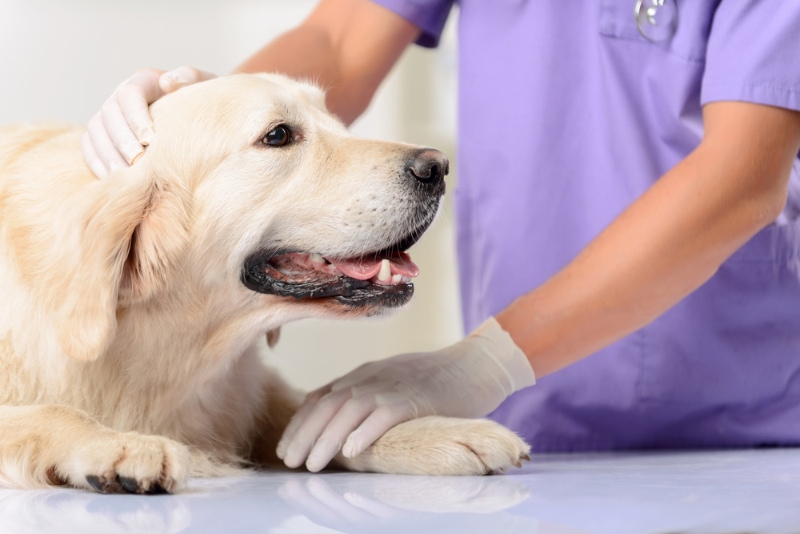
4. Make Sure Your Pup’s Vaccinations Are Up to Date
Rabies
Rabies might be one of the first diseases that came to mind after realizing your dog ate a squirrel. Fortunately, the likelihood of contracting rabies from a squirrel in the United States is pretty low. A large study examined the records of 21,977 squirrels submitted for rabies testing between 1995 and 2010 and found that only 9 of them (0.04%) were positive1.
However, rabies is a serious (almost always fatal) disease, so it is best to play it safe! Check your pup’s vaccination records or contact your veterinarian’s office to confirm their rabies vaccine is up-to-date.
If your pup needs a booster vaccine, it should be given as soon as possible after eating the squirrel.
If your dog has never been vaccinated against rabies and there is reason to suspect the squirrel they ate was rabid, additional steps may be required (e.g., quarantine).
Leptospirosis
In some areas, wildlife (including squirrels) can transmit a bacterial disease called leptospirosis. Ask your veterinarian if your pup should be vaccinated against this disease, which can also affect people.
5. Monitor Your Pup for Signs of Gastrointestinal (GI) Upset
Your dog may experience gastrointestinal (GI) upset after eating a squirrel.
Your vet may recommend taking an X-ray of your pup’s abdomen or just ask you to monitor them closely for a few days.
Here’s what to watch for:
If you notice any of these signs or have any other concerns, please contact a veterinarian.
6. Talk to Your Veterinarian About Treatment for Parasites
Squirrels can carry fleas, ticks, and intestinal parasites like roundworms and tapeworms, some of which can also be transmitted to people. If your pup already takes parasite prevention medication regularly, they may not need any additional treatment.
If not, your veterinarian will likely prescribe an external parasite treatment and a few doses of broad-spectrum deworming medication or a combination product that covers external and internal parasites.
Veterinary products are very safe and generally more effective than those available over the counter for treating parasites. Be sure to give all doses according to your vet’s directions.

7. Clean Up and Dispose of Any Squirrel Remains
If you find all or part of a dead squirrel in your yard, handle it safely. Many parasites and diseases they can carry also affect people! Do not handle the body without wearing gloves or, better yet, use a shovel to pick it up and put it in a plastic bag.
Some municipalities may allow you to dispose of the squirrel in your regular garbage, but check your local regulations to be sure.
In Conclusion
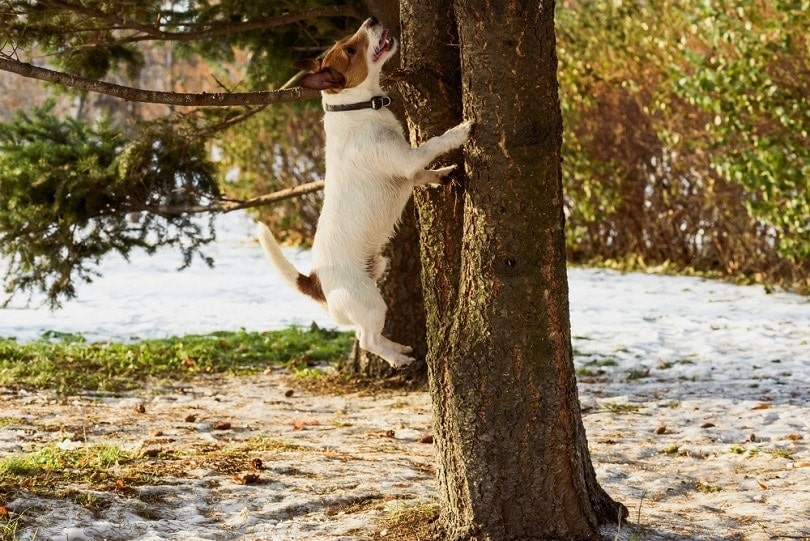
Even though many dogs enjoy chasing squirrels, the activity is not without risk, especially if they manage to catch and eat one. It’s best to keep a close eye on them when they are outside. If they spend time off-leash, make sure they have good recall and teach them commands like “leave it” so you can stop them from picking up potentially dangerous items or animals. Also, vaccinate them against rabies and leptospirosis (if recommended by your veterinarian) and treat them regularly for parasites.
Featured Image Credit: alexei_tm, Shutterstock
Get Hepper In Your Inbox


Pet care tips from our vets and experts, straight to your inbox.
You may opt-out at any time. View our Privacy Policy for more information.
Dr. Sharon (as she is known by her clients) has had an intense love for animals for as long as she can remember. She grew up in Guelph, Ontario and fulfilled her childhood dream by obtaining her Doctor of Veterinary Medicine (DVM) degree from the Ontario Veterinary College in 2009. She has since found joy working in a variety of small animal clinics, focusing on cat and dog care. She loves sharing her expertise and empowering pet owners to take the best possible care of their fur babies!
Sharon currently lives in beautiful British Columbia with her husband, daughter, and Parker, her loveable Great Dane. When she’s not at work, she enjoys clogging, photography, and exploring the outdoors with her family.
Dr. Sharon (as her clients call her), was raised in Guelph, Ontario, and has loved animals for as long as she can remember. She fulfilled her childhood dream when she obtained her Doctor of Veterinary Medicine (DVM) degree. Sharon now lives in British Columbia, Canada with her husband, daughter, and Parker, their loveable Great Dane. When she’s not working, she enjoys clogging, photography, hiking, and camping with her family.
Education
Dr. Sharon obtained her DVM in 2009 from the Ontario Veterinary College in Ontario, Canada.
Experience
Dr. Sharon loves sharing her knowledge and empowering people to take the best possible care of their fur babies, which she has been able to do through her work. She has practiced in a variety of small animal clinics since graduating, with a main focus on cats and dogs.
Check out some of our top posts written by our veterinary team:
Why Does My Dog Snore? Should I Act?
My Cat Ate Paint! Our Vet Explains What to Do Now
How Common is Heartworm in Cats? 7 Things to Know About Heartworm Disease
Join the conversation
Ask a question, share your story, or send private feedback.