Hepper is reader-supported. When you buy via links on our site, we may earn an affiliate commission at no cost to you. Learn more.
Can Tortoises Eat Potatoes? Vet-Reviewed Nutrition Facts & FAQ


In this article
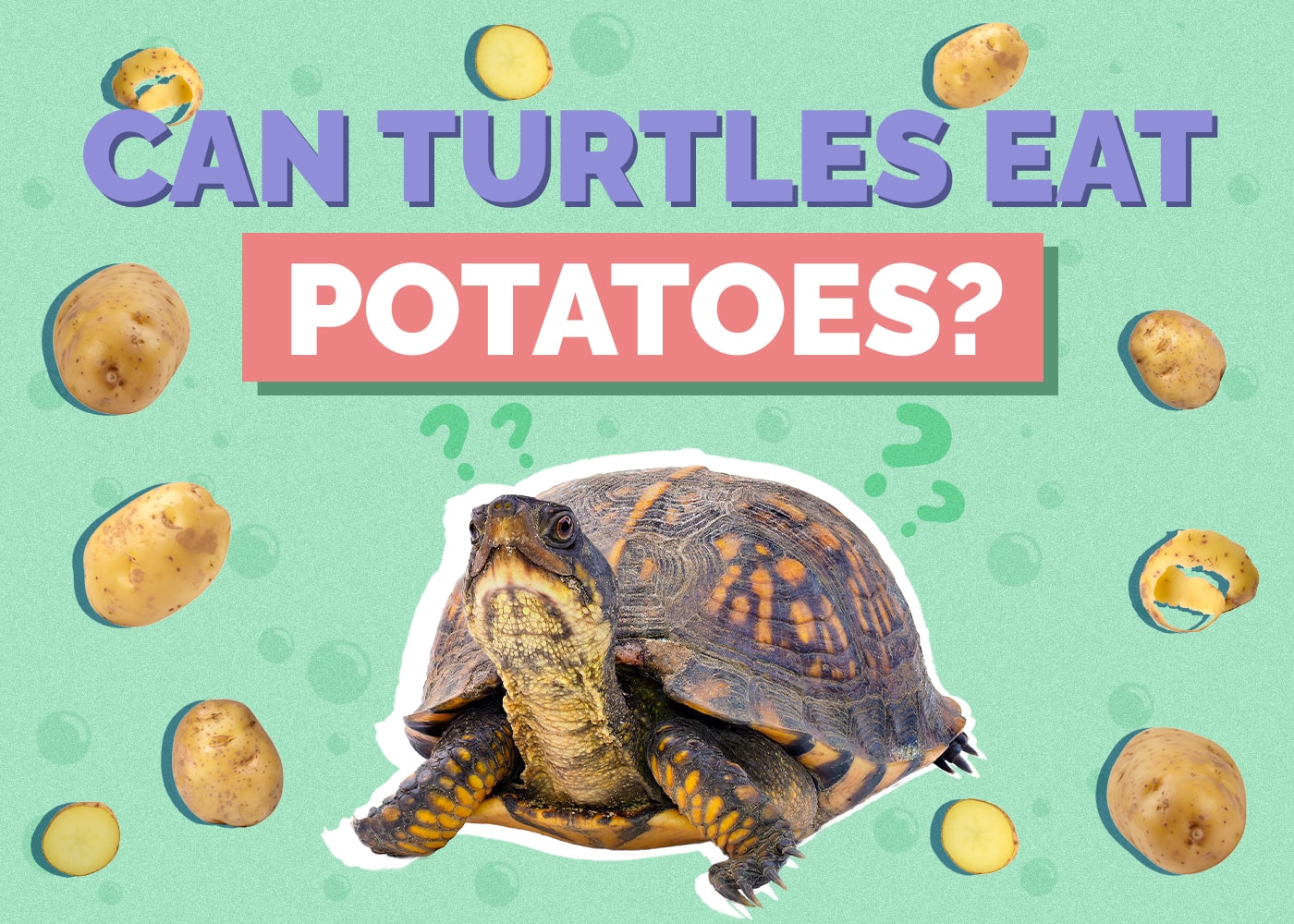
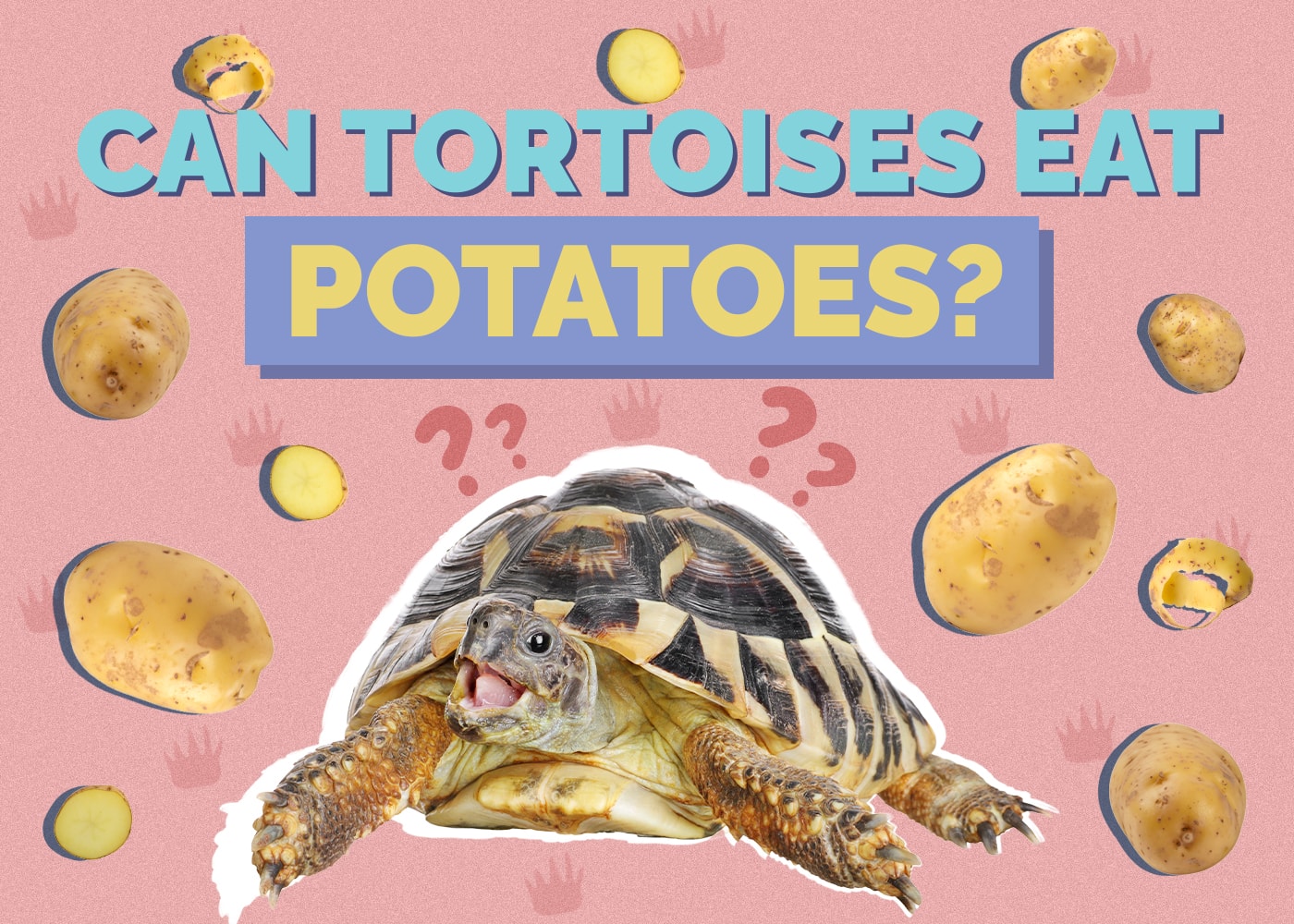
Tortoises, which are predominantly herbivorous, can safely enjoy a huge variety of vegetables, and are especially fond of fibrous and leafy greens, which make up a large percentage of their diet. However, potatoes are not a good choice for tortoises for several reasons, but fortunately there are plenty of vegetables you can feed instead that are much safer and more nutritious.
Let’s take a look at why this is the case.

Are Potatoes Good for Tortoises?
Potatoes are not good for tortoises. Whilst eating a tiny piece on occasion is unlikely to cause any problems, the potato tuber, leaves and stems can cause moderate to severe illness if ingested in large enough quantities.
This is because potatoes contain compounds called solanine and chaconine. These have the potential to cause vomiting and diarrhea, and in severe cases of toxicity, the organs could be seriously affected. For this reason, it’s safest not to feed any part of a potato plant to tortoises. There are plenty of far safer vegetables to feed your tortoise that don’t come with any risk attached.

Can Tortoises Eat Sweet Potatoes?
Tortoises can eat shredded or gently cooked sweet potatoes occasionally and in small amounts. You might be surprised to learn that sweet potatoes don’t come from the same family as regular potatoes, but they are still very starchy, which is why they can’t be fed regularly. Furthermore, the calcium-to-phosphorus ratio in sweet potato leaves cannot be considered healthy for tortoises to consume. It is important that reptiles like tortoises mostly eat foods with twice as much calcium as phosphorus, and in sweet potatoes, it is the other way around. Sweet potatoes are okay in small amounts, but there are others that are safer.
Tortoises are built to derive nutrients from a lot of leafy, fibrous greens, with some species benefiting from more variety, such as fleshy vegetables and fruit.
Safe Vegetables for Tortoises
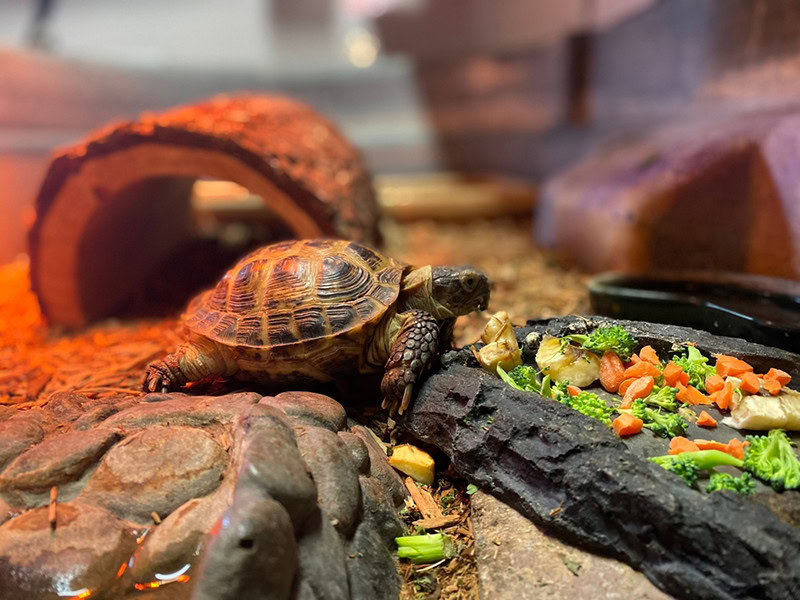
Instead of feeding potatoes to your tortoise, it’s best to go for a range of nutritious greens and vegetables, rotated regularly to offer the most nutritional benefit and variety, which is the key to a healthy tortoise diet.
Because there is a lot of variation in nutritional requirements among tortoise species, it is important to know what type of tortoise you have in order to know what their natural habitat and natural dietary preferences are.
Broadly speaking, there are two main classifications of tortoise to be aware of when selecting foods:
Below are some safe greens and vegetables to feed your tortoise.
Fresh Greens
- Romaine lettuce
- Mustard greens
- Collard greens (high in oxalates—feed in moderation)
- Endive
- Chard
- Turnip greens
- Dandelion greens
- Arugula
- Watercress
- Carrot tops

Vegetables
Note that these vegetables should be offered in smaller amounts than the fresh greens listed above. Around 10-20% of the daily amount can be made up of vegetables other than fresh greens.
- Carrots
- Green beans
- Pumpkin
- Sweet potatoes
- Zucchini
- Celery
- Bell peppers
- Bean sprouts
- Summer squashes


Conclusion
Because there are so many healthier greens and other vegetables for tortoises to eat, it’s best to keep potatoes out of your tortoise’s food bowl, especially since potatoes have the potential to make tortoises unwell.
If you’re finding figuring out the right balance of greens, vegetables, and fruits for your tortoise difficult, we recommend speaking to a vet or reptile specialist experienced in tortoise care and nutrition for advice. Ideally, you’ll want to do this before you bring your tortoise home to make sure you’re clued up on all the facts.
Sources
https://www.thetortoisetable.org.uk/plant-database/viewplants/?plant=740&c=8
https://www.medvetforpets.com/sulcata-tortoise-background-care-recommendations/
https://exoticdirect.co.uk/news/tortoise-food-and-diet-advice0
https://nutrientoptimiser.com/nutritional-value-sweet-potato-leaves-cooked-steamed-without-salt/
Featured Image Credit: Nutricao em casa, Shutterstock
Get Hepper In Your Inbox


Pet care tips from our vets and experts, straight to your inbox.
You may opt-out at any time. View our Privacy Policy for more information.
Kit Copson is a freelance writer and lifelong animal lover with a strong interest in animal care. She has parented various furry beings over the years and is currently a proud cat mom of two—one skittish but adorable Domestic Shorthair and very chilled (unless hungry) Siamese and a —and dog mom of one—an adopted Bichon Poodle cross. When not writing about or spending time with pets, Kit can be found doodling in her sketchpad, reading, or more often than not, drinking tea.
Join the conversation
Ask a question, share your story, or send private feedback.