





Click to Skip Ahead
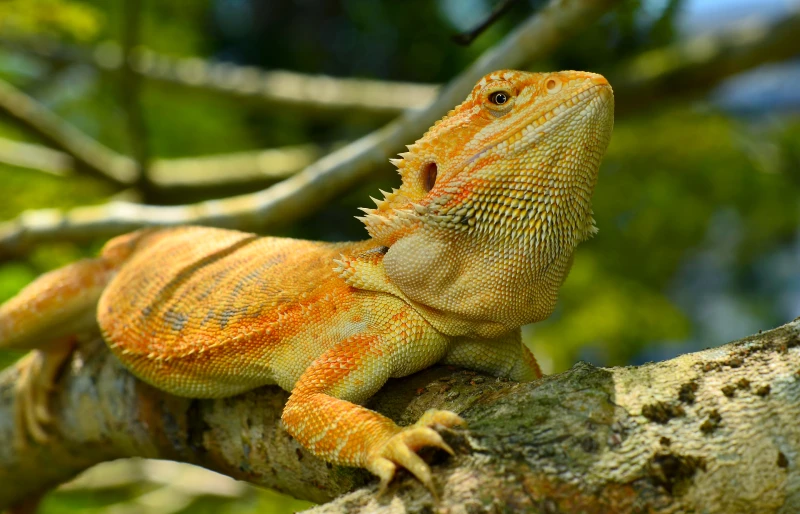
It is easy to understand why bearded dragons are so popular—they are typically docile, easy to socialize, seriously cute, and absolutely fascinating to boot. One of the most interesting facts about bearded dragons is that they have a parietal eye—also known as a “third eye”.
This extra photosensory eye is an important survival tool in the wild, and, in this post, we’ll explain how it works.

What Is a “Third Eye”?
The parietal (third) eye can be found on the top of a bearded dragon’s head along the midline, at the center point between the two regular eyes that are on the sides of the head. It sits under the parietal bone and appears as a very tiny white dot, so it’s easy to miss if you don’t look closely. The third eye does not have an eyelid, but, instead, a specialized translucent scale that serves as a protective covering.
Though it contains rudimentary retinal tissue and a lens,-like structure, the photosensitive parietal (third) eye lacks an iris and true image-forming capability and is not the same as the bearded dragon’s other two eyes. Instead of seeing images as a regular eye would, the third eye functions by detecting changes in light intensity and thereby shadows, in the environment.
Why Do Bearded Dragons Have a Third Eye?

Because it can sense changes in lightness and darkness, the parietal eye allows the bearded dragon to sense potential predators like birds swooping down on them, which explains why they may flee in panic when you try to pick them up from above.
Moreover, the third eye is connected via neural pathways to the pineal gland, which produces melatonin, the hormone that regulates the sleep-wake cycle. Researchers have also found that the third eye plays a role in behavioral thermoregulation, and disruption of this system can reduce a bearded dragon’s ability to appropriately select optimal basking temperatures.
Which Other Animals Have a Third Eye?
Bearded dragons aren’t the only reptiles to possess a third eye. Most other lizards have one, as do frogs, salamanders, and the tuatara. Some bony fish also have a pineal or parapineal photosensory organ. On the other hand, mammals don’t have a third eye—this only occurs in some cold-blooded animals.
How to Properly Pick Up a Bearded Dragon

Since the bearded dragon’s third eye helps to detect shadows of potential predators, picking them up from above can make them feel uneasy. Instead, approach from the front or side with your hand (or two hands if you have a large bearded dragon), place your hand under their chest, and gently scoop them up.
Once your bearded dragon is used to handling, simply placing your hand under its chin and chest may be enough to prompt them to climb up onto your palm without you having to pick them up.
If your bearded dragon is sitting on something like a log, you’ll want to put your hand under its body, then gently lift and free the legs from whatever the bearded dragon is sitting on before picking them up fully. This helps prevent their nails from getting caught on the object and ripped off when you pick them up.
For young bearded dragons just getting used to handling, it’s not a good idea to simply scoop them up, as they can be quite timid and reactive as youngsters. If you do this (unless your beardie is just a naturally relaxed pet), they may panic and jump from your hands, risking injury. Instead, you can start by just placing your hand inside the enclosure to let them get used to its presence.
Then, you can try hand-feeding bits of food to your bearded dragon, and, when they are comfortable taking food from you, place treats on your hand to tempt them to walk onto your palm. The best rule of thumb is to never force your bearded dragon to be held—let them come to you in their own time.

Conclusion
So, it is true—bearded dragons, like many other reptiles, amphibians, and aquatic vertebrates, do indeed have a third eye that functions as a warning system for incoming predators. It also helps with behavioral thermoregulation and maintaining the sleep-wake cycle. If you have a beardie, take a close look at the top of the head to see this incredible organ for yourself.
Featured Image Credit: Ery Azmeer, Shutterstock