Hepper is reader-supported. When you buy via links on our site, we may earn an affiliate commission at no cost to you. Learn more.
8 Great Tips on How to Train Your Dog to Be Calm in Public

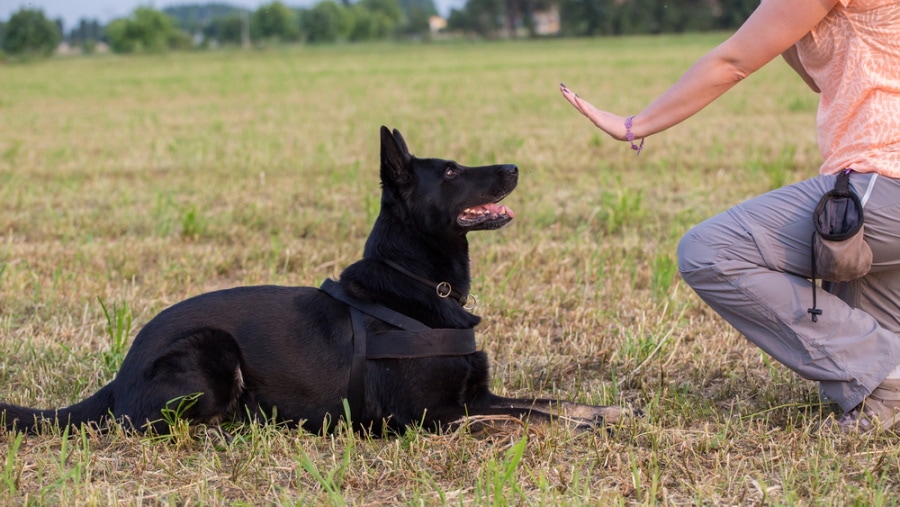
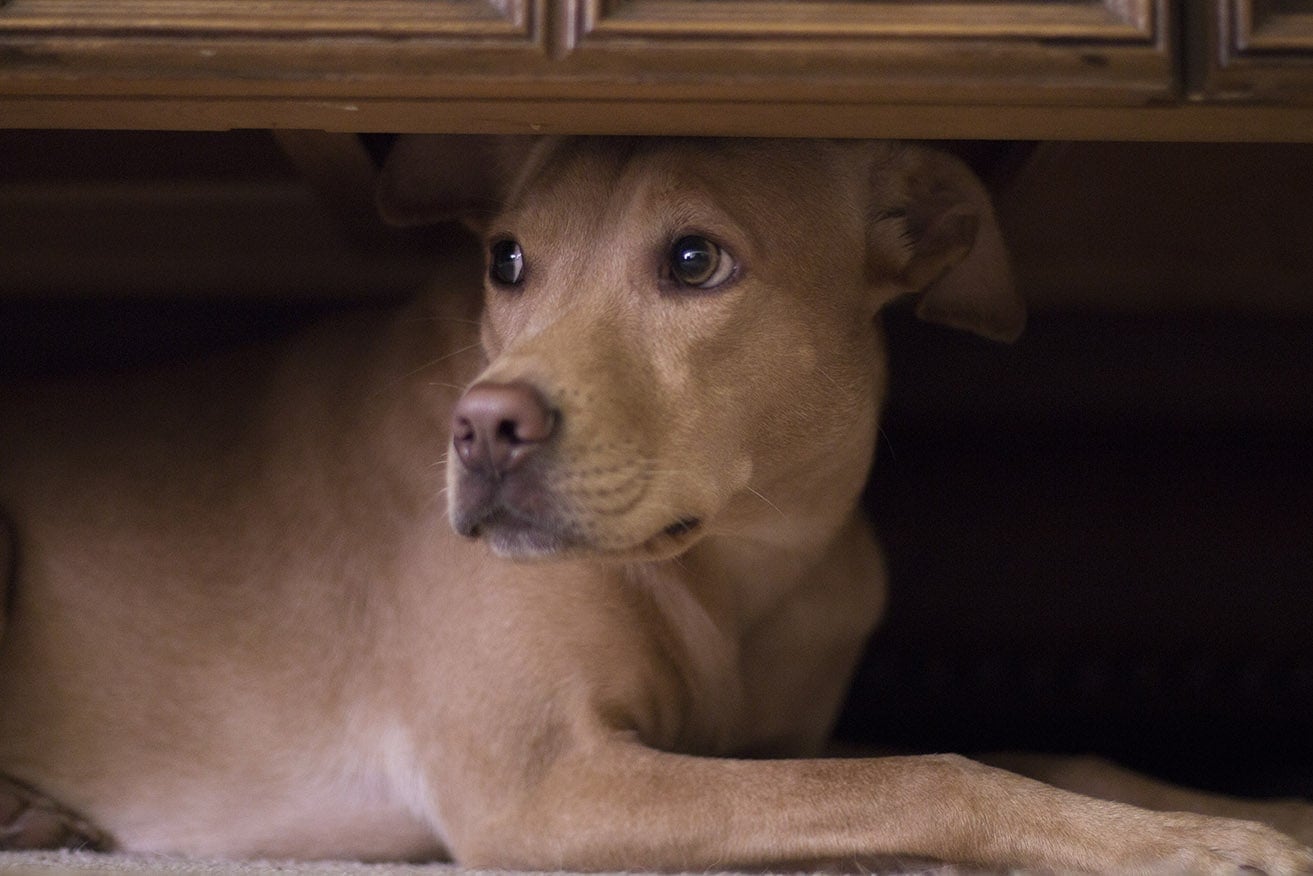
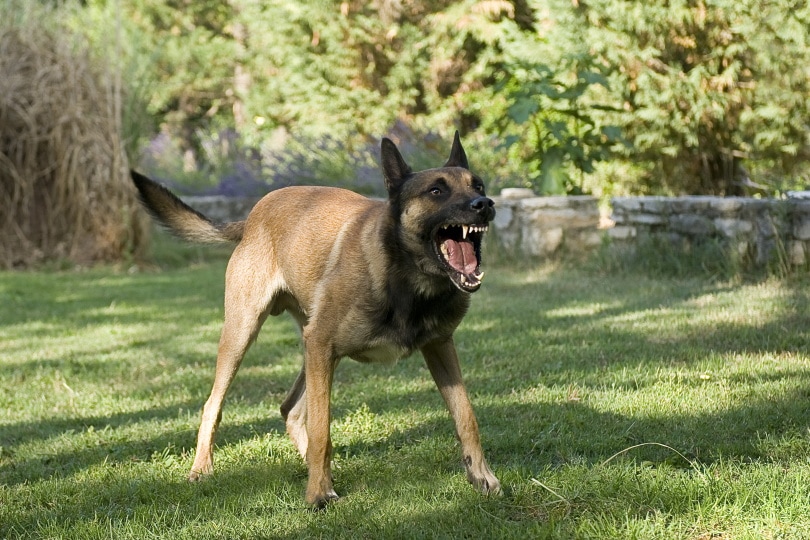
When planning on adopting a dog, we all picture relaxing walks in forests and watching them chase a ball across green fields before obediently delivering it back to us. In some cases, it’s not quite that simple. Some dogs suffer from anxiety and stress-related behaviors1 that may make them act up in public—pulling on the leash, barking at other dogs, and jumping at passersby are some of these behaviors.
To curb these behaviors, dog parents need to take control and teach their dogs how to be calm in public. Below are some tips you can start putting into practice today, but if you’re really struggling to calm your dog down in public, they may have more deep-seated issues that need addressing like past trauma or neglect by previous owners. A vet or dog behaviorist is the best person to go to if this is the case.

The 8 Tips to Train Your Dog to Be Calm in Public
1. Teach Basic Commands
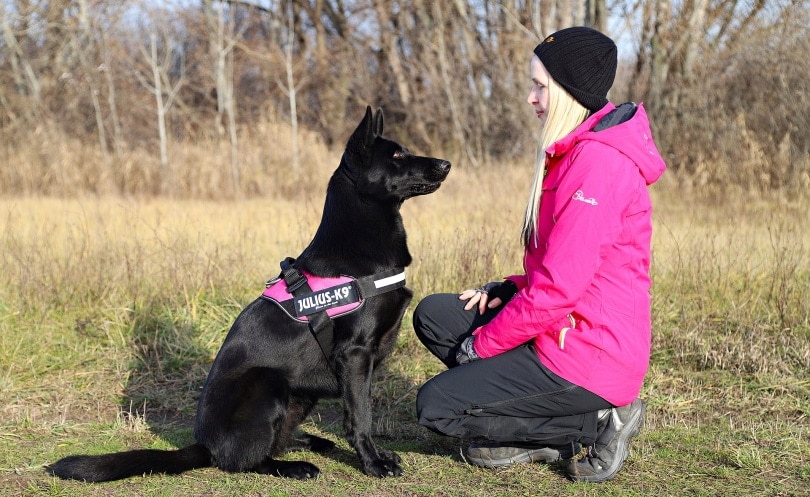
All dogs need to learn basic commands like “sit” and “stay”, ideally as early as possible. But if you have a rescue dog, they may have come to you having been poorly trained or not at all. If this is the case, don’t worry—adult dogs are perfectly capable of learning basic obedience. It’s never too late to start!
Your dog knowing how to obey basic commands is crucial because this gives you more control when out in public with them. These commands can even help prevent serious incidents like your dog rushing out into the road because they don’t know how to “stay”.
Ideally, dogs should learn to recognize the following commands and verbal cues:
- Their name
- “Sit”
- “Stay”
- “Come”
- “Down”
- “Heel”
- “Leave it”
- “Off”
If you need help with training your dog, we suggest speaking with a vet online.
2. Socialize Your Dog
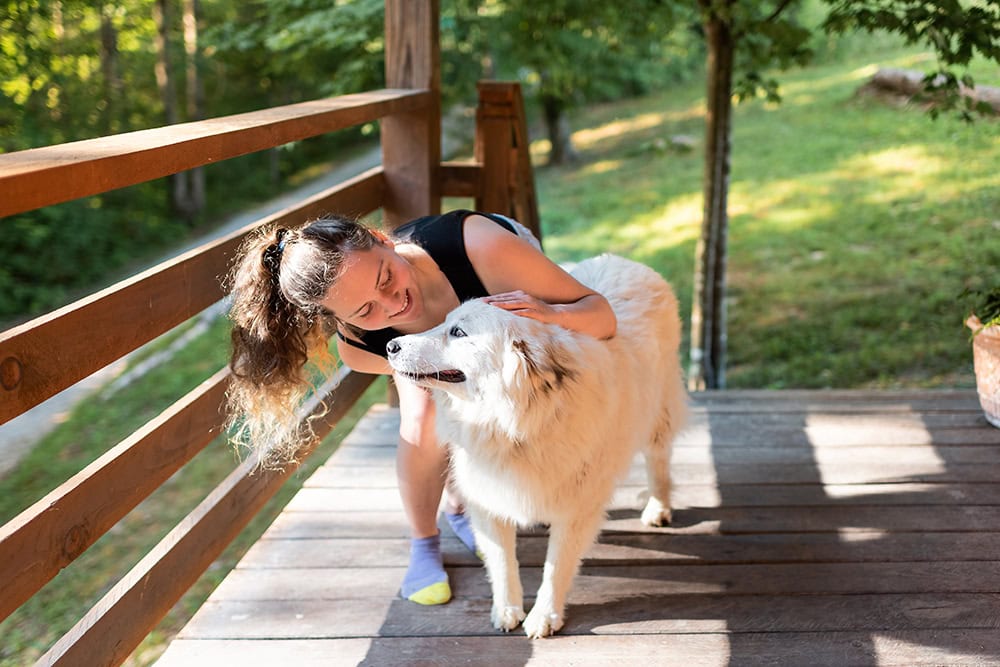
Another crucial step in teaching your dog to be calm in public around other people and dogs is to socialize them with other people and dogs. If a dog isn’t used to other beings, they’re more likely to become stressed when suddenly faced with them out in public.
For this, you may need to recruit some dog-loving friends and their dogs to spend some time with you and your dog in a supervised environment. If your dog isn’t good with other dogs, introduce them gradually, for example, letting the dogs sniff at each other from under a door before letting them meet face to face.
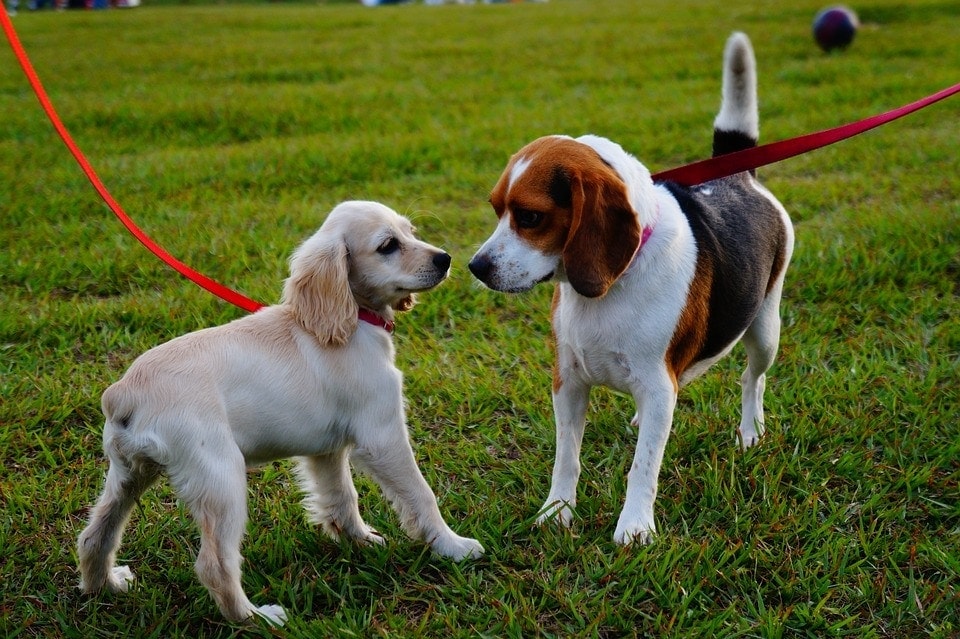
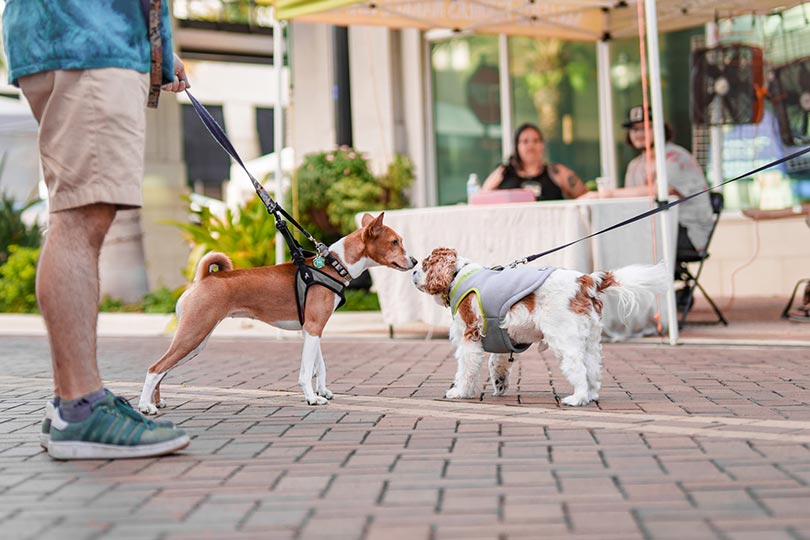
If you’re afraid of how your dog will react to another dog when they do meet one, make sure both dogs are on a leash for early meetings and keep them at a safe distance from one another. Once your dog is more used to other dogs and people, they’re less likely to be stressed out by them when out and about.
If you’re not feeling ready to introduce other dogs to your dog, you can always start even more slowly. Go somewhere where your dog will be able to see other dogs but only from a distance. Give your dog a treat when they spot the other dog/dogs to get them to associate other dogs with something nice. Only treat them when another dog is in sight, so the effect doesn’t wear off.
3. Exercise Your Dog
Before taking your dog into public spaces, make sure they’ve been exercised first. It is never a good idea to take a dog to public spaces when they’re full of pent-up energy as this makes them more likely to become anxious or destructive. Make sure your dog has been able to burn off some of this energy before heading to a place with other people and dogs.
4. Use Treats
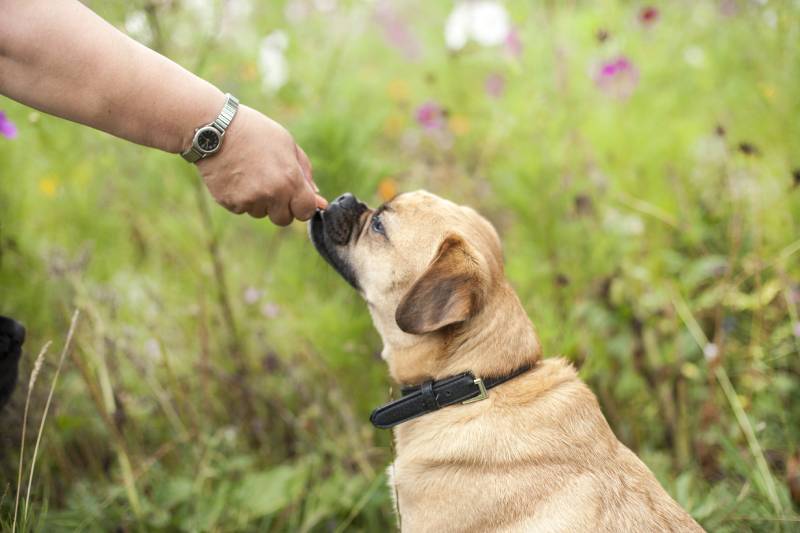
If your dog is food-motivated, treats are your friend when it comes to public outings. You can even start teaching relaxed behavior from inside your house. Reward your dog when they show relaxed behavior like settling down on their bed.
You can even try putting a leash on your dog while you’re at home and rewarding calmness like stopping barking or pulling. This teaches leash-anxious dogs to associate good behavior on the leash with a tasty reward.
When you are out walking your dog in public, reward them each time they show relaxed behavior. If your dog is not food motivated, try offering their favorite toy or distraction methods instead.
5. Distract Your Dog
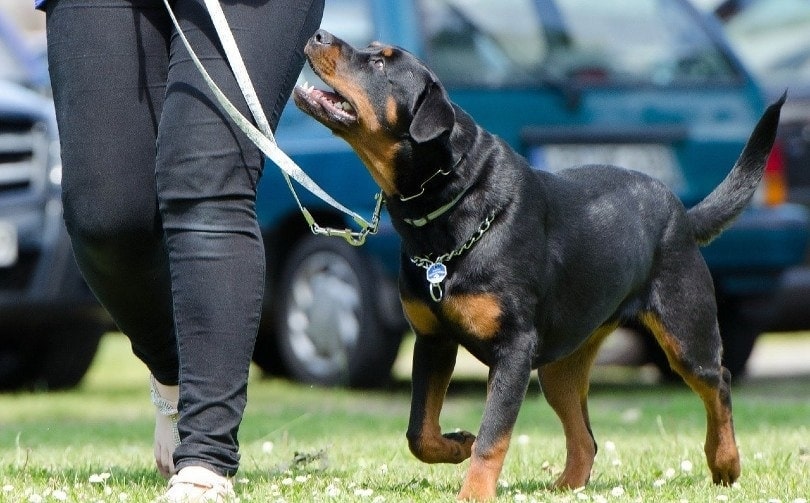
If you sense that your dog is going to start acting up when another human or dog passes by, prepare distractions based on what your dog is motivated by. That could be their favorite treats, toy, or just yourself if your dog responds well to praise. Using such distractions may help take your dog’s attention off who they’re barking at and onto something more interesting.
6. Do the Jolly Routine
The “Jolly Routine” is a method of distracting your dog from their tense feelings or feelings of fear. Basically, when you sense that your dog is going to get stressed, for example, when they see another dog on the street, try relaxing your body and muscles.
Act in a friendly, lighthearted manner towards what is causing your dog to get upset to show them there’s nothing to be afraid of. Sing, whistle, skip, hum—whatever gets you feeling as loose and carefree as possible. Speak in a high-pitched tone. The goal is to have your lightheartedness rub off on your dog, so they feel less threatened and scared.
Avoid trying to calm your dog down. Though it’s a natural response to want to comfort your dog, actively trying to calm them instills the idea that there’s something to be afraid of. Acting happy and silly helps instill the opposite.
7. Choose an Appropriate Harness
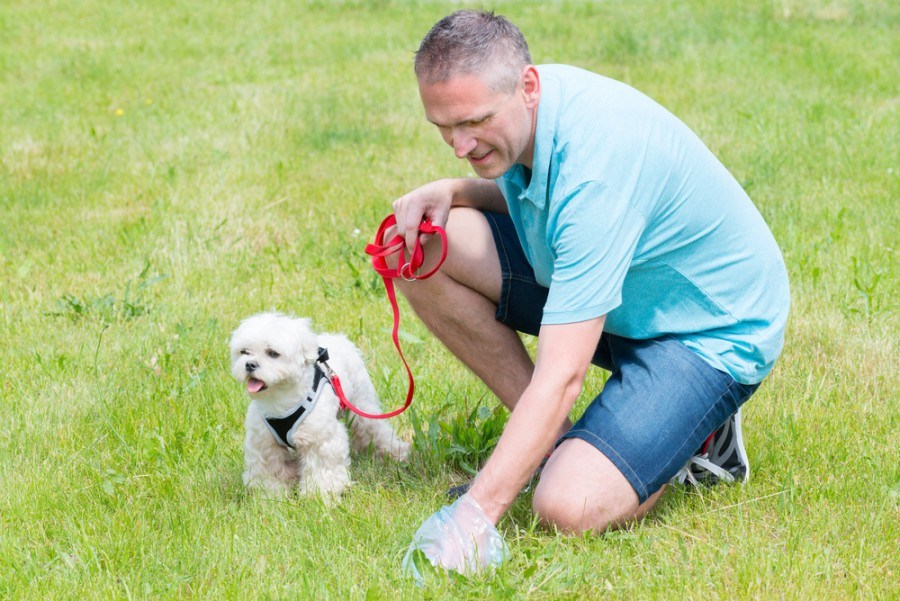
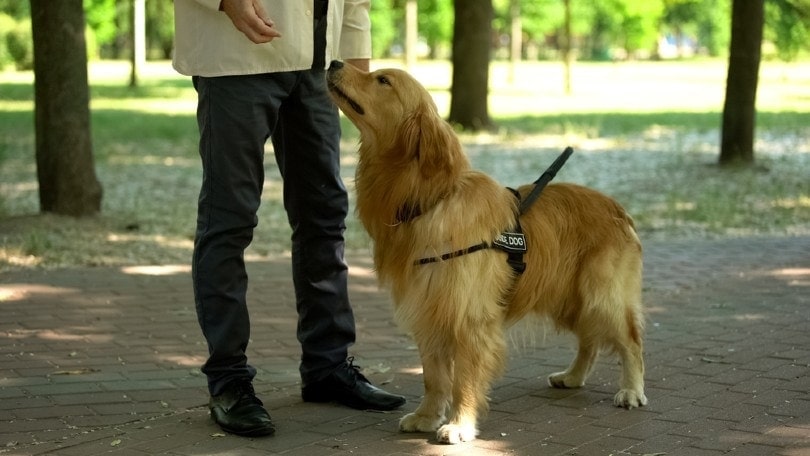
A harness that your dog feels secure and comfortable in can help keep them safe if they do start to panic out in public. Leashes and collars are not a good idea for dogs that pull as this causes extra distress, whereas harnesses don’t put pressure on the neck. Harnesses are often the more secure option, too, which gives you an extra layer of reassurance. Go for something properly fitted and comfortable for your dog.
8. Go to Dog-Friendly Places
When your dog starts reacting more positively to other people and dogs out on walks and seems more relaxed in general, you might want to consider trying a dog-friendly park or café to further their socialization.
It’s best to start gradually if your dog is new to these kinds of places. Perhaps, for example, with a brief sniff around quiet areas of the dog park to start before gradually building up to spending more time inside. Keep your dog close to you on their harness to give you better control while you’re getting them used to these new places.
Final Thoughts
It’s normal to feel nervous about getting your dog to calm down in public, especially if you have a dog prone to barking or other stress-related behaviors. Don’t be afraid to let others know that your dog is learning. If, for example, someone approaches to pet your dog, there’s nothing wrong with saying something like “My dog can’t be pet right now, he’s in training.”
Our top tip is to try and stay as calm as possible when out in public with your dog. Dogs can sense when you’re tensing up, which can cause them to feel more tense. On the other hand, if you’re relaxed and lighthearted yourself, your dog is more likely to feel more relaxed and lighthearted, too.
Finally, please never yell at or otherwise punish your dog when things you try don’t work out. This just exacerbates their stress and doesn’t help the situation at all. Stay positive and always praise your dog when they do get it right. Good luck!
Related Reads:
“Sources”
Featured Image Credit: Luca Nichetti, Shutterstock
Get Hepper In Your Inbox


Pet care tips from our vets and experts, straight to your inbox.
You may opt-out at any time. View our Privacy Policy for more information.
Kit Copson is a freelance writer and lifelong animal lover with a strong interest in animal care. She has parented various furry beings over the years and is currently a proud cat mom of two—one skittish but adorable Domestic Shorthair and very chilled (unless hungry) Siamese and a —and dog mom of one—an adopted Bichon Poodle cross. When not writing about or spending time with pets, Kit can be found doodling in her sketchpad, reading, or more often than not, drinking tea.
Join the conversation
Ask a question, share your story, or send private feedback.