Hepper is reader-supported. When you buy via links on our site, we may earn an affiliate commission at no cost to you. Learn more.
Why Is My Puppy Limping? 10 Vet Reviewed Reasons

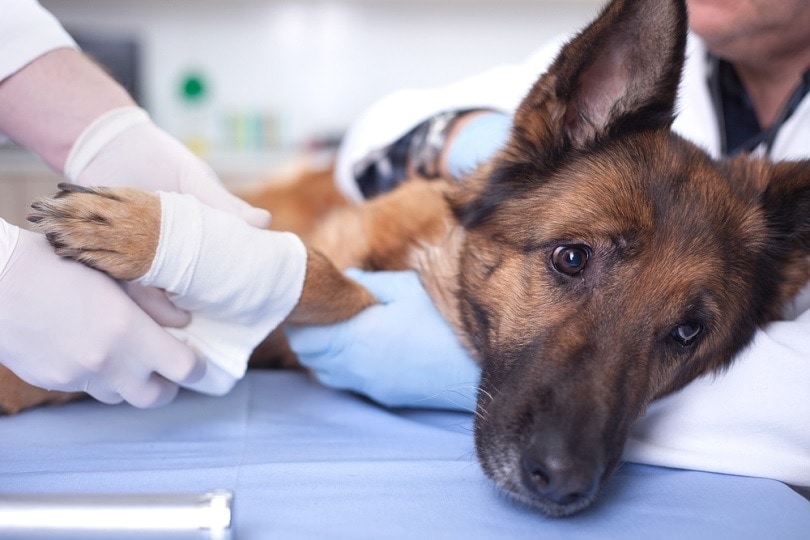
Owning a puppy certainly has its ups and downs, with many of the ups being their cuteness. But one of the downs is the fear that something is wrong with them.
For example, it can be quite alarming if you see your puppy limping. However, injuries can easily happen to puppies because their bodies are still developing, and they can be overzealous while playing.
We know how scary it can be to see your puppy in pain, so let’s go over the common reasons for limping and what you should do when it occurs.

The 10 Possible Reasons Your Puppy Might Be Limping
1. Muscle Strains and Sprains
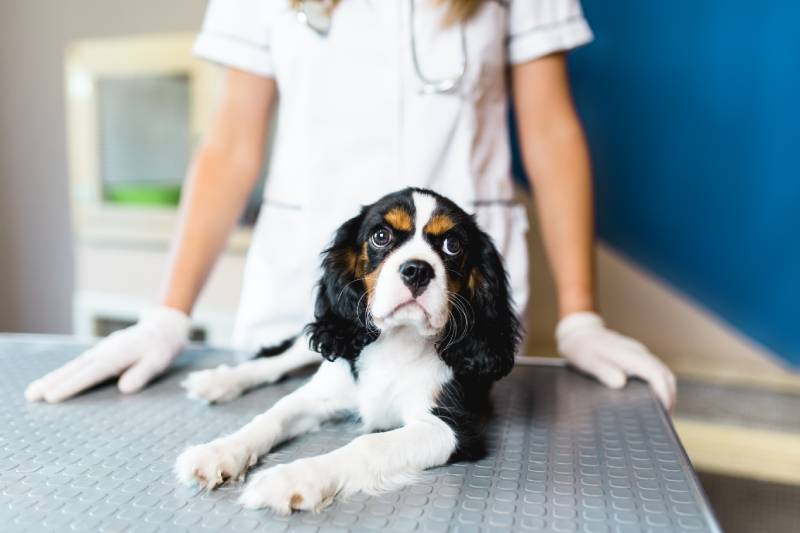
Muscle strains and sprains are among the most common causes for a puppy to start limping. These can occur through regular play, like running and jumping, or stepping down the wrong way.
Many of these kinds of injuries can be treated through rest and discouraging your puppy from too much activity. But if the strain or sprain might be more serious, it should be looked after by your vet.
2. Superficial Injury
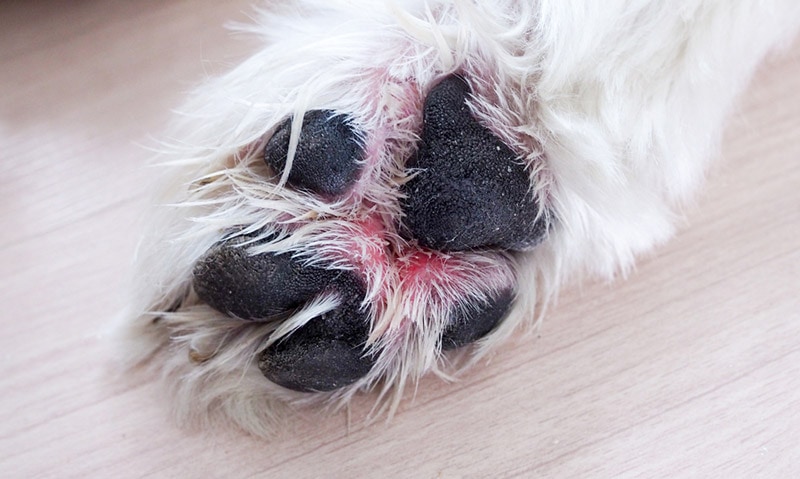
Sometimes, limping is caused by a minor injury, such as a cut or something wedged between the paw pads. It could also be an insect sting or bite or a burn from hot pavement.
If your puppy continues to play while limping, it is likely to be superficial. Check your puppy’s paw for an injury, and take them in to see the vet if it seems more serious.
3. Trauma
In the case of a trauma, the limp will be pronounced, and if it’s a fracture, the puppy won’t want to put weight on their leg, which might be at a strange angle. Their bones are still growing and weaker than adult dogs, so it’s easier for a break to occur.
This is an emergency situation, and you must take your puppy to your veterinarian or the closest emergency clinic immediately.
4. Hip Dysplasia
Hip dysplasia is typically associated with adult dogs, but puppies 5 months and older can experience it. Large breeds are more prone to it, though it’s harder to diagnose in puppies.
The hip joint becomes misshapen and rubs inside the joint, causing inflammation and pain. This needs treatment by your vet.
5. Elbow Dysplasia
Elbow dysplasia is similar to hip dysplasia in that there’s a malformation of the elbow joint, which causes the puppy pain. It also affects large breed dogs more often and will need a vet’s attention.
6. Luxating Patella
Wobbly kneecaps or luxating patella are when the kneecaps shift sideways from their usual positions. It can affect different breeds, but small-breed dogs are more likely to experience it.
In this case, the limp might come and go, and some dogs don’t even experience pain. But your vet can treat it with surgery or medication and a temporary restriction of exercise.
7. Legg-Calvé-Perthes Disease
Legg-Calvé-Perthes disease is the degeneration of the head of one of the thigh bones. This occurs most commonly in small breeds and tends to affect puppies that are 5 to 8 months of age.
Treatment typically involves surgery, followed by intensive exercise (physical therapy is common).
8. Asymmetrical Growth
When the puppy’s leg bones grow, they should all grow at the same rate. Asymmetrical growth is when one bone grows faster than the others, which results in a bow-legged stance and a limp. The good news is that this is not a painful condition.

9. Osteochondritis Dissecans
Osteochondrosis dissecans occurs while the puppy is still in the womb, in which the bone of a joint has abnormally thick cartilage. This happens primarily in large and giant breeds. Treatment is surgery, followed by medication for inflammation and pain.
10. Panosteitis
Panosteitis is sometimes called growing pains because it affects the long bones of the legs. Typically, large breed dogs of 2 years and younger are affected. This isn’t usually a serious disease, but it is quite painful.
It’s most common in large breed dogs, particularly the German Shepherd. Panosteitis usually resolves itself when the dog has stopped growing, and the only treatment is anti-inflammatories to relieve pain and inflammation.

How to Figure Out Which Leg Is the Problem
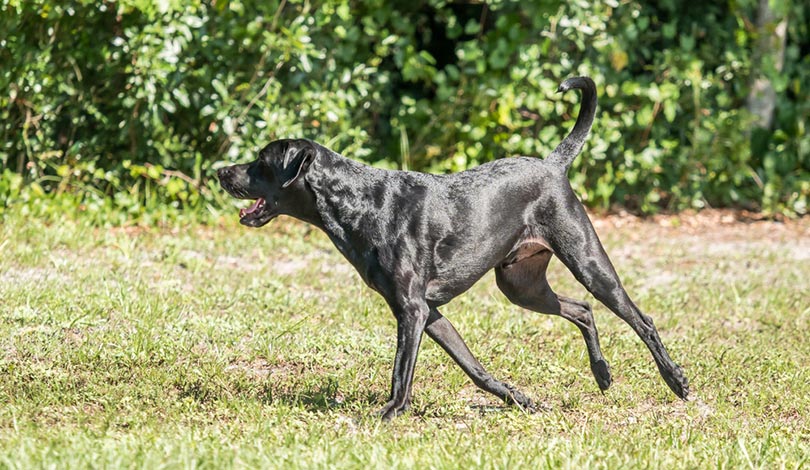
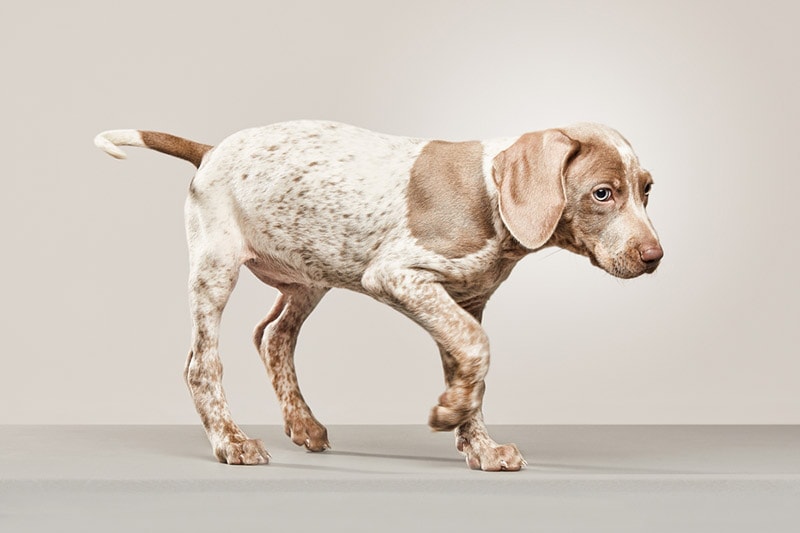
Unless your puppy is pulling up a specific leg, it can be somewhat challenging to figure out which leg has the problem. You can record your puppy walking, which can be shown to the vet, and look out for these signs: typically the head raises when the bad leg touches the ground.
Signs That Your Puppy Is in Pain
Other than limping, there are other signs that will tell you if your puppy is in pain:
- Unusually quiet
- Anti-social behavior
- Increased aggression
- Increased whining and crying
- Lack of appetite
- Poor posture
- Trembling and shaking
- Lethargy
- General weakness
- Not interested in playing
- Fever
Examining Your Puppy
When you see your puppy limping, examine them immediately to determine the cause. If the leg seems to be dislocated, is sitting at an odd angle, or is swollen and hot, don't touch it; take them straight to your vet.
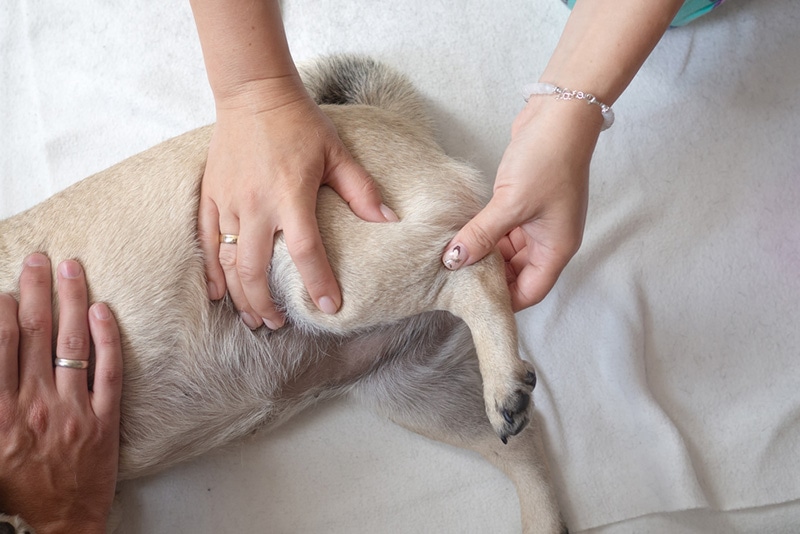
Otherwise, ensure that your puppy is calm, and have them lie down so you can check them for injuries. Use a helper if your puppy won't sit still. Start with the limbs by lifting them and gently pressing your hands along the front and the back of each leg. If your puppy reacts when you apply pressure on a specific part of the leg, you’ve found the source. You should also check the leg joints, which might be inflamed or swollen.
Don’t forget the paws and paw pads, which might have wounds, cuts, or something wedged in them, such as a stone or thorn.
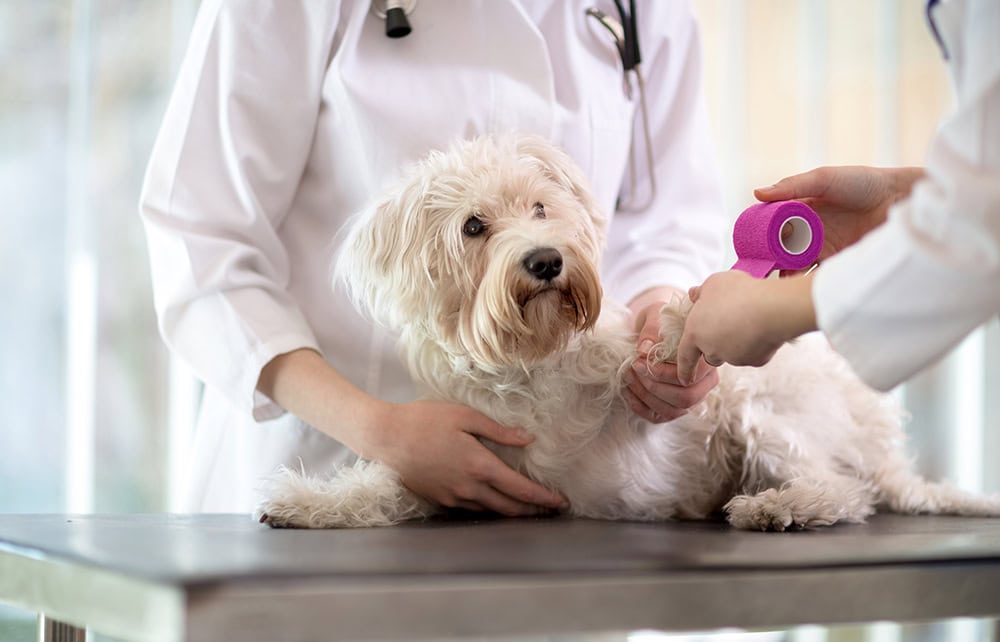
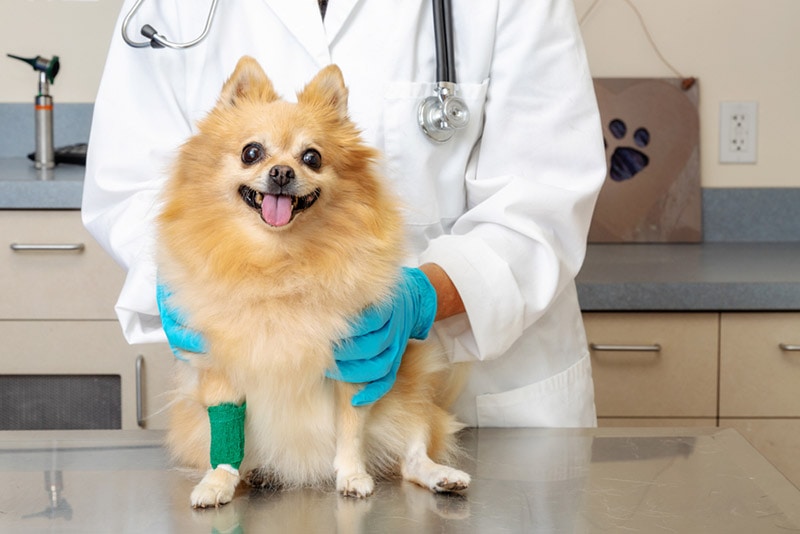
Once you’ve examined your puppy’s legs and paws, contact your veterinarian for the next steps. They might not need you to bring your puppy in if it isn’t a serious problem; it will likely be treated at home with rest. Only give them pain medication prescribed by your vet—never use human medication on your puppy!
If you can’t pinpoint the source of your puppy’s pain, take them to see your veterinarian because it might be something internal.
Conclusion
If the limping comes on quite suddenly but seems minor, and your puppy is still in good spirits and playing, it’s likely a superficial injury. It might be a broken toenail, a burn from hot pavement, or a wound or sting.
If the limp is quite pronounced, is really impacting their movements, and continues to get worse, this is a serious injury that merits an immediate visit to the vet.
A limp can be serious or nothing to worry about, but you shouldn’t gamble with your puppy’s health. Call your vet and explain the situation, and you’ll either bring your puppy in for an exam and treatment, or they can provide instructions on how to treat the limp at home.
Sources
https://www.petmd.com/dog/conditions/musculoskeletal/c_dg_legg_calve_perthes_disease
https://www.petmd.com/dog/conditions/musculoskeletal/c_dg_osteochondrosis
https://www.petmd.com/dog/conditions/musculoskeletal/c_multi_patellar_luxation
https://www.petmd.com/dog/conditions/musculoskeletal/c_dg_hip_dysplasia#hip-dysplasia-dogs
Featured Image Credit: Santos Roman, Shutterstock
Get Hepper In Your Inbox


Pet care tips from our vets and experts, straight to your inbox.
You may opt-out at any time. View our Privacy Policy for more information.
Kathryn was a librarian in a previous lifetime and is currently a writer about all things animals. When she was a child, she hoped to work in zoos or with wildlife in some way, thanks to her strong love for animals. Unfortunately, she's not strong in the sciences, so she fills her days with researching and writing about all kinds of animals and spends time playing with her adorable but terribly mischievous tabby cat, Bella. Kathryn is hoping to add to her family in the near future – maybe another cat and a dog.
Join the conversation
Ask a question, share your story, or send private feedback.